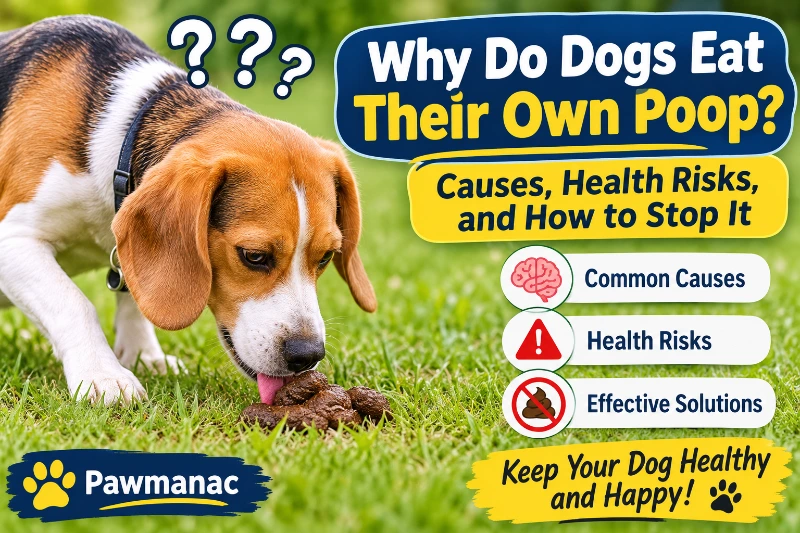
Why Do Dogs Eat Their Own Poop? Causes, Health Risks, and How to Stop It
Watching your dog eat its own poop can be unpleasant and confusing. You might wonder why an animal that receives regular meals, fresh water, and proper care would want to eat something that seems completely unsuitable. However, this behavior is more common than many dog owners realize.
The habit of eating feces is called coprophagia. Dogs may develop it for several reasons, including curiosity, instinct, boredom, anxiety, hunger, or learned behavior. In some cases, underlying medical conditions can also contribute to poop eating.
Although puppies commonly explore their surroundings by sniffing and tasting different things, persistent poop eating should not always be ignored, especially in adult dogs.
Understanding why your dog eats its own poop is the first step toward addressing the behavior. This guide explains the common causes, possible health risks, differences between puppies and adult dogs, and practical ways to help your pet stop eating feces.
Why Do Dogs Eat Their Own Poop?
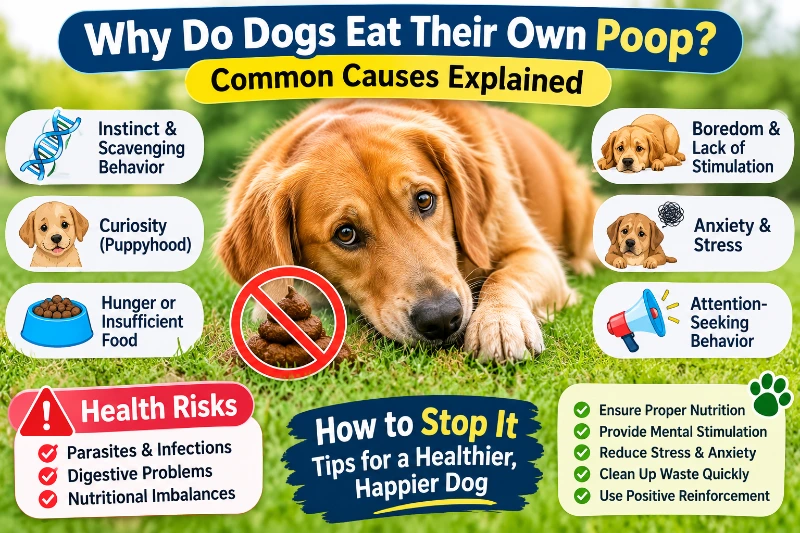
Dogs eat their own poop for several behavioral and medical reasons. Some do it out of curiosity, while others develop the habit because of boredom, stress, hunger, or previous experiences.
Veterinary guidance generally emphasizes ruling out medical causes before assuming that poop eating is purely behavioral.
Here are some of the most common explanations.
1. Natural Instinct and Scavenging Behavior
Dogs have inherited many behaviors from their wild ancestors, including scavenging and investigating different food sources.
One theory suggests that eating fresh feces may have helped ancestral canines keep their living areas clean and reduce exposure to certain intestinal parasites. However, this does not fully explain why individual domestic dogs develop the habit.
Mother dogs also naturally eat their puppies’ feces during the early weeks of life. This helps keep the nesting area clean and reduces the smell that could attract predators.
Puppies observe their mothers and may imitate this behavior. As a result, some young dogs begin exploring feces and eventually develop a habit of eating it.
2. Curiosity During Puppyhood
Puppies explore the world through their noses and mouths. They investigate toys, household objects, plants, food, and sometimes their own waste.
For a young puppy, feces may simply be another unfamiliar object worth investigating.
This behavior is particularly common during early development, when puppies are learning about their surroundings.
Some puppies eventually stop eating poop as they mature. However, owners should discourage the habit early by supervising bathroom breaks, cleaning up immediately, and rewarding appropriate behavior.
3. Hunger or Insufficient Food Intake
A dog that does not receive enough food for its energy needs may search for additional sources of something to eat.
This can happen when feeding portions are too small, meals are irregular, or the dog has a higher energy requirement than its current diet provides.
Certain medical conditions and medications can also increase appetite, making dogs more likely to investigate unusual food sources.
However, eating poop does not automatically mean your dog is starving. Check its feeding schedule, body condition, and nutritional needs before making changes to its diet.
4. Boredom and Lack of Mental Stimulation
Dogs need more than food and a comfortable sleeping area. They also need physical exercise, mental stimulation, and opportunities to explore.
When dogs spend long periods alone or in restricted spaces without sufficient activities, they may develop unwanted habits.
For some dogs, eating poop becomes an activity that fills otherwise empty time.
Common signs of boredom may include:
- Excessive chewing.
- Repeated barking.
- Digging in the yard.
- Restlessness.
- Destructive behavior.
- Constantly searching for food.
Providing regular walks, interactive toys, sniffing activities, and short training sessions can help reduce boredom-related behaviors.
5. Anxiety and Stress
Stress can influence how dogs behave around food, people, and their surroundings.
Some dogs may eat feces when they feel anxious, especially if they spend too much time alone or experience changes in their environment.
Possible triggers include separation anxiety, moving to a new home, unfamiliar visitors, loud noises, and changes in daily routines.
A stressed dog may also display other behaviors, such as excessive licking, pacing, hiding, whining, or destructive chewing.
Dogs can also develop unusual or repetitive behaviors when they experience stress or have difficulty coping with their surroundings. Understanding the possible causes of these behaviors can help owners recognise when their pets may need additional attention or veterinary support.
If you suspect anxiety is contributing to poop eating, identify the situations that trigger it and provide a calmer, more predictable environment.
6. Attention-Seeking Behavior
Dogs quickly learn which actions get a reaction from their owners.
If a dog eats poop and its owner immediately rushes toward it, shouts, or starts chasing it, the dog may interpret the reaction as an exciting interaction.
Even negative attention can sometimes reinforce an unwanted behavior.
In other situations, a dog may learn to swallow feces quickly because it expects its owner to take it away.
Instead of shouting or chasing, calmly redirect your dog and reward it for moving away from the waste.
7. Fear of Being Punished for Accidents
Some dogs develop poop-eating habits because they have experienced punishment during house training.
For example, if an owner repeatedly shouts at a puppy for having an indoor accident, the puppy may become frightened whenever it eliminates.
One possible response is to eat the feces to remove the evidence.
This does not happen with every dog, but it is one reason punishment-based house training can create additional behavioral problems.
Rewarding outdoor bathroom habits and cleaning indoor accidents without punishment helps create a more positive learning environment.
8. Digestive Problems and Nutritional Deficiencies
Some medical conditions can affect how a dog’s body digests food and absorbs nutrients.
When digestion or nutrient absorption is impaired, a dog may experience increased hunger or changes in appetite that contribute to unusual eating behaviors.
Possible medical factors include:
- Intestinal parasites.
- Exocrine pancreatic insufficiency (EPI).
- Gastrointestinal disorders.
- Poor nutrient absorption.
- Certain nutritional deficiencies.
- Diets that do not meet the dog’s nutritional requirements.
However, it is important to understand that nutritional deficiency is not the most common explanation for coprophagia. Many dogs eat poop despite receiving a complete and balanced diet.
If your dog regularly eats feces, ask your veterinarian whether its diet, digestion, and overall health need evaluation.
Why Do Puppies Eat Their Own Poop?
Puppies are more likely to experiment with eating feces because they are naturally curious and still learning about their environment.
There are several reasons behind this behavior.
Learning from their mother: Mother dogs regularly clean their puppies by consuming their waste. Puppies may observe and imitate this behavior.
Exploring their surroundings: Young puppies investigate unfamiliar objects using their mouths, including their own feces.
Developing food habits: Puppies are still learning what is appropriate to eat. Without supervision, they may develop undesirable scavenging habits.
Hunger and growth: Growing puppies have different nutritional and energy requirements. Inadequate feeding can contribute to increased food-seeking behavior.
Most importantly, puppies should receive a complete diet formulated for their growth stage. Supervise bathroom breaks and remove feces immediately to prevent the behavior from becoming an established habit.
If your puppy eats poop regularly, particularly alongside diarrhea, poor weight gain, vomiting, or an unusually strong appetite, arrange a veterinary examination.
Why Do Adult Dogs Suddenly Start Eating Their Own Poop?
If an adult dog has never eaten feces before but suddenly develops this habit, it deserves more attention.
A new behavior may be associated with changes in appetite, digestion, health, or daily routines.
Possible explanations include:
- Increased hunger caused by a medical condition.
- Intestinal parasites.
- Digestive enzyme deficiencies.
- Gastrointestinal problems.
- Medication side effects.
- Increased stress or anxiety.
- Changes in feeding schedules.
- Reduced exercise or mental stimulation.
For example, conditions such as exocrine pancreatic insufficiency can interfere with digestion and nutrient absorption. Some medications, including corticosteroids, can also increase appetite.
Pay attention to other symptoms, such as unexplained weight loss, diarrhea, vomiting, lethargy, or changes in drinking habits.
A veterinarian can examine your dog and determine whether diagnostic tests, including fecal testing or blood work, are necessary.
Why Do Dogs Eat Other Dogs’ Poop?
Dogs do not always limit this behavior to their own feces. Some are attracted to the poop of other dogs, cats, or different animals.
This behavior is also called coprophagia, but its possible motivations can differ depending on the source of the feces.
For example, some dogs investigate other animals’ waste because of its smell, texture, or undigested food content.
Cat feces can be particularly attractive to dogs because cats generally eat diets containing substantial amounts of animal protein.
Other possible reasons include:
- Curiosity and scavenging instincts.
- Attraction to unfamiliar smells.
- Boredom.
- Hunger.
- Learned eating habits.
Eating another animal’s feces can expose dogs to intestinal parasites, bacteria, and other harmful organisms.
Keep your dog’s access to litter boxes, animal waste, and contaminated outdoor areas restricted whenever possible.
Is Eating Their Own Poop Dangerous for Dogs?
Eating their own poop is not always immediately harmful, but it is not a habit owners should encourage.
A healthy dog’s fresh feces may carry a different level of risk from the feces of an infected animal. However, stool can contain intestinal parasites, bacteria, and other organisms that may cause health problems.
Repeated poop eating also makes it more difficult to identify changes in your dog’s bowel movements, which can be useful when monitoring digestive health.
Possible Health Risks:
| Health Concern | How It Can Affect Dogs |
| Intestinal parasites | Certain parasite eggs or organisms may spread through fecal contamination. |
| Bacterial exposure | Feces can contain harmful bacteria. |
| Gastrointestinal upset | Contaminated material may contribute to digestive problems. |
| Parasite transmission | Eating infected animal feces can expose dogs to additional parasites. |
| Underlying illness | Persistent poop eating may occur alongside digestive or metabolic conditions. |
The risk is generally more concerning when dogs consume feces from unfamiliar animals, wildlife, or animals with unknown health histories.
If your dog eats poop and develops vomiting, diarrhea, appetite changes, or unusual tiredness, contact your veterinarian.
How to Stop Your Dog From Eating Its Own Poop
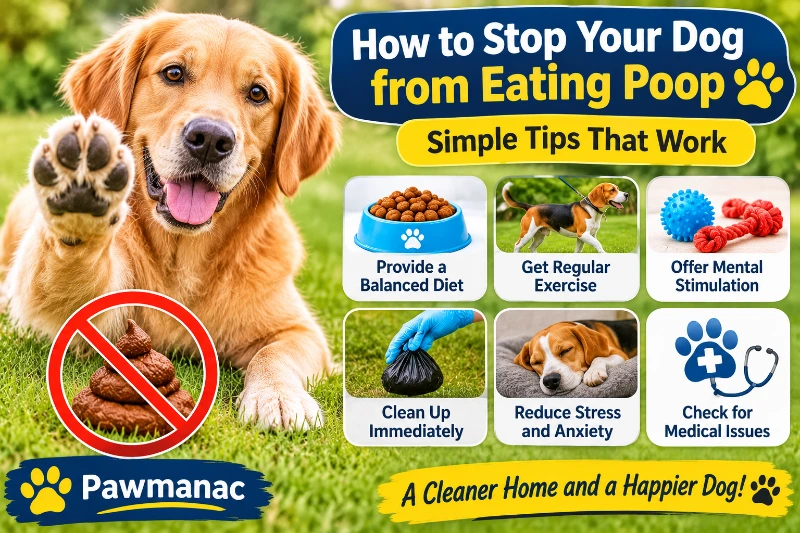
Stopping coprophagia usually requires consistency, supervision, and an understanding of why the behavior occurs.
There is no single solution that works for every dog. However, the following methods can help reduce opportunities for poop eating and encourage better habits.
1. Pick Up Poop Immediately
The simplest and often most effective approach is to remove feces before your dog gets the opportunity to eat them.
After your dog finishes its bathroom break, clean up the waste immediately.
If your dog uses a backyard, inspect the area regularly and remove old feces.
Reducing access prevents repeated opportunities to practice the unwanted behavior.
2. Teach the Leave It Command
Teaching your dog the “leave it” command can help prevent it from picking up unwanted objects, including feces.
Start training with a harmless object or treat.
- Place an object on the floor and allow your dog to notice it.
- Say “leave it” in a calm voice.
- Reward your dog when it looks away or moves away from the object.
- Repeat the exercise during short training sessions.
- Gradually practice in more distracting environments.
Once your dog understands the command, use it during supervised bathroom breaks.
Reward your dog for moving away from its feces instead of trying to grab it.
3. Reward Your Dog After Bathroom Breaks
Create a positive routine whenever your dog finishes eliminating.
As soon as it finishes, call its name and encourage it to move toward you.
Give it a small treat, praise, or a favorite toy.
This teaches your dog that leaving the feces and returning to you leads to something rewarding.
With consistent practice, the dog may become less interested in returning to the waste.
4. Improve Your Dog’s Diet
Make sure your dog receives a complete and balanced diet suitable for its age, size, activity level, and health needs.
Puppies, adult dogs, and senior dogs may have different nutritional requirements.
If your dog seems constantly hungry, ask your veterinarian whether its daily food intake is appropriate.
Avoid adding random vitamins, minerals, or supplements in an attempt to stop poop eating. Supplementation should only be used when there is a specific nutritional need.
5. Provide More Exercise and Mental Stimulation
Bored dogs need appropriate activities to keep their minds and bodies occupied.
Try including the following activities in your dog’s daily routine:
- Regular walks.
- Food puzzle toys.
- Sniffing games.
- Fetch and interactive play.
- Basic obedience training.
- Safe opportunities to explore new environments.
The goal is to provide activities that satisfy your dog’s natural curiosity and reduce boredom.
Regular outdoor walks are another useful way to provide physical activity and mental stimulation. Choosing comfortable walking equipment can make these outings easier to manage, particularly when your dog needs additional leash control during walks.
6. Avoid Punishment
Never shout at your dog, hit it, or rub its nose in feces to discourage poop eating.
Punishment can increase fear and anxiety and may make some dogs more likely to hide their bathroom behavior.
Instead, use calm redirection and reward-based training.
If your dog has an indoor accident, clean it thoroughly without creating a frightening experience.
7. Ask Your Veterinarian About Medical Causes
If your dog continues eating poop despite consistent training and environmental management, arrange a veterinary examination.
Your veterinarian may recommend:
- A physical examination.
- Fecal testing for intestinal parasites.
- A review of your dog’s current diet.
- Blood tests when medically indicated.
- Additional digestive investigations if symptoms suggest a gastrointestinal problem.
Treating an underlying medical condition may help reduce the behavior if it is contributing to coprophagia.
Do Products That Stop Dogs From Eating Poop Actually Work?
You may find supplements, powders, and food additives marketed as poop-eating deterrents.
Some products claim to change the smell or taste of feces, making it less attractive to dogs.
However, their effectiveness is not well established, and results can vary considerably between individual dogs.
These products should not replace veterinary assessment, appropriate feeding, supervision, or training.
Before using any supplement, check with your veterinarian to make sure it is appropriate for your dog’s age, health, and existing diet.
Prevention and consistent behavior management remain important parts of addressing coprophagia.
When Should You Take Your Dog to the Veterinarian?
Occasional poop eating may be behavioral, particularly in puppies. However, persistent or sudden changes should not be ignored.
Consider scheduling a veterinary appointment if your dog:
- Suddenly starts eating its own poop.
- Eats feces repeatedly despite training.
- Shows increased hunger or unusual food-seeking behavior.
- Experiences unexplained weight loss.
- Has frequent diarrhea or vomiting.
- Appears unusually tired or uncomfortable.
- Has changes in appetite or drinking habits.
- Shows signs of poor digestion.
Seek prompt veterinary care if your dog develops repeated vomiting, severe diarrhea, weakness, or significant abdominal discomfort.
Taking a short video of the behavior and keeping notes about your dog’s feeding schedule, bowel movements, and symptoms can help your veterinarian understand the situation.
Frequently Asked Questions About Dogs Eating Their Own Poop:
Conclusion:
Dogs eat their own poop for several reasons, including natural instincts, curiosity, boredom, anxiety, hunger, and learned behavior. Although the habit is relatively common in puppies, persistent poop eating in adult dogs deserves attention because it may sometimes be associated with an underlying medical condition.
The best way to address coprophagia is to understand its cause, remove access to feces, maintain a balanced diet, provide sufficient exercise, and use positive reinforcement.
If your dog suddenly develops this habit or shows additional symptoms such as weight loss, vomiting, or diarrhea, consult a veterinarian.
With patience, consistent training, and appropriate veterinary care, many dogs can learn to leave their poop alone and develop healthier bathroom habits.



One Comment