Harnesses for Dogs: Types, Fit, and How to Choose the Right One
Choosing the right harness can make everyday walks safer, more comfortable, and easier to manage. Whether you have a small puppy, a large breed, or a dog that constantly pulls on the leash, the right equipment can make a noticeable difference. However, not all dog harnesses are designed for the same purpose. Some provide better control, while others focus on comfort, freedom of movement, or outdoor activities.
Before buying a harness, it is important to understand how different designs work, which features matter, and how to find the correct size. A harness that looks attractive may not necessarily fit your dog’s body properly.
This guide explains the different types of harnesses for dogs, how to measure your pet, what features to look for, and how to use a harness safely.
What Is a Dog Harness?
A dog harness is a wearable piece of equipment that fits around a dog’s chest and body and connects to a leash through one or more attachment points. Unlike a traditional collar, which places leash pressure around the neck, a properly fitted body harness distributes pressure across a larger area.
Dog harnesses are commonly used for everyday walks, obedience training, hiking, running, and traveling. They can also provide additional control when walking dogs that pull or become distracted easily.
Most harnesses feature adjustable straps, buckles, leash attachment rings, and sometimes padded sections for additional comfort.
The best option depends on your dog’s size, body shape, walking habits, and individual needs.
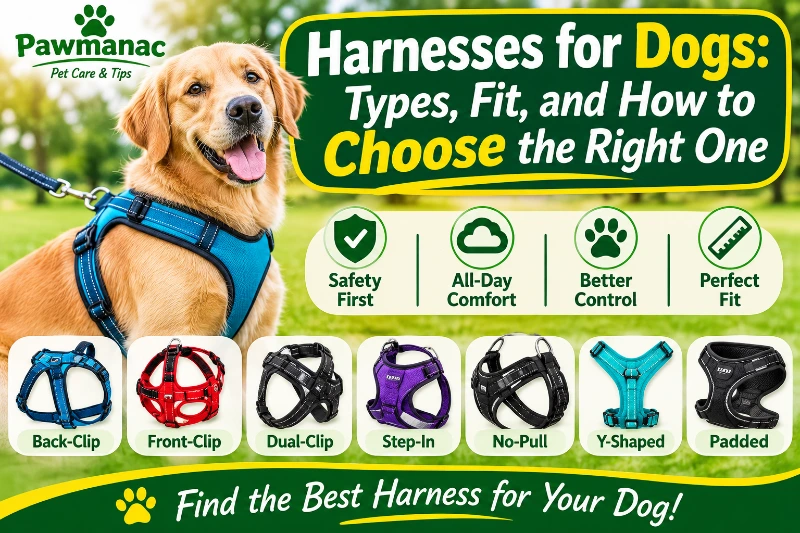
Different Types of Harnesses for Dogs

Understanding harness designs is the first step toward choosing the right equipment. Although many products look similar, their attachment positions and construction can affect how they work.
Back-Clip Dog Harness
A back-clip harness features a leash attachment ring positioned on the dog’s back, usually between the shoulder blades.
This design is popular because it is relatively easy to put on and comfortable for many dogs. The leash stays away from the front legs, making it a practical option for relaxed everyday walks.
Best for:
- Dogs that already walk calmly on a leash.
- Small dogs with delicate necks.
- Puppies getting accustomed to walking equipment.
- Everyday neighborhood walks.
One limitation is that some dogs can lean forward and continue pulling against the leash. A back-clip harness does not automatically teach better leash manners.
Front-Clip Dog Harness
A front-clip harness has its leash attachment point on the chest rather than the back.
When a dog moves forward and pulls, leash tension from the front attachment can redirect its body toward the handler. This can make it easier to guide a dog during training.
Best for:
- Dogs that pull during walks.
- Owners who need additional steering control.
- Dogs learning loose-leash walking.
However, front-clip designs are not guaranteed to stop pulling. Some harnesses may rotate around the dog’s body when the leash becomes tight, potentially causing rubbing or discomfort.
Dual-Clip Dog Harness
A dual-clip harness includes attachment points on both the chest and back.
This design gives owners more flexibility because they can choose the attachment point according to the dog’s walking behavior and training needs.
For example, the front clip may be useful during training sessions, while the back clip can be convenient for relaxed walks.
Best for:
- Dogs that need different levels of leash guidance.
- Owners working on loose-leash training.
- Dogs that transition between everyday walks and outdoor activities.
Some owners also use compatible double-ended leashes with both attachment points, but the setup should be appropriate for the individual dog.
Step-In Dog Harness
A step-in harness allows a dog to place its front paws into two openings before the harness is fastened around its back.
This design can be convenient for dogs that dislike having equipment pulled over their heads.
Step-in harnesses are often available in lightweight materials and adjustable designs.
Best for:
- Small dogs.
- Dogs sensitive around their ears or head.
- Pets that dislike over-the-head harnesses.
- Owners looking for a simple walking accessory.
Make sure the leg openings fit properly and do not restrict natural movement.
No-Pull Dog Harness
A no-pull harness is designed to provide additional control when a dog pulls on its leash. Many models use a front attachment point to redirect forward movement.
Some designs also use tightening or pressure-based mechanisms. These should be selected carefully because excessive pressure can create discomfort.
A no-pull harness is not a substitute for training. Dogs still need to learn how to walk comfortably without pulling against the leash.
Best for:
- Strong dogs that pull frequently.
- Dogs learning leash manners.
- Owners who need additional control during walks.
Choose a design that provides guidance without rubbing, restricting movement, or causing pain.
Y-Shaped Dog Harness
A Y-shaped harness features straps that form a Y across the dog’s chest when viewed from the front.
This design can allow more natural shoulder movement when properly fitted because the straps are positioned around the chest rather than directly across the shoulder joints.
It is a popular option for dogs that need a comfortable harness for everyday walking and outdoor activities.
Best for:
- Active dogs.
- Daily walking.
- Hiking and outdoor adventures.
- Dogs that need greater freedom of movement.
Padded Dog Harness
Padded harnesses include additional cushioning around selected contact areas, such as the chest and back.
Padding can improve comfort, especially when dogs wear their harnesses during longer walks. However, extra padding does not automatically make a harness better.
The material should remain breathable, and the harness should not become too bulky or interfere with movement.
Best for:
- Dogs that walk for extended periods.
- Active pets.
- Dogs that need additional cushioning.
- Outdoor adventures.
How to Choose the Right Dog Harness
The right harness should match your dog’s physical characteristics and walking behavior. Instead of choosing based only on appearance, consider the following factors before purchasing.
1. Measure Your Dog Correctly
Getting the correct size is essential for safety and comfort. A harness that is too loose may allow your dog to escape, while one that is too tight can restrict movement and cause skin irritation.
The most important measurement is usually chest girth.
Use a soft measuring tape and wrap it around the widest part of your dog’s rib cage, just behind the front legs. Some harness designs also require neck measurements.
Always compare your measurements with the manufacturer’s sizing chart because sizing can differ between brands.
2. Consider Your Dog’s Size and Body Shape
A harness designed for a small breed may not provide sufficient support for a larger dog.
Consider your dog’s chest width, neck shape, weight, and body proportions when selecting a product.
For example, broad-chested dogs may need a design with additional adjustment points, while smaller dogs may benefit from lightweight materials and appropriately sized buckles.
Do not choose a size based only on breed or weight.
3. Check the Material and Padding
The material affects durability, breathability, and comfort.
Common materials include:
- Nylon: Lightweight, durable, and easy to clean.
- Mesh: Breathable and suitable for lightweight designs.
- Neoprene: Soft and commonly used in padded sections.
- Polyester: Available in different textures and everyday designs.
- Leather: Durable when properly maintained, although it may require additional care.
Choose materials that suit your local weather and your dog’s activity level.
4. Look for Adjustable Straps
Adjustability helps create a secure fit around different body shapes.
A good harness should allow adjustments around the chest and neck without leaving excessive loose material.
Multiple adjustment points can be especially helpful for growing puppies and dogs with unusual body proportions.
5. Examine the Buckles and Leash Attachment Points
Check that the buckles are secure, easy to fasten, and made from durable materials.
The leash attachment ring should be strong enough for your dog’s size and normal walking conditions.
Reflective details can also improve visibility during early morning or evening walks.
When choosing walking accessories, it’s also worth understanding how dogs perceive different colours. Dogs see blue and yellow more easily than red and green, so colour visibility can be useful to consider when selecting outdoor equipment.
How Should a Dog Harness Fit?
A dog harness should feel secure without being restrictive. Proper positioning is more important than simply selecting the correct size printed on the packaging.
Use these checks after putting the harness on:
- You should generally be able to slide two fingers comfortably underneath the straps.
- The harness should not press against the throat.
- The straps should not rub behind the front legs or inside the armpits.
- The front legs should move naturally without restriction.
- The harness should remain stable when your dog walks or turns.
- Your dog should not be able to easily back out of it.
A harness that moves excessively, twists, or slips toward the neck may need adjustment or a different design.
Check your dog’s skin and coat after the first few walks. Redness, flattened fur, hair loss, or repeated scratching around the harness area may indicate a fit problem.
How to Measure Your Dog for a Harness
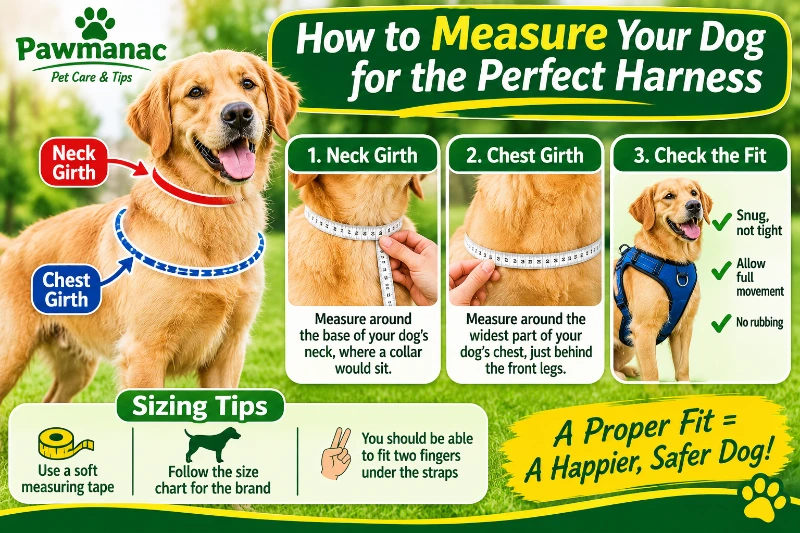
You do not need special equipment to measure your dog. A flexible measuring tape is usually sufficient.
Follow these steps:
Step 1: Measure chest girth
Wrap the tape around the widest part of the chest, immediately behind the front legs. Keep it snug without squeezing the body.
Step 2: Measure the neck
If the manufacturer requires a neck measurement, measure around the base of the neck where the harness will sit.
Step 3: Check your dog’s weight
Some manufacturers use weight as an additional sizing reference. Weigh your dog and compare the result with the recommended size range.
Step 4: Compare measurements with the size chart
Use the exact sizing chart for the harness you intend to purchase. Do not assume that a medium harness from one company will fit the same as a medium from another.
Step 5: Test the fit
After fastening the harness, check the straps, leg movement, and leash attachment points before going outside.
For puppies, repeat measurements regularly because their bodies can change quickly as they grow.
Dog Harness vs. Dog Collar: Which Is Better?
Both harnesses and collars have practical uses, but they work differently.
A collar fits around the neck and is commonly used for identification tags and leash attachment. A harness distributes leash pressure across the dog’s body rather than concentrating it around the neck.
| Feature | Dog Harness | Dog Collar |
| Pressure distribution | Across the chest and body | Around the neck |
| Leash control | Often provides more body control | Directly connected to the neck |
| Pulling management | Some designs help redirect pulling | Can place pressure on the throat |
| Everyday use | Suitable for supervised walks | Useful for identification tags |
| Fit requirements | Requires careful body measurements | Requires correct neck sizing |
| Escape risk | Possible if poorly fitted | Possible if too loose |
For dogs that pull, have neck sensitivities, or need additional walking control, a properly fitted harness may be a more suitable option.
However, harnesses are not automatically safer in every situation. Fit, construction, supervision, and the dog’s individual health needs all matter.
Which Dog Harness Is Best for Different Dogs?
There is no single harness that works perfectly for every dog. The following comparison can help narrow down your options.
| Dog Type | Harness to Consider | Main Reason |
| Small dogs | Lightweight back-clip | Comfortable everyday walking |
| Large dogs | Adjustable, durable harness | Secure fit and handling |
| Puppies | Adjustable Y-shaped harness | Accommodates growth |
| Dogs that pull | Front-clip or dual-clip | Additional leash guidance |
| Active dogs | Padded Y-shaped harness | Movement and comfort |
| Sensitive dogs | Step-in harness | Avoids pulling equipment over the head |
| Hiking dogs | Secure outdoor harness | Stability and useful handling features |
| Short-nosed breeds | Carefully fitted, non-restrictive body harness | Avoids unnecessary neck pressure |
Dogs with respiratory difficulties, mobility problems, or orthopedic conditions may need a specific harness design recommended by their veterinarian.
How to Put on a Dog Harness
Putting on a harness correctly helps prevent discomfort and accidental escapes.
The process depends on the design, but most harnesses follow a similar routine.
- Allow your dog to inspect and smell the harness before putting it on.
- Identify the neck opening, chest straps, and buckle positions.
- Position the harness according to its design.
- Fasten all buckles securely.
- Adjust the straps so they sit comfortably against the body.
- Attach the leash to the appropriate ring.
- Check the fit before beginning your walk.
If your dog seems uncomfortable, introduce the harness gradually with treats and positive reinforcement.
Avoid forcing a nervous dog into unfamiliar equipment.
Are Dog Harnesses Safe to Wear All Day?
Dog harnesses are generally intended for supervised activities such as walking, training, and outdoor adventures.
Leaving a harness on continuously is not always advisable. Straps can become caught on furniture, crates, or other objects, creating an entanglement risk.
A harness worn for extended periods can also trap moisture, irritate the skin, or cause rubbing.
For most household situations, removing the harness after walks is a sensible habit. Check your dog’s skin regularly and inspect the equipment for damaged straps, loose stitching, or broken buckles.
How to Clean and Maintain a Dog Harness
Regular cleaning helps maintain hygiene and extends the useful life of your dog’s equipment.
Dirt, sweat, moisture, and outdoor debris can collect between straps and padding.
Follow these maintenance tips:
- Check the manufacturer’s washing instructions before cleaning.
- Remove loose dirt and hair with a soft brush.
- Hand-wash when recommended using mild soap.
- Rinse thoroughly to remove cleaning residue.
- Allow the harness to dry completely before using it again.
- Inspect buckles, stitching, adjustment sliders, and metal rings regularly.
Avoid using harsh cleaning products unless the manufacturer specifically recommends them.
Replace a harness if its straps become damaged, buckles stop locking properly, or attachment points show signs of serious wear.
Common Mistakes to Avoid When Buying Dog Harnesses
Even a high-quality harness may become uncomfortable or unsafe when the wrong design or size is selected.
Here are some common mistakes to avoid:
Choosing by appearance alone: Attractive patterns and colors should not be more important than comfort, fit, and construction.
Buying without measuring: Breed and weight are not always reliable indicators of harness size.
Assuming no-pull means no training: Harnesses can help manage pulling, but they do not replace positive reinforcement and leash training.
Ignoring shoulder movement: A harness that restricts the front legs can interfere with normal walking.
Choosing excessive padding: More cushioning does not always mean better comfort, particularly in hot weather.
Not checking wear and tear: Damaged straps and buckles can increase the risk of accidental escapes.
Leaving the harness on unsupervised: Equipment can become caught on nearby objects, so supervision is important.
Frequently Asked Questions:
Conclusion:
The right harness can make walking more comfortable and manageable for both dogs and their owners. However, choosing one requires more than looking at its design or price. Consider your dog’s body shape, walking habits, activity level, and comfort when comparing different options.
Back-clip, front-clip, dual-clip, step-in, and Y-shaped harnesses all serve different purposes. The most important thing is finding a design that fits securely without restricting natural movement or causing irritation.
Measure your dog carefully, check the manufacturer’s sizing guide, and inspect the harness regularly. With the right fit and consistent leash training, a suitable dog harness can become a valuable part of your pet’s everyday walking routine.






One Comment