
Can Dogs Be Autistic? Signs, Symptoms, and What Dog Owners Should Know
Have you ever noticed that your dog avoids social interactions, becomes uncomfortable around certain sounds, or repeats the same actions over and over again? These behaviors can make some pet owners wonder whether their dogs might be autistic.
The question “Can dogs be autistic?” has attracted attention among dog owners, animal behavior researchers, and veterinarians. Although dogs can display behaviors that resemble some characteristics of autism in humans, autism spectrum disorder (ASD) is not currently an established veterinary diagnosis for dogs.
Researchers have explored a condition sometimes described as canine dysfunctional behavior (CDB), particularly in relation to repetitive behaviors and unusual social responses. However, this term should not be treated as proof that a dog has human autism.
Understanding the difference is important because behaviors that look unusual may have other explanations, including anxiety, fear, pain, neurological conditions, or compulsive disorders.
In this guide, we explore autism-like behaviors in dogs, possible causes, how veterinarians evaluate unusual behavior, and practical ways to support a dog that needs extra attention.
Can Dogs Be Autistic?
The short answer is that dogs are not currently diagnosed with autism spectrum disorder in the same way humans are. However, they can exhibit certain behaviors that resemble characteristics associated with autism in people.
Autism spectrum disorder is a human neurodevelopmental condition involving differences in social communication, interaction, and patterns of behavior. Diagnosing it requires evaluating specific developmental and behavioral characteristics.
Dogs communicate and interact differently from humans, making it difficult to apply the same diagnostic criteria to them.
Some dogs may display:
- Repetitive movements or actions.
- Limited interest in social interactions.
- Unusual reactions to sounds, lights, or touch.
- Difficulty adapting to unfamiliar environments.
- Repeated tail chasing or spinning.
- Strong preferences for predictable routines.
These behaviors do not automatically indicate autism. They may be associated with several medical or behavioral conditions.
What Is Canine Dysfunctional Behavior?
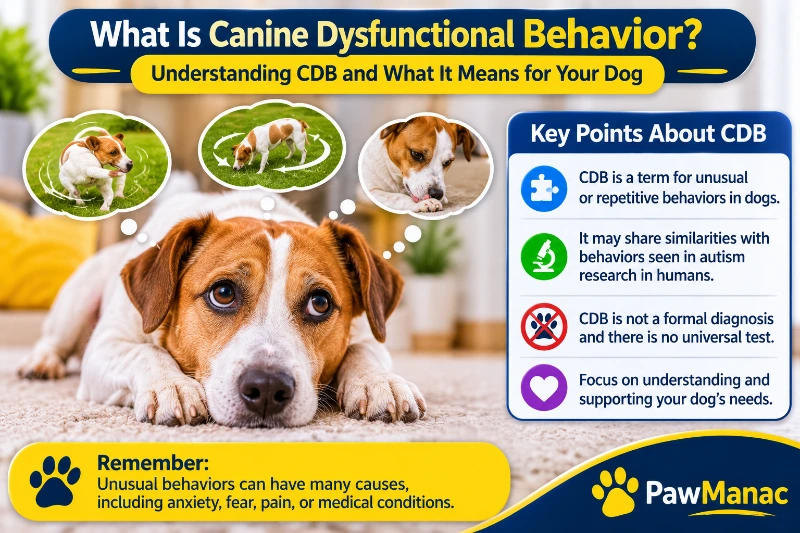
Canine dysfunctional behavior (CDB) is a term used in discussions of dogs that display certain unusual or repetitive behavioral patterns.
Researchers have explored whether some of these patterns share biological similarities with characteristics observed in humans with autism. One area of research has involved repetitive tail-chasing behavior in Bull Terriers.
However, CDB is not an established equivalent of human autism, and there is no universally accepted veterinary test or diagnostic checklist that confirms autism in dogs.
The most important thing for owners is to understand what their dog is experiencing rather than trying to assign a human diagnosis to its behavior.
What Are the Signs of Autism-Like Behavior in Dogs?
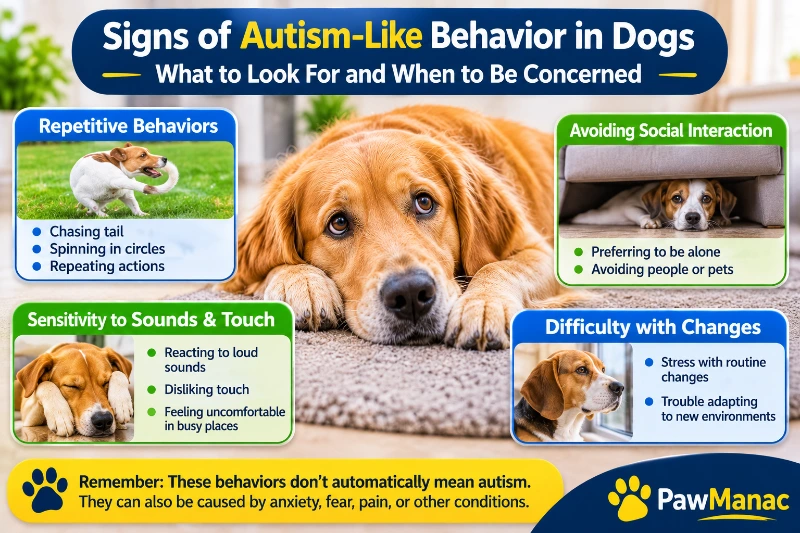
Dogs can display different behavioral patterns that may remind owners of autism-related characteristics in humans. However, these signs are not specific to autism and should be evaluated in the context of the dog’s overall health and environment.
1. Repetitive Behaviors
Repeated actions are among the most frequently discussed behaviors when people ask whether dogs can be autistic.
Some dogs repeatedly perform the same movement or activity even when there is no obvious reason to continue.
Examples include:
- Chasing their tails repeatedly.
- Walking in circles or spinning.
- Pacing along the same path.
- Repeatedly licking their paws or body.
- Chasing lights or shadows.
- Repeating the same movement for extended periods.
Occasional repetitive activities can be normal. For example, puppies may chase their tails during play.
Concern increases when the behavior becomes excessive, difficult to interrupt, causes injury, or interferes with normal activities.
Persistent repetitive behavior may be associated with canine compulsive disorder, anxiety, medical conditions, or other behavioral problems.
2. Avoiding Social Interaction
Some dogs show less interest in interacting with unfamiliar people or other animals.
They may prefer spending time alone, avoid approaching visitors, or move away when someone attempts to pet them.
However, not every dog enjoys social interaction equally. Some are naturally independent, cautious, or uncomfortable around unfamiliar people.
A dog that avoids social contact may also be experiencing fear, insufficient socialization, previous negative experiences, or pain.
Owners should avoid forcing their dogs into interactions. Allowing a dog to approach people and other animals at its own pace can help create a more comfortable environment.
3. Sensitivity to Sounds and Touch
Certain dogs react strongly to sounds, physical contact, or changes in their surroundings.
You can also learn more about how dogs see colours and understand their visual world.
For example, a dog may become uncomfortable when someone touches its paws, reacts to household appliances, or becomes distressed by sudden noises.
Possible reactions include:
- Hiding during loud sounds.
- Moving away when touched.
- Barking or whining unexpectedly.
- Becoming restless in busy environments.
- Showing discomfort around unfamiliar objects.
These reactions may resemble sensory sensitivities associated with autism in humans, but they can also occur with noise phobias, anxiety, fear, or physical discomfort.
If your dog suddenly becomes sensitive to touch, a veterinary examination is particularly important because pain can change how an animal responds to handling.
4. Difficulty Adjusting to Changes in Routine
Dogs often become comfortable with predictable routines. They may expect meals, walks, playtime, and bedtime at familiar times.
Some dogs become noticeably uncomfortable when their routine changes.
For example, your dog may become restless when you take a different walking route or when furniture is moved around the house.
A preference for routine is not necessarily a behavioral problem. However, excessive distress when small changes occur may indicate anxiety or difficulty coping with environmental changes.
Maintaining a consistent schedule and introducing changes gradually can help dogs feel more secure.
5. Limited Response to Social Cues
Dogs communicate through body language, facial expressions, sounds, and movement.
Some dogs may appear less responsive when their owners call their names, invite them to play, or attempt to interact with them.
However, a limited response does not automatically indicate an autism-like condition.
Possible explanations include:
- Hearing difficulties.
- Fear or anxiety.
- Lack of training.
- Distraction.
- Previous negative experiences.
- Medical or neurological conditions.
If your dog stops responding to familiar sounds or commands, schedule a veterinary checkup to investigate possible hearing or health problems.
6. Unusual Play Behavior
Play is an important part of a dog’s physical and social development.
Some dogs prefer playing alone rather than interacting with other dogs. Others repeatedly focus on one toy, perform the same activity, or show little interest in unfamiliar games.
These preferences do not necessarily indicate a problem.
Dogs have different personalities and play styles. Some enjoy energetic group activities, while others prefer quiet games with their owners.
It becomes more concerning when unusual play patterns are accompanied by distress, repetitive movements, social withdrawal, or difficulty performing normal daily activities.
Can Certain Dog Breeds Be More Likely to Show Autism-Like Behaviors?
There is no scientifically established list of dog breeds that are more likely to have autism.
However, researchers have investigated genetic influences on certain repetitive behaviors in dogs.
Bull Terriers are particularly interesting in this area because repetitive tail-chasing behavior has been studied in the breed.
Other breeds have also been associated with specific repetitive or compulsive behaviors. For example, tail chasing has been reported in German Shepherds, while flank sucking has been described in Doberman Pinschers.
These observations do not mean that these breeds have autism.
Genetics, early development, environment, stress, and individual health can all influence canine behavior.
Breed alone cannot determine whether a dog has a behavioral disorder.
What Causes Autism-Like Behaviors in Dogs?
There is no single confirmed cause of autism-like behavior in dogs. Different medical, genetic, environmental, and psychological factors can influence how a dog responds to its surroundings.
Understanding these possibilities helps owners avoid assuming that unusual behavior automatically means autism.
1. Genetic Factors
Genetics can influence a dog’s temperament, activity level, and susceptibility to certain behavioral conditions.
Some repetitive behaviors appear more frequently in particular breeds or family lines. Bull Terriers, for example, have been studied because of their tendency toward repetitive tail chasing.
Researchers have investigated possible biological similarities between certain canine behavioral patterns and human neurodevelopmental conditions. However, these findings do not establish that dogs inherit autism in the same way humans do.
2. Anxiety and Fear
Anxiety is a common reason dogs develop unusual behavioral patterns.
A dog experiencing anxiety may repeatedly pace, hide, bark, lick its body, or avoid unfamiliar people and situations.
Common anxiety triggers include:
- Loud noises and thunderstorms.
- Separation from owners.
- Unfamiliar environments.
- Changes in household routines.
- Previous traumatic experiences.
- Interactions with unfamiliar animals.
Some anxiety-related behaviors may look similar to autism-associated characteristics, but their underlying causes can be different.
3. Early Socialization Experiences
A dog’s early experiences can influence how it responds to people, animals, and unfamiliar environments.
Puppies that have limited positive exposure to different sounds, people, surfaces, and everyday situations may become fearful or uncomfortable as they grow older.
Early socialization does not guarantee a particular personality, but positive and gradual experiences can help puppies develop confidence.
A dog that avoids social interaction may simply need patience, appropriate training, and opportunities to explore its surroundings safely.
4. Neurological and Medical Conditions
Some medical conditions can affect a dog’s movement, awareness, communication, and responses to its environment.
Pain, hearing problems, neurological disorders, and other health issues may produce behavioral changes that owners mistake for psychological or developmental differences.
For example, a dog that suddenly starts avoiding touch may be experiencing joint pain or another physical problem.
Veterinarians therefore need to investigate potential medical causes before identifying a behavioral disorder.
Can Dogs Have a Condition Similar to Autism?
Although autism is not an established canine diagnosis, researchers have investigated certain behavioral conditions that share some observable characteristics with autism in humans.
Two important areas are canine compulsive disorder and abnormal repetitive behaviors.
Canine Compulsive Disorder
Canine compulsive disorder involves repetitive behaviors that become excessive, difficult to interrupt, or disruptive to normal life.
Examples include:
- Persistent tail chasing.
- Excessive licking.
- Repeated spinning.
- Shadow chasing.
- Repetitive pacing.
- Repeated snapping at invisible objects.
These behaviors may begin as ordinary activities but become more frequent or intense over time.
For example, a dog may initially lick its paws because of irritation. If the behavior continues excessively, it may develop into a compulsive pattern.
Canine compulsive disorder is not the same as human autism or human obsessive-compulsive disorder, although some behavioral features may appear similar.
Abnormal Repetitive Behaviors
Abnormal repetitive behaviors are actions that occur repeatedly without an obvious practical purpose.
Veterinary researchers study these behaviors because they may be associated with stress, frustration, medical conditions, or differences in brain function.
A 2014 review published in Veterinary Clinics of North America: Small Animal Practice discussed repetitive behaviors in dogs and cats and highlighted the importance of investigating underlying medical causes.
A later 2023 review also proposed a structured approach to evaluating repetitive behaviors by considering medical, environmental, and temperament-related factors.
These studies demonstrate why repetitive behavior should be investigated rather than automatically labeled as autism.
How Do Veterinarians Identify Autism-Like Behaviors in Dogs?
There is currently no recognized veterinary diagnostic test that confirms autism in dogs.
Instead, veterinarians investigate the specific behaviors, their frequency, when they started, and how they affect the dog’s daily life.
The evaluation usually involves several steps.
1. Reviewing the Dog’s Medical History
The veterinarian may ask about your dog’s age, breed, previous health conditions, medication, and behavioral development.
They may also want to know whether the behavior appeared suddenly or developed gradually.
This information helps identify possible connections between physical health and behavioral changes.
2. Performing a Physical Examination
A physical examination helps identify conditions that may influence behavior.
Depending on the dog’s symptoms, the veterinarian may recommend additional investigations involving hearing, vision, neurological function, pain, or other medical concerns.
For example, repeated paw licking may be associated with skin irritation, allergies, infection, or pain rather than a behavioral condition.
3. Observing Behavioral Patterns
The veterinarian may ask owners to describe or record specific behaviors.
Useful information includes:
- What behavior does the dog repeat?
- How frequently does it happen?
- How long does each episode last?
- What situations trigger it?
- Can the dog stop when distracted?
- Does the behavior cause distress or injury?
- Has the behavior become more frequent?
Videos recorded at home can help veterinarians understand behaviors that may not appear during an appointment.
4. Referring to a Veterinary Behaviorist
If the behavior is persistent, severe, or difficult to manage, your veterinarian may recommend a board-certified veterinary behaviorist.
These specialists evaluate complex behavioral problems and can develop treatment plans based on the dog’s individual needs.
Their goal is not to confirm human autism in a dog but to understand the behavior and identify appropriate ways to improve the animal’s quality of life.
How to Help a Dog Showing Autism-Like Behaviors
If your dog displays repetitive actions, avoids social contact, or becomes overwhelmed by everyday situations, there are several ways to support it.
The best approach depends on the underlying cause and should be discussed with a veterinarian when behaviors are persistent or concerning.
Create a Predictable Daily Routine
Dogs often feel more comfortable when they know what to expect.
Try maintaining consistent times for meals, walks, exercise, and rest.
Avoid making unnecessary sudden changes to your dog’s environment. When changes are unavoidable, introduce them gradually.
A predictable routine can help reduce stress for dogs that struggle with unfamiliar situations.
Provide a Quiet and Comfortable Space
Some dogs need a calm place where they can rest without constant interruptions.
Consider creating a comfortable area with:
- A suitable dog bed.
- Fresh drinking water.
- Familiar toys.
- Reduced household noise.
- Enough space to relax.
Allow your dog to use this space whenever it needs a break.
Do not force it to interact with visitors or other animals when it is uncomfortable.
Use Positive Reinforcement Training
Reward-based training can help dogs develop confidence and learn alternative behaviors.
For example, if your dog becomes uncomfortable around unfamiliar people, reward calm behavior at a comfortable distance.
Short training sessions are often easier for dogs than long, demanding activities.
Avoid shouting, punishment, or forcing a dog to face situations that cause fear. These approaches can increase stress and make behavioral problems worse.
Introduce New Experiences Gradually
Dogs that react strongly to unfamiliar environments may benefit from gradual exposure.
Start with situations that your dog can comfortably tolerate.
For example, if your dog becomes nervous around other dogs, begin by observing calm dogs from a distance rather than immediately introducing direct contact.
Reward relaxed behavior and increase exposure gradually.
If your dog shows signs of distress, increase the distance or reduce the intensity of the situation.
Provide Mental and Physical Enrichment
Appropriate activities can help reduce boredom and support healthy behavior.
Depending on your dog’s abilities and preferences, try:
- Food puzzle toys.
- Sniffing games.
- Short training exercises.
- Gentle walks.
- Interactive play.
- Safe opportunities to explore new environments.
Choose activities that your dog enjoys rather than forcing it to participate in unfamiliar games.
Follow Veterinary Treatment Recommendations
If your veterinarian identifies anxiety, compulsive behavior, pain, or another medical condition, follow the recommended treatment plan.
Depending on the diagnosis, treatment may involve behavioral modification, environmental changes, medication, or a combination of approaches.
Never give your dog human medication or supplements intended for autism without veterinary guidance.
When Should You Worry About Your Dog’s Behavior?
Not every unusual behavior requires medical attention. Dogs have different personalities, habits, and preferences.
However, certain changes deserve a veterinary assessment.
| Behavior | Why It Matters |
| Sudden social withdrawal | May indicate pain, illness, or fear |
| Excessive tail chasing | Could be associated with compulsive behavior |
| Persistent paw licking | May indicate allergies, irritation, or pain |
| Strong reactions to touch | Could indicate physical discomfort |
| Repeated pacing | May be associated with stress or medical problems |
| Sudden changes in responsiveness | May require hearing or neurological assessment |
| Self-injury during repetitive behavior | Requires prompt veterinary attention |
Seek veterinary advice if a behavior is new, worsening, difficult to interrupt, or interfering with eating, sleeping, exercise, or normal interaction.
If your dog experiences seizures, severe disorientation, sudden weakness, or serious self-injury, seek prompt veterinary care.
Can Dogs Be Trained to Manage Autism-Like Behaviors?
Dogs displaying unusual or repetitive behaviors can often benefit from structured training and behavioral support.
Although training cannot establish or cure autism in dogs, it can help address specific difficulties.
For example, reward-based training can encourage alternative behaviors, improve confidence, and teach dogs to respond more comfortably to everyday situations.
A professional trainer experienced in reward-based methods may help with basic training, while complex or severe behavioral problems should be evaluated by a veterinary behaviorist.
The important thing is to understand what triggers the behavior and choose an approach that supports the dog’s emotional and physical well-being.
Frequently Asked Questions About Autism in Dogs:
Conclusion:
So, can dogs be autistic? Although dogs can display behaviors that resemble certain characteristics of autism in humans, autism spectrum disorder is not currently an established veterinary diagnosis for dogs.
Some dogs show repetitive movements, unusual social responses, sensitivity to their surroundings, or difficulty adjusting to changes. These behaviors may be related to canine compulsive disorder, anxiety, genetics, medical conditions, or environmental factors.
Instead of labeling a dog as autistic, owners should focus on understanding its individual needs and identifying the reasons behind unusual behavior.
With veterinary guidance, positive reinforcement, a predictable routine, and an appropriate environment, dogs experiencing behavioral difficulties can receive the support they need to live comfortable and fulfilling lives.






One Comment