
Can Dogs Eat Chocolate?
Can Dogs Eat Chocolate? No. Chocolate is one of the most common causes of dog poisoning, and it is the question vets and poison helplines hear most around holidays like Easter, Halloween, and Christmas. Unlike many human foods that are simply unhealthy for dogs, chocolate contains a compound dogs cannot process properly, and even a modest amount can make a small dog seriously ill.
The good news is that most cases caught early end well. What matters is knowing which types of chocolate are dangerous, how much is too much for your dog’s size, and exactly what to do in the first hour after your dog gets into it.
The quick answer:
No — dogs should never eat chocolate, in any form or any amount. Chocolate contains theobromine, a stimulant dogs break down far more slowly than people do, so it builds up in their system and can damage the heart, gut, and nervous system. Dark and baking chocolate are the most dangerous, but no type is safe. If your dog has eaten chocolate, skip the wait-and-see approach and call your vet or the ASPCA Animal Poison Control Center at (888) 426-4435.
Chocolate verdict at a glance:
| Type of chocolate | Verdict | Why |
|---|---|---|
| Dark chocolate | Never — most dangerous common type | Very high in theobromine; a small bar can poison a small dog |
| Baking chocolate and cocoa powder | Never — the most concentrated of all | The highest theobromine per ounce of any chocolate product |
| Semisweet chocolate chips | Never | Nearly as concentrated as dark chocolate |
| Milk chocolate | Never | Lower theobromine, but still toxic — and dogs tend to eat a lot of it |
| White chocolate | Avoid | Only trace theobromine, but the fat and sugar can trigger stomach upset and pancreatitis |
| Chocolate cake, cookies, and ice cream | Avoid | Contain real chocolate plus sugar and fat; the darker the bake, the higher the risk |
In this guide:
- Why chocolate is toxic to dogs
- Which types of chocolate are most dangerous
- How much chocolate is dangerous, by dog size
- Signs of chocolate poisoning and when they appear
- What to do if your dog ate chocolate
- How to keep chocolate away from your dog
Why chocolate is toxic to dogs:
Chocolate contains two stimulants from the same family: theobromine and caffeine. Together they are called methylxanthines. People metabolize theobromine quickly, which is why a chocolate bar gives us nothing worse than a pleasant buzz. Dogs process it much more slowly — theobromine can stay in a dog’s system for many hours — so it accumulates to toxic levels instead of clearing.
As theobromine builds up, it overstimulates the body. The gut reacts first, then the heart speeds up and becomes irregular, and in severe cases the nervous system is affected, causing tremors and seizures. The fat and sugar in chocolate add a second problem: a rich, fatty load can set off pancreatitis, a painful inflammation of the pancreas, a day or two later.
This is also why chocolate sits at the top of the “never feed” list in our guide to what human foods can dogs eat — it is not a gray-area food. There is no safe serving size.
Which types of chocolate are most dangerous:
The darker and less sweet the chocolate, the more theobromine it contains per ounce, and the smaller the amount needed to poison a dog. From most to least dangerous:
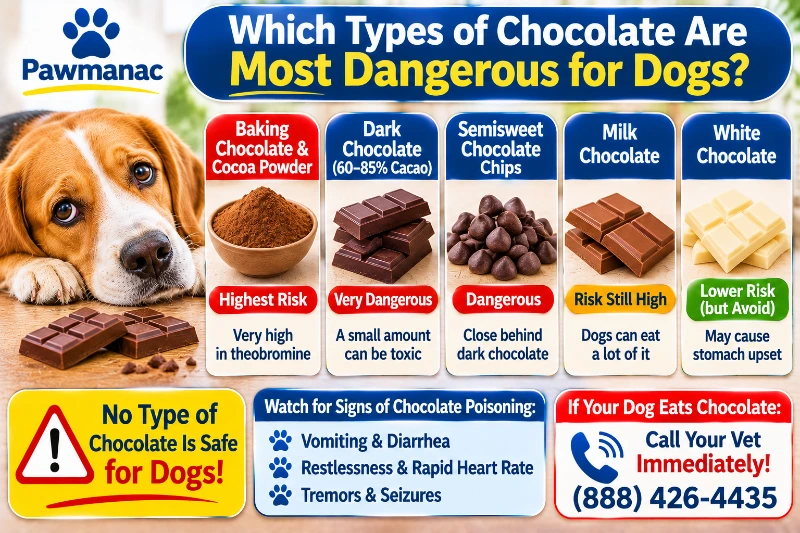
- Baking chocolate and cocoa powder are the worst offenders. Unsweetened baking chocolate carries roughly ten times the theobromine of milk chocolate, so even a licked spoon or a spilled dusting of cocoa powder matters for a small dog.
- Dark chocolate (60–85% cacao) is next. One standard dark bar can be a genuine emergency for a dog under 20 pounds.
- Semisweet chocolate chips are close behind dark chocolate, and they are exactly what sits open in many kitchen cupboards.
- Milk chocolate is the least concentrated of the true chocolates, but it is the one dogs most often steal in quantity — a whole bag of milk chocolate candies is still a vet visit.
- White chocolate contains only trace theobromine and rarely causes poisoning, but it is loaded with fat and sugar, so it can still cause vomiting, diarrhea, and pancreatitis. Treat it as off-limits too.
How much chocolate is dangerous:
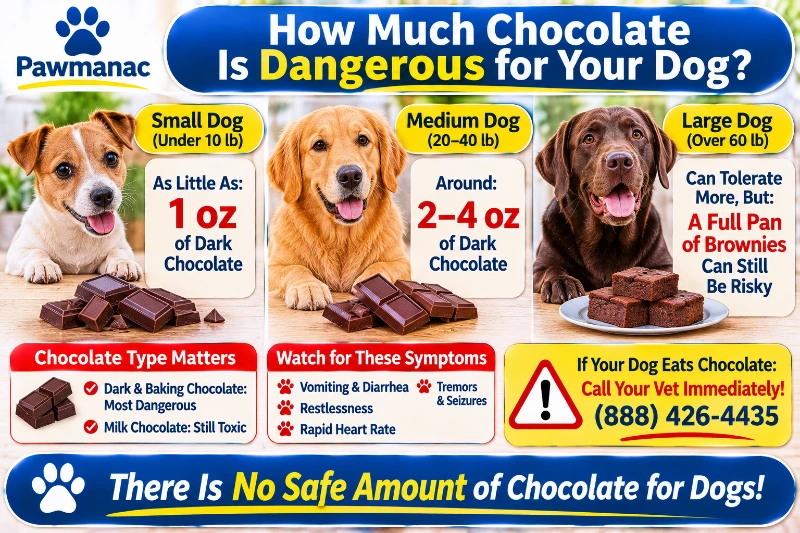
There is no safe dose of chocolate for a dog — but toxicity is dose-dependent, which means the risk turns on two numbers: how much theobromine the dog ate, and how much the dog weighs. As a rough guide, mild signs can appear around 20 mg of theobromine per kilogram of body weight, heart signs around 40–50 mg/kg, and seizures at 60 mg/kg and above.
In practical terms:
- A small dog (under 10 lb) can be poisoned by a single ounce of dark chocolate or a few squares of a baking bar. For small dogs, treat any chocolate theft as an emergency.
- A medium dog (20–40 lb) is at risk from a couple of ounces of dark chocolate, or a large quantity of milk chocolate such as a whole candy bar or a bag of foil-wrapped pieces.
- A large dog (over 60 lb) tolerates more, but a full pan of brownies, a box of dark chocolates, or a bag of cocoa powder can still poison them.
Do not try to do this math alone while your dog is drooling on the kitchen floor. Tell the vet or the poison helpline the type of chocolate, your best estimate of how much is missing, and your dog’s weight — that is exactly the information they need to tell you whether to come in.
Signs of chocolate poisoning:
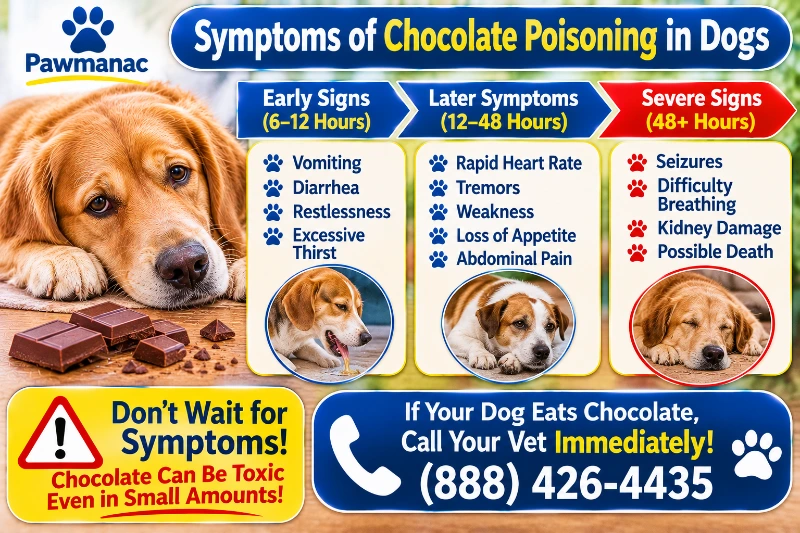
Signs usually begin 6 to 12 hours after eating, because the theobromine takes time to absorb and accumulate. That delay fools many owners into thinking their dog got away with it. Watch for:
- Vomiting and diarrhea, sometimes with chocolate visible in it
- Restlessness, pacing, and an inability to settle
- Excessive thirst and increased urination
- Panting and a racing or pounding heartbeat
- Drooling and abdominal discomfort
- In severe cases: muscle tremors, stiffness, and seizures
Symptoms can last up to 72 hours because theobromine clears a dog’s body so slowly. A dog that seems fine at bedtime can be unwell the next morning, which is why vets prefer to hear from you early rather than late.
What to do if your dog ate chocolate:
Act quickly, and do not wait for symptoms. Follow the steps on our emergency page, what to do if your dog ate something toxic, and in the meantime:
- Remove access. Take the remaining chocolate away and, if you can, work out how much is missing — wrapper and all. Keep the packaging; the label tells the vet the type and cocoa percentage.
- Call your vet or the ASPCA Animal Poison Control Center at (888) 426-4435 (a consultation fee may apply). Give them the type of chocolate, the estimated amount, your dog’s weight, and when it happened.
- Never induce vomiting unless a vet tells you to. Home remedies like salt water are dangerous, and vomiting is only helpful within a short window and only in the right cases. This is the same rule that applies to other kitchen emergencies, such as when a dog gets hold of chicken bones — the wrong home fix can do more harm than the food itself.
- At the clinic, treatment may include safely inducing vomiting, giving activated charcoal to bind the theobromine still in the gut, IV fluids, and medication to control heart rate, tremors, or seizures. Most dogs treated early go home within a day or two.
How to keep chocolate away from your dog:
Chocolate poisoning is almost always a storage accident, not a feeding decision — most owners already know not to share it, the same way they know a fatty treat like bacon is a sometimes food at best. The risk is the chocolate your dog can reach:
- Store baking chocolate and cocoa powder in closed containers on high shelves, not on counters — counter-surfing is how most cases start.
- Keep holiday chocolate out of reach: Easter eggs, advent calendars, Halloween candy bowls, and chocolate coins are the classic culprits, and foil wrappers get swallowed along with the chocolate.
- Never leave gift boxes of chocolate under a tree or on a coffee table, and warn guests — especially children — not to share.
- Keep purses and school bags zipped and off the floor; dogs are excellent at finding the one candy bar inside.
Frequently Asked Questions:
The Bottom Line:
Chocolate is never safe for dogs — not dark, not milk, not a little square as a treat. The darker the chocolate and the smaller the dog, the greater the danger. Store it like medicine, and if your dog eats any, call your vet or ASPCA Poison Control at (888) 426-4435 straight away rather than waiting for signs.
Sources:
- American Kennel Club (AKC) — guidance on chocolate toxicity in dogs
- ASPCA Animal Poison Control Center — chocolate poisoning overview and hotline
- Merck Veterinary Manual — chocolate toxicosis in animals
- Pet Poison Helpline — chocolate toxicity in dogs and cats
- VCA Hospitals — chocolate poisoning in dogs