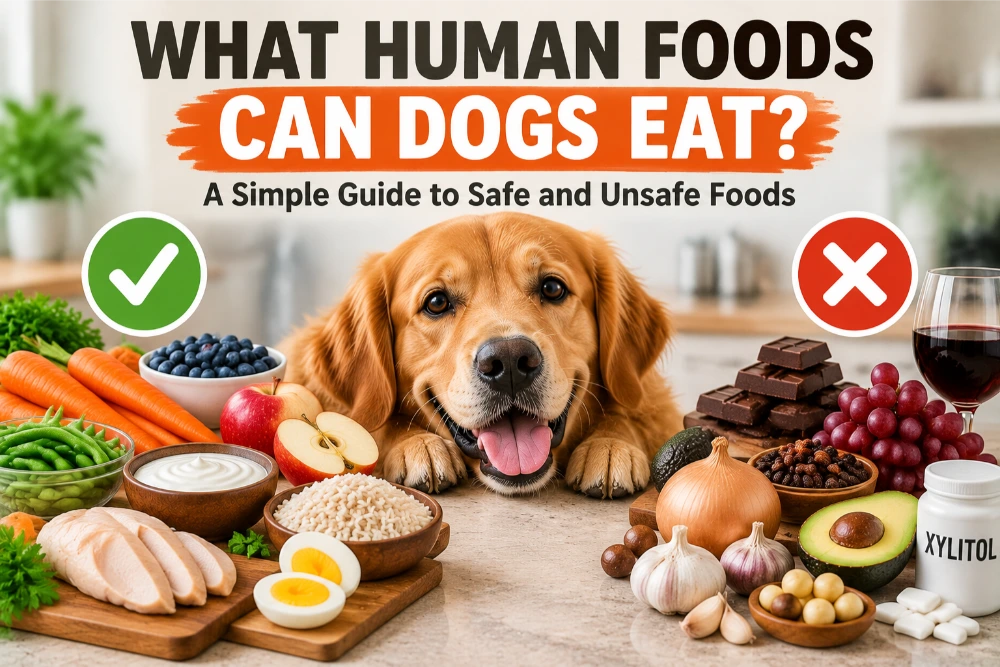
What Human Foods Can Dogs Eat? A Simple Guide to Safe and Unsafe Foods
You are cooking dinner. Your dog sits next to you with big, hopeful eyes. Can you share a bite?
Sometimes yes, and sometimes it could put your dog in the emergency room. The tricky part is that foods that are healthy for people can be dangerous for dogs.
So, what human foods can dogs eat? This guide gives you a clear answer. You will learn which human foods are safe, which ones to never give, how much is okay for your dog’s size, and what to do in an emergency.
In this guide:
- The quick answer
- 6 rules to follow before you share food
- Human foods dogs can eat
- More foods people ask about (quick answers)
- How much can your dog have? Treat limits by size
- Calories in common treats
- Human foods dogs must never eat
- What to do if your dog eats something dangerous
- Frequently asked questions
The Quick Answer:
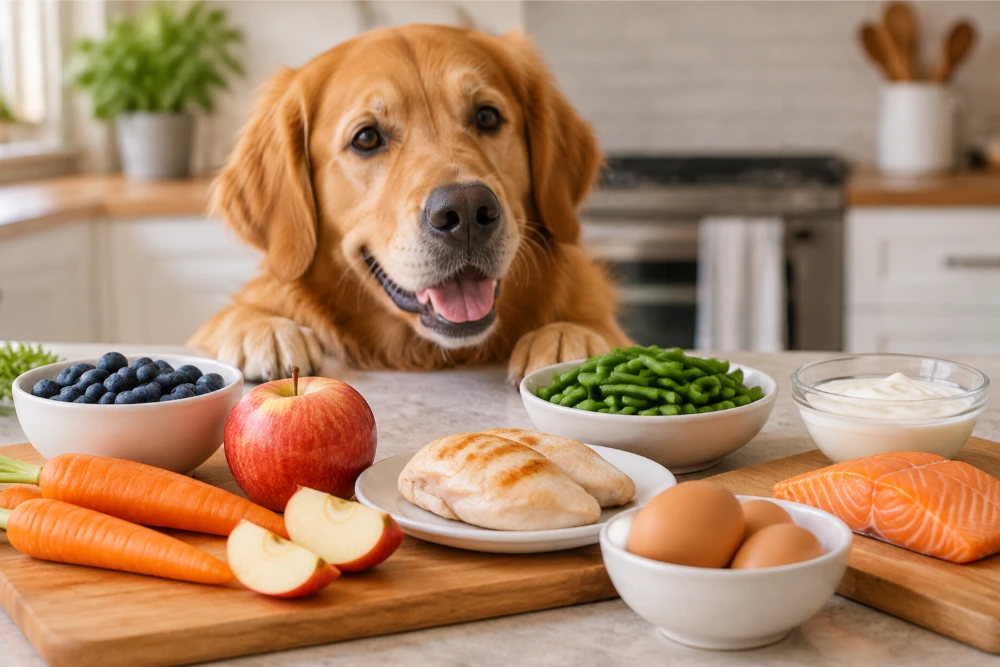
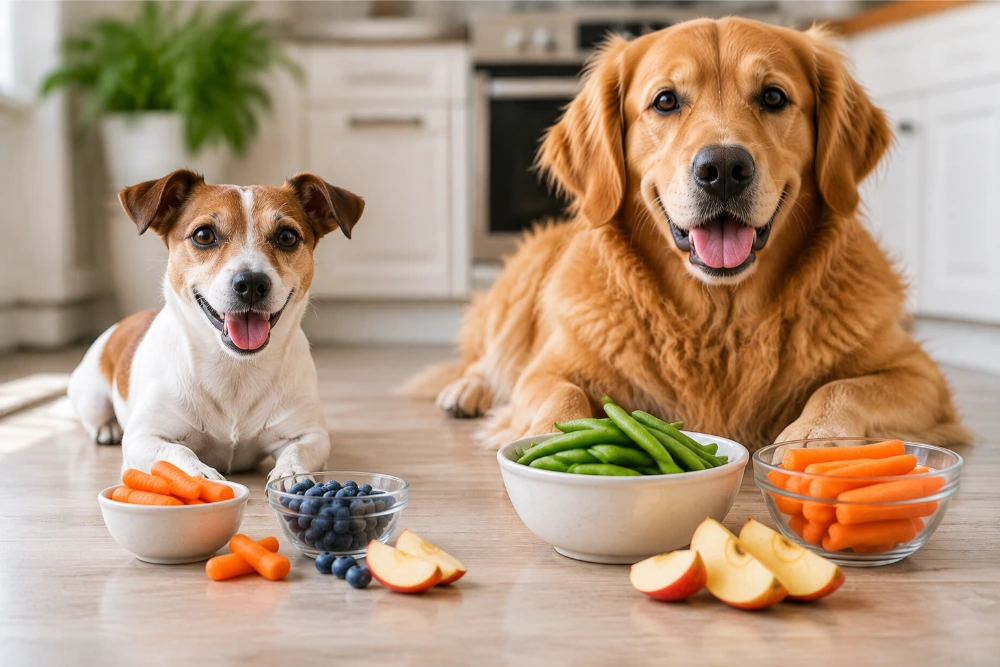
Yes, dogs can eat some human foods. Plain carrots, green beans, cooked chicken, cooked eggs, plain yogurt, and blueberries are good examples. Always give them in small amounts, plain, and without salt or spices.
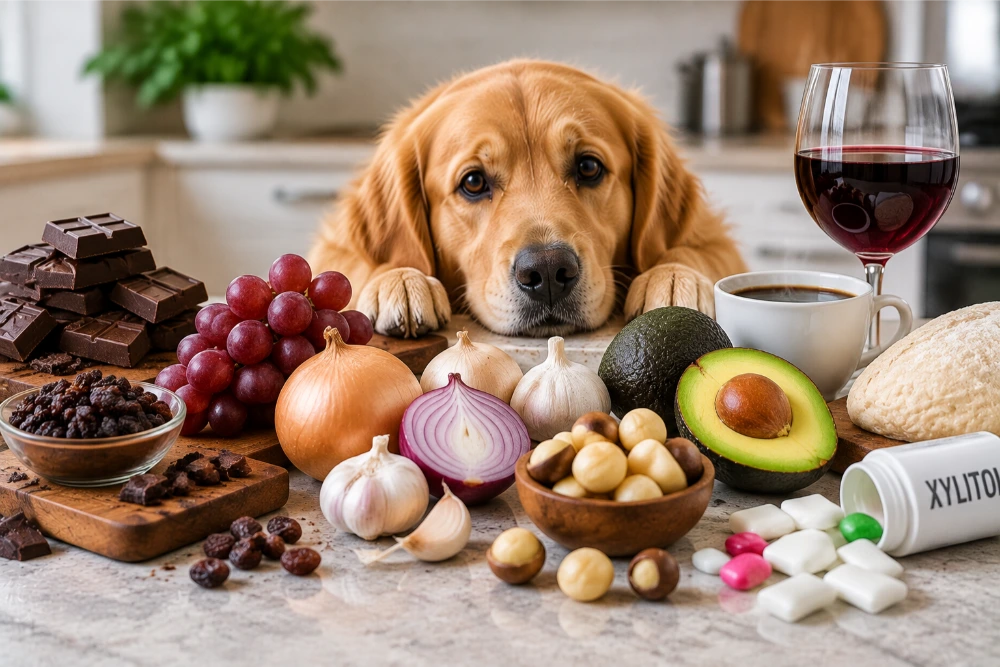
No, dogs must never eat some human foods. Chocolate, grapes, raisins, onions, garlic, macadamia nuts, alcohol, and anything with xylitol can make a dog very sick.
Here is the short version:
| Safe in small amounts (plain) | Never give |
| Carrots, green beans, peas | Chocolate |
| Apples (no seeds), bananas, blueberries | Grapes and raisins |
| Cooked chicken, turkey, salmon | Onions, garlic, chives |
| Cooked eggs | Macadamia nuts |
| Plain yogurt | Anything with xylitol |
| Plain rice, plain oatmeal | Alcohol |
| Peanut butter (xylitol-free) | Avocado, cherries, coffee |
Get the free printable fridge chart
6 Rules to Follow Before You Share Any Human Food:
Even a safe food can cause trouble if you serve it the wrong way. Follow these rules every time.
- Keep it plain. No salt, sugar, butter, oil, or spices. Seasoning can upset your dog’s stomach, and some seasonings, like garlic and onion powder, are toxic.
- Cook it when needed. Meat, fish, and eggs should be fully cooked. Raw or undercooked food can carry germs and parasites. UC Davis’s veterinary nutrition service lists raw animal products among the foods to avoid.
- Cut it small. Chop food into bite-size pieces so your dog does not choke.
- Start with a tiny amount. Give one new food at a time. Wait a day to see how your dog reacts. If you see vomiting or diarrhea, stop.
- Follow the 10% rule. Veterinary teams at NC State, UC Davis, and Tufts all say treats and extra foods should be no more than 10% of your dog’s daily calories. The other 90% should come from a complete, balanced dog food. See the size chart below.
- Check labels for xylitol. This sweetener is very dangerous for dogs and hides in many foods (more on this below).
What Human Foods Can Dogs Eat Safely?
These foods are safe for most healthy dogs when you follow the rules above. Remember, “safe” does not mean “unlimited.”
Fruits:
Fruit is a sweet treat, but it has natural sugar. Keep portions small.
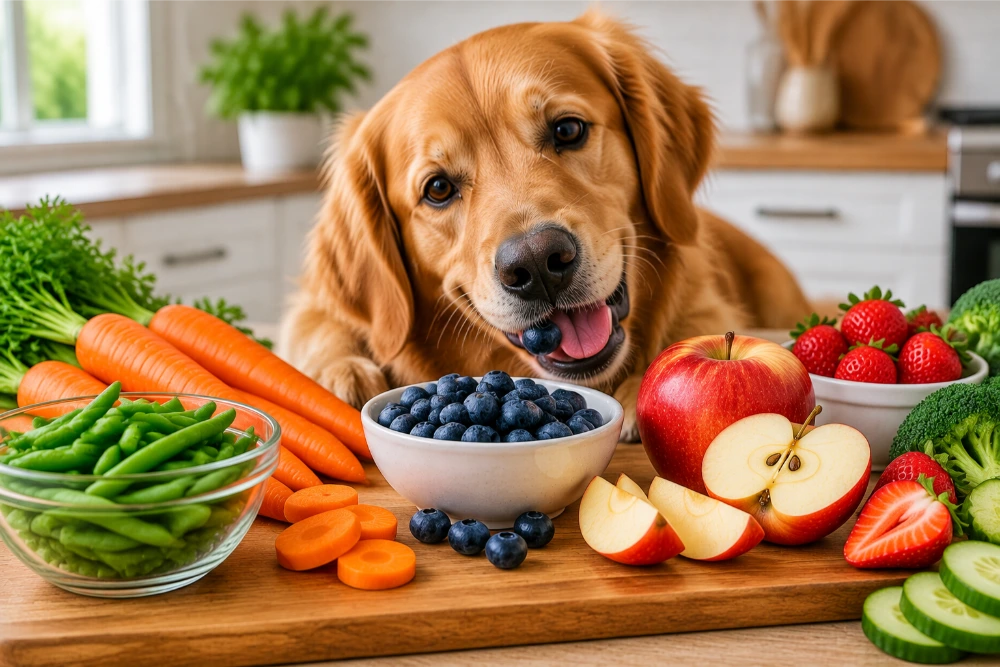
- Apples: Crunchy and full of fiber. Remove the core and seeds first. NC State lists apple seeds as toxic to pets.
- Bananas: Soft, sweet, and easy to chew. Give a few slices, not the whole banana.
- Blueberries: Small and a good training treat. They add up faster than you might think (see the calorie section).
- Strawberries: Fine in small pieces. You can freeze them for a cool summer snack.
- Watermelon: A juicy treat. Take out the rind and seeds first.
Vegetables:
Vegetables are often the best human food for dogs because they are low in calories.
- Carrots: Crunchy and low in calories. Raw or cooked is fine, cut small.
- Green beans: A great low-calorie snack, especially for dogs who need to lose weight. If you use canned ones, rinse them to remove extra salt.
- Peas: Small and easy to eat.
- Pumpkin puree: Plain pumpkin (not pie filling) is gentle on the stomach.
- Broccoli and cucumbers: Fine in small pieces.
Meat and Fish:
Dogs are happy to eat meat, but how you cook it matters.
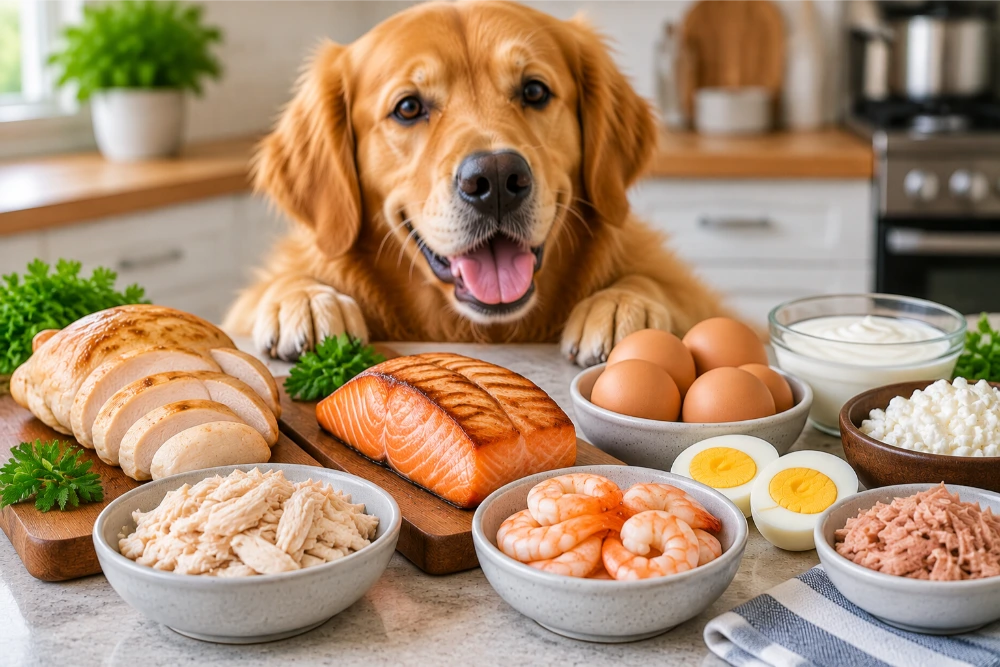
- Chicken and turkey: Serve plain and cooked, with skin and extra fat removed. Always remove the bones. Cooked poultry bones can splinter and cut a dog’s insides.
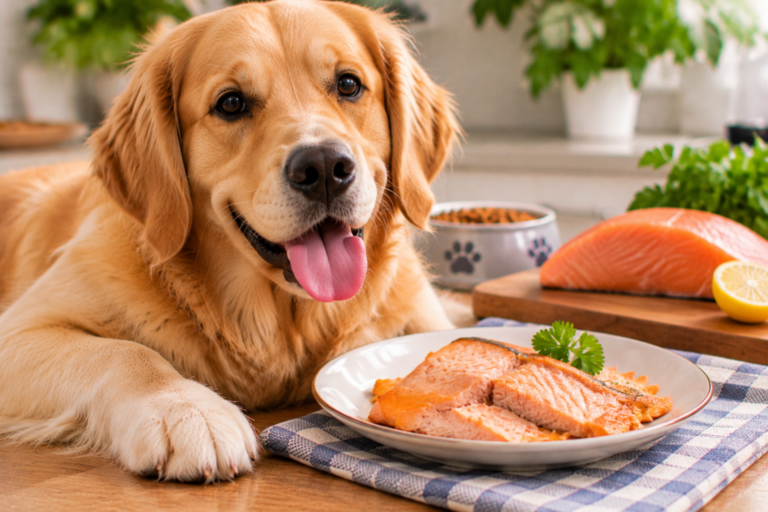
- Salmon: A good source of protein and healthy fats. It must be fully cooked and boneless. Raw or undercooked salmon can carry a parasite that can make dogs very sick. Serve fish now and then, not every day.
- Tuna: Fine in small amounts. Choose tuna packed in water, not oil. Tuna has some mercury, so do not make it a daily food.
- Shrimp: An occasional treat if it is fully cooked and the shell, tail, and legs are removed.
Ham and bacon: These are very salty and fatty. A tiny bite once in a while will not hurt most dogs, but they are not good for regular treats.
Eggs:
Cooked eggs are safe for dogs. They are full of protein. Always cook them all the way. Raw egg white can lead to a vitamin shortage called biotin deficiency, and raw eggs can carry germs.
Dairy:
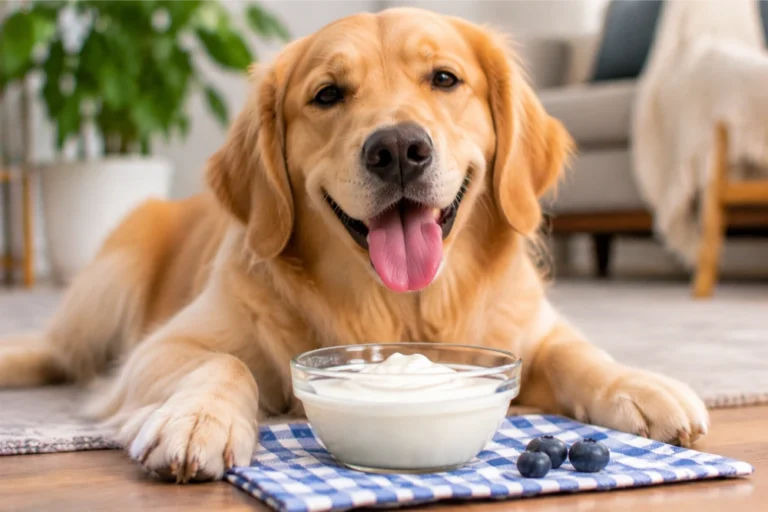
- Plain yogurt: Many dogs can eat it, and it may be good for digestion. Avoid yogurt with added sugar and never give yogurt with artificial sweeteners.
- Cheese: A small piece is fine if your dog handles dairy well. Cheese is high in fat, so lower-fat types like mozzarella or cottage cheese are better.
- Milk: Some dogs cannot digest milk well. Water is the safer choice.
Grains, Nuts, and Other Foods:
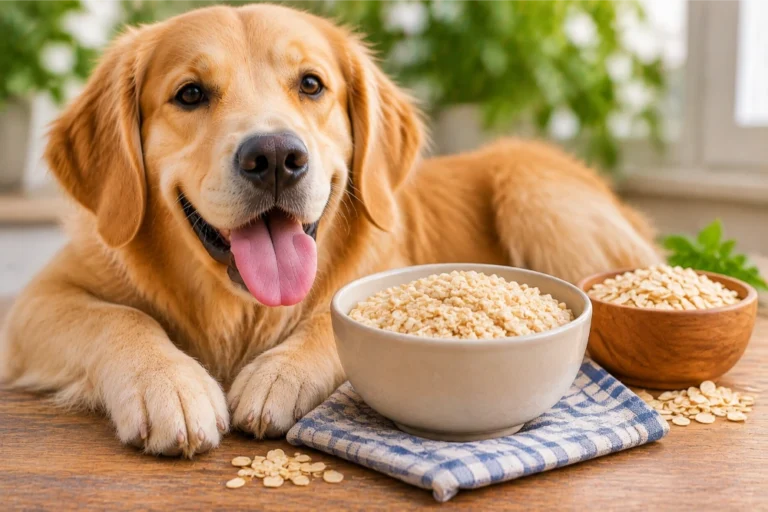
- Plain rice and plain oatmeal: Cooked and unseasoned, they are easy on the tummy.
- Peanut butter: A favorite dog treat. Pick unsalted peanut butter and check the label for xylitol first. It is also very high in calories, so use a small amount.
- Popcorn: Only air-popped, with no salt or butter. Un-popped kernels can be a choking risk.
- Peanuts and cashews: A few unsalted ones are okay. Too many add too much fat.
- Corn: Fine off the cob. The cob itself can block your dog’s intestines.
More Foods People Ask About (Quick Answers):
Here are quick answers for other foods dog owners search for. Each one has its own full guide.
| Food | Verdict | Quick note |
| Olives | Tiny amounts | Plain, pitted, and unsalted only. Skip stuffed, brined, or flavored olives. |
| Pomegranate | Small amounts | A few seeds are fine. Skip the peel and any juice with added sugar. |
| Ginger | Small amounts | A tiny amount of fresh ginger is fine. Skip ginger candy and ginger drinks, which have sugar. |
| Brussels sprouts | Small amounts | Plain and cooked. Too many can cause gas. |
| Radishes | Small amounts | Plain and sliced small. The sharp taste upsets some dogs’ stomachs. |
| Beets | Small amounts | Plain and cut small. Skip pickled beets, which have salt, sugar, and spices. |
| Edamame | Small amounts | Shelled and plain, with no salt. |
| Bell peppers | Small amounts | Plain, seeds removed, cut small. Skip hot peppers, which can upset the stomach. |
| Pecans | Avoid | High in fat, and pecans can grow mold that makes dogs sick. |
How Much Can Your Dog Have? Treat Limits by Size:
The 10% rule is easy to say and hard to picture. Your dog’s daily treat limit is 10% of their daily calories. Smaller dogs have a much smaller limit than most people expect.
| Dog size | Average calories per day | Maximum treat calories per day |
| 10 lb dog | About 300 | About 30 |
| 75 lb dog | About 1,400 | About 140 |
These are averages from Tufts University’s veterinary nutrition team. Your dog may need more or less depending on age, weight, and activity. Ask your vet for your dog’s real number.
What 30 calories of treats looks like
- About 6 baby carrots (around 5 calories each)
- About 1 cup of green beans
- About 35 blueberries (25 berries is roughly 20 calories)
Now compare that with peanut butter. One tablespoon has about 95 calories. For a 10 lb dog, that is more than three times the whole day’s treat limit. This is why vets often recommend vegetables for dogs who need to lose weight.
How Many Calories Are in These Treats?
A treat can look small but still pack a lot of calories. This table shows the calories in just one gram of each food. The numbers come from veterinary nutrition sources like the NC State Veterinary Hospital and Tufts University, and they are approximate.
| Food | Calories per gram (approximate) |
| Cucumber | 0.15 |
| Watermelon | 0.30 |
| Green beans | 0.31 |
| Carrots | 0.41 |
| Blueberries | 0.5 |
| Chicken breast (cooked) | 1.65 |
| Egg | 2.0 |
| Provolone cheese | 3.8 |
| Smooth peanut butter | 6.0 |
What this means: A spoonful of peanut butter has far more calories than the same weight of green beans. If your dog needs to lose weight, pick the low-calorie foods at the top of the table.
Values vary with how a food is prepared. For exact numbers, you can look up any food in the USDA FoodData Central database (fdc.nal.usda.gov).
Human Foods Dogs Must Never Eat:
Keep these away from your dog at all times. Some can cause serious illness, and a few can be deadly.
The Most Dangerous Foods
- Chocolate: It has chemicals called theobromine and caffeine that dogs cannot handle. Dark chocolate is the worst, but all types are unsafe. It can cause vomiting, shaking, seizures, and heart problems.
- Grapes and raisins: These can cause kidney failure in some dogs. Not every dog reacts, but you cannot know which ones will, so never take the chance. This also includes sultanas and currants.
- Onions, garlic, and chives: They damage a dog’s red blood cells and can cause anemia (a low blood count). Signs can show up days later, so keep watching your dog even if they seem fine at first.
- Xylitol: This sugar substitute is found in some gum, candy, baked goods, and even some peanut butters. It can drop a dog’s blood sugar fast and harm the liver. Xylitol can also be listed as birch sugar or wood sugar. “Sugar alcohol” on a label is a broad group, so look for xylitol by name in the ingredients, and skip the product if you are not sure.
- Macadamia nuts: They can cause weakness, vomiting, shaking, and a high body temperature.
- Alcohol: Even small amounts can seriously harm a dog’s liver and brain.
- Yeast dough: Raw dough can swell in the stomach and cause serious problems.
Foods That Are Not Safe or Can Upset the Stomach
- Avocado, cherries, peach and plum pits: The NC State list marks these as toxic to pets. Pits can also block the gut.
- Coffee, tea, and caffeine: Caffeine is dangerous for dogs.
- Cooked bones: They splinter and can cut or block the intestines. This can need emergency surgery.
- Almonds: They are hard to chew and can block the throat. Salted ones are worse.
- Cinnamon: It can irritate a dog’s mouth and stomach, and breathing in the powder can cause coughing.
- Ice cream: Too much sugar, and many dogs cannot digest the milk.
Salty, spicy, fatty, or fried foods: These can cause vomiting, diarrhea, and in some dogs a painful pancreas problem.
What to Do If Your Dog Eats Something Dangerous
Stay calm and act fast.
- Take the food away and check your dog’s mouth for leftovers.
- Gather the facts. Keep the package or note what they ate, how much, and when. Know your dog’s weight.
- Call your vet or a pet poison helpline right away. Do not wait for signs to show up. Some poisons, like garlic and onion, take days to show.
- Follow the advice you are given. Do not make your dog vomit unless a vet tells you to.
- Go to an emergency vet immediately if your dog has seizures, collapses, or has trouble breathing.
Warning signs to watch for: vomiting, diarrhea, drooling, shaking, weakness, very tired behavior, trouble walking, pale gums, or swollen belly. If you see any of these, call a vet at once.
Simple Tips for Sharing Food Safely
- Use human food as a treat or training reward, not as a meal.
- Never feed from the table. It teaches dogs to beg, and it makes it hard to know what they ate.
- Keep trash cans and counters out of reach.
- Tell kids and guests the rules, so nobody sneaks your dog a grape or a piece of chocolate.
- Dogs with allergies, a sensitive stomach, kidney problems, or diabetes may need special diets. Ask your vet first.
- Puppies have small stomachs. Use even smaller portions, and ask your vet before adding new foods.
Frequently Asked Questions:
The Bottom Line:
Sharing food with your dog can be safe and fun. Stick to plain, simple foods like carrots, green beans, cooked chicken, and blueberries. Keep treats to 10% of the daily calories. Never give chocolate, grapes, raisins, onions, garlic, macadamia nuts, alcohol, or anything with xylitol.
When you are not sure, the safest move is to skip it and ask your vet. Bookmark this page, save the poison helpline number in your phone, and share this guide with anyone who feeds your dog.
This article is for general information. It is not a substitute for advice from your veterinarian.
Sources:
- American Kennel Club: People Foods Dogs Can and Can’t Eat (akc.org)
- NC State Veterinary Hospital: Healthy Human Food Treats for Pets (hospital.cvm.ncsu.edu/?p=3889)
- Tufts University Petfoodology: Does an Apple a Day Keep the Vet Away? Harmful vs Healthy Foods for Pets (sites.tufts.edu/petfoodology/?p=9234)
- Tufts University Petfoodology: Treat Options for Dogs and Cats Without Unbalancing Their Diet (vetnutrition.tufts.edu/?p=10108)
- UC Davis Veterinary Medical Teaching Hospital, Nutrition Support Service: Treat Guidelines for Dogs (nutrition.vetmed.ucdavis.edu)
- Purdue University College of Veterinary Medicine: Treat Your Doggie (vet.purdue.edu)
- ASPCA Animal Poison Control Center (aspca.org/pet-care/animal-poison-control)
- USDA FoodData Central (fdc.nal.usda.gov)
- MedVet: Human Foods Cats and Dogs Can Eat and Foods to Avoid (medvet.com)


2 Comments