Can Dogs Eat Bacon? The Honest Answer, the Risks, and What to Feed Instead
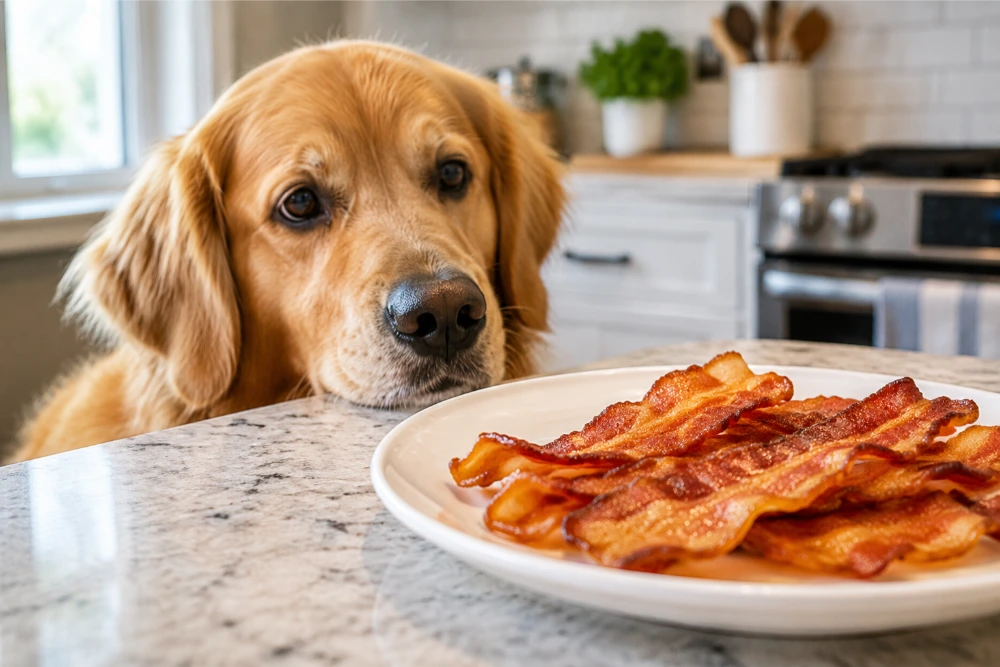
The pan is sizzling. The whole kitchen smells like breakfast. And there is your dog, glued to your leg, staring at the plate like it owes them money.
So can dogs eat bacon? Here is the short, honest answer, plus everything the other guides leave out: how much salt and fat is really in a slice, which kinds of bacon are worst, what to do if your dog already stole some, and what to give them instead.
Many dog owners wonder, can dogs eat bacon without experiencing health problems? While a small stolen piece may not cause harm, regularly feeding bacon can create health risks.
The quick answer:
Bacon is not toxic to dogs, but it is not a good treat. One stolen slice will not harm most healthy dogs. Do not feed it on purpose. It is very fatty and very salty, which can upset the stomach and, in some dogs, trigger a serious pancreas problem called pancreatitis.
Bacon verdict at a glance:
| Question | Answer |
| Is bacon toxic to dogs? | No. It will not poison a dog the way chocolate or grapes can. |
| Is bacon a safe treat? | No. Too much fat and salt for regular feeding. |
| My dog stole one slice. Is that an emergency? | Usually no for a healthy adult dog. Watch them for a day or two. |
| Can dogs eat bacon every day? | Never. |
| Is raw bacon okay? | No. Raw meat adds a germ risk on top of the fat and salt. |
| Is turkey bacon okay? | A tiny bite at most. It is still salty and processed. |
| What should I give instead? | Plain cooked chicken or turkey, or a vet-approved bacon-flavored treat (see below). |
In this guide
- Why bacon is bad for dogs (with real numbers)
- Which kinds of bacon are worst
- My dog ate bacon: what to do
- Dogs that should never have bacon
- Safer meaty treats your dog will love
- Frequently asked questions
Why Bacon Is Bad for Dogs:
Understanding can dogs eat bacon safely starts with looking at its nutritional content. Bacon contains significant amounts of fat and sodium, making it unsuitable for regular dog treats.
Bacon is not a poison. It is a problem of amounts and ingredients. A slice of bacon is mostly fat, packed with salt, and made with curing agents and flavorings that dogs do not need. Here are the four main reasons to skip it.
1. The fat can trigger pancreatitis
Bacon is one of the fattiest foods in your kitchen. A sudden dose of rich, greasy food can cause vomiting and diarrhea. In some dogs it can also set off pancreatitis, a painful swelling of the pancreas that often needs veterinary care. Dogs that have had pancreatitis before, and some breeds, are at higher risk.
Signs of pancreatitis include vomiting, loss of appetite, tiredness, a hunched back, a painful belly, dehydration, and fever. They can show up a day or two after the bacon was eaten, so keep watching your dog.
2. The salt adds up
Dogs need some sodium, but they do not need the amount in cured meat. Too much salt can cause extreme thirst and vomiting, and in severe cases tremors and seizures. According to the Merck Veterinary Manual, the lethal dose of salt for dogs is about 4 grams per kilogram of body weight, and signs of poisoning can begin at about 2 to 3 grams per kilogram.
Let’s put that in perspective. A slice of cooked bacon has roughly 180 to 190 milligrams of sodium, which is about half a gram of salt. For a 10 lb (4.5 kg) dog, signs could start around 9 to 13 grams of salt, which is about 18 or more slices of bacon. So salt poisoning from one or two stolen slices is very unlikely. It becomes a real worry when a dog eats a large amount of bacon, or other salty foods on top of it, such as ham, jerky, or broth.
This is rough math for context, not a safe-dose rule. Slice size, brand, and your dog’s health all change the picture. Never use it to decide that a certain amount of bacon is fine.
3. The calories blow the treat budget
Most vets say treats and extras should be no more than 10% of your dog’s daily calories. For a 10 lb dog that is only about 30 calories a day. One cooked slice of bacon has about 42 to 44 calories. That is more than a small dog’s whole treat allowance for the day, in a single slice.
| Bacon by the numbers | One cooked slice (about 8 g) | Why it matters |
| Calories | About 42 to 44 | More than the daily treat limit for a 10 lb dog (about 30 calories) |
| Sodium | About 180 to 190 mg | Dogs do not need added salt, and it adds up with other salty foods |
| Fat | About 3 to 3.5 g | Almost three quarters of the calories come from fat, a pancreatitis trigger |
| Nutrition for dogs | Very little | A bit of protein, but far less value than the fat and salt cost |
Values are approximate, from USDA-based nutrition data for a cooked 8 g slice. Thick-cut slices have more of everything.
4. Curing agents, seasonings, and extras
Commercial bacon is cured with ingredients like sodium nitrite. These are a concern only in large amounts, but they are one more reason bacon is not a clean treat. The bigger problem is flavored bacon. Garlic and onion seasoning, sugar glazes, and pepper coatings can be harmful or upsetting for dogs.

Which Kinds of Bacon Are Worst for Dogs?
When considering can dogs eat bacon in different forms, remember that cooking does not remove all the fat and sodium. Different bacon varieties can carry additional risks.
Not all bacon is equal. Here is how each type stacks up.
| Type | Verdict | Why |
| Regular cooked bacon | Not recommended | Not toxic. One stolen slice rarely hurts a healthy dog, but do not feed it on purpose. |
| Raw bacon | Avoid | Raw pork products can carry germs like salmonella. Vets advise against raw animal products as treats. |
| Bacon grease or fat | Avoid | Pure fat. It offers no nutrition and is a pancreatitis risk. Do not pour it on dog food. |
| Bacon rind | Avoid | Mostly fat and very salty, with no benefit for your dog. |
| Smoked bacon | Avoid | Just as salty and fatty as regular bacon. |
| Flavored bacon (maple, pepper, garlic) | Avoid | Added sugar and seasonings. Garlic and onion are toxic to dogs. |
| Bacon bits | Avoid | Very salty and often seasoned. |
| Turkey bacon | Tiny bite at most | Leaner than pork bacon, but still processed and salty. Low-sodium, uncured, cooked, and unseasoned is the least bad option. |
| Bacon-wrapped foods | Avoid | Check what is inside. Fillings and sauces may contain onion, garlic, or other harmful ingredients. |
| Plain cooked lean pork | Tiny bite at most | A small amount of fully cooked, unseasoned lean pork can be fine. It is not the same as cured bacon. |
My Dog Ate Bacon: What to Do
If you are worried about whether can dogs eat bacon safely after an accidental bite, consider your dog’s size, the amount consumed, and any existing health conditions.
Stay calm. Most dogs that steal a bit of bacon end up fine. How worried you should be depends on how much they ate and what kind of dog you have.
| What happened | Risk | What to do |
| One slice or a small bite (healthy adult dog) | Low | Watch your dog for the next day or two. Keep fresh water available and skip fatty foods at the next meal. |
| Several slices or a whole package | Moderate to high | Call your vet or a pet poison helpline. Watch for vomiting, diarrhea, and belly pain. |
| Bacon grease from the pan | Moderate | Call your vet or a pet poison helpline. Watch for vomiting, diarrhea, and belly pain. |
| Raw bacon | Moderate | Watch for vomiting and diarrhea. Call your vet if signs appear. |
| Bacon cooked with garlic, onion, or a sugary glaze | Higher | Watch for vomiting and diarrhea. Call your vet for advice even after one slice. |
Step by step
- Take away the rest and check what is left. Work out how much your dog ate.
- Note the details. Write down the type of bacon, how much, when, and your dog’s weight.
- Call your vet if you are unsure. For a large amount, or a high-risk dog, call right away. Do not wait for signs.
- Do not make your dog vomit unless a vet tells you to.
- Keep fresh water out and offer a light, plain meal next time. Ask your vet what they suggest.
- Watch for 48 hours. Pancreatitis signs can appear a day or two later.
Warning signs to watch for
- Stomach upset: vomiting, diarrhea, drooling, loss of appetite
- Possible pancreatitis: a painful or swollen belly, a hunched back, tiredness, fever, dehydration
- Possible salt poisoning: extreme thirst, repeated vomiting, tremors, seizures
- Possible allergic reaction: itchy red skin, facial swelling, wheezing
Dogs That Should Never Have Bacon:
For some dogs even a small piece is a bad idea. Ask your vet before sharing any fatty or salty food if your dog:
- has had pancreatitis, or is a breed that is prone to it (miniature schnauzers are one example)
- has heart disease, kidney disease, or diabetes
- is overweight, since bacon adds a lot of calories fast
- is a puppy, because small stomachs handle rich food badly
- is a very small dog, because the same amount of bacon is a far bigger dose
Why Do Dogs Go Crazy for Bacon?
It is not your imagination. Bacon smells strong, smoky, and fatty, and dogs have a far stronger sense of smell than we do. They are drawn to rich, salty, meaty flavors. That is exactly why bacon-flavored treats work so well for training, and why so many dogs become bacon thieves. The good news is you can give them the flavor they love without the risks.
Safer Meaty Treats Your Dog Will Love:
Instead of wondering can dogs eat bacon as an occasional reward, choose healthier alternatives such as plain cooked chicken, turkey, or vegetables.
You do not have to skip the meaty reward. Here are better options. Count every treat toward the 10% daily limit.
| Treat | Approx. calories | Compared with a 10 lb dog’s 30-calorie daily treat limit |
| 1 cooked slice of bacon | 42 to 44 | Over the limit in one slice |
| About 18 g (3/4 oz) plain cooked chicken breast | About 30 | The whole daily limit |
| 6 baby carrots | About 30 | The whole daily limit |
| About 1 cup green beans | About 30 | The whole daily limit |
- Plain cooked chicken or turkey. No skin, no bones, no seasoning. Cut it into tiny pieces for training.
- Crispy chicken “bacon bits.” Cook plain chicken breast fully (165°F or 74°C inside), slice it thin, and bake low and slow until dry and crisp. Use no salt, oil, or seasoning. Dogs love the crunch.
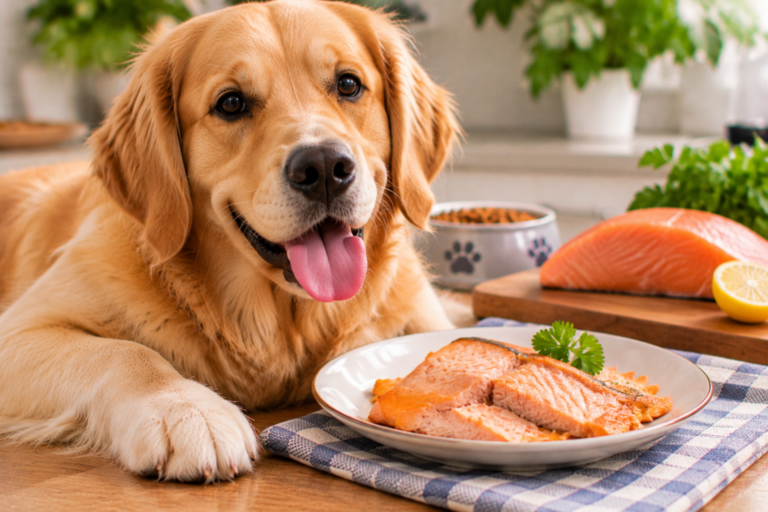
- Cooked salmon pieces. Fully cooked, boneless, and only now and then.
- Cooked egg. A good protein snack when cooked all the way through.
- Vegetables for volume. Carrots and green beans give a crunchy reward for far fewer calories.
- Bacon-flavored dog treats. These give the taste without a strip of real bacon. Read the label: pick a short ingredient list, check the calories, and make sure there is no xylitol.
For the full list of foods that are safe and unsafe, see our guide, “What Human Foods Can Dogs Eat?”.
Frequently Asked Questions:
The Bottom Line:
Bacon is not poison, and one stolen slice will not usually hurt a healthy dog. But it is too fatty, too salty, and too high in calories to be a safe treat, and it can cause real trouble for small dogs and dogs with health conditions. Skip the bacon, use the tips above for safer swaps, and keep your plate out of reach.
If you are ever unsure about what your dog ate, call your vet. Save the poison helpline number in your phone today, and share this guide with anyone who loves feeding your dog.This article is for general information. It is not a substitute for advice from your veterinarian.
Sources:
- Merck Veterinary Manual: Salt Toxicosis in Animals (merckvetmanual.com/toxicology/salt-toxicity/salt-toxicosis-in-animals)
- American Kennel Club: Is Salt Bad for Dogs? (akc.org/expert-advice/health/is-salt-bad-for-dogs)
- Tufts University Petfoodology: Treat Options for Dogs and Cats Without Unbalancing Their Diet (vetnutrition.tufts.edu/?p=10108)
- NC State Veterinary Hospital: Healthy Human Food Treats for Pets (hospital.cvm.ncsu.edu/?p=3889)
- UC Davis Nutrition Support Service: Treat Guidelines for Dogs (nutrition.vetmed.ucdavis.edu)
- USDA FoodData Central: Pork, cured, bacon, cooked (fdc.nal.usda.gov)
- Chewy Education: Can Dogs Eat Bacon? (chewy.com/education/dog/food-and-nutrition/can-dogs-eat-bacon)
- Pooch & Mutt: Can Dogs Eat Bacon? (poochandmutt.co.uk/blogs/can-dogs-eat/bacon)
- ASPCA Animal Poison Control Center (aspca.org/pet-care/animal-poison-control)