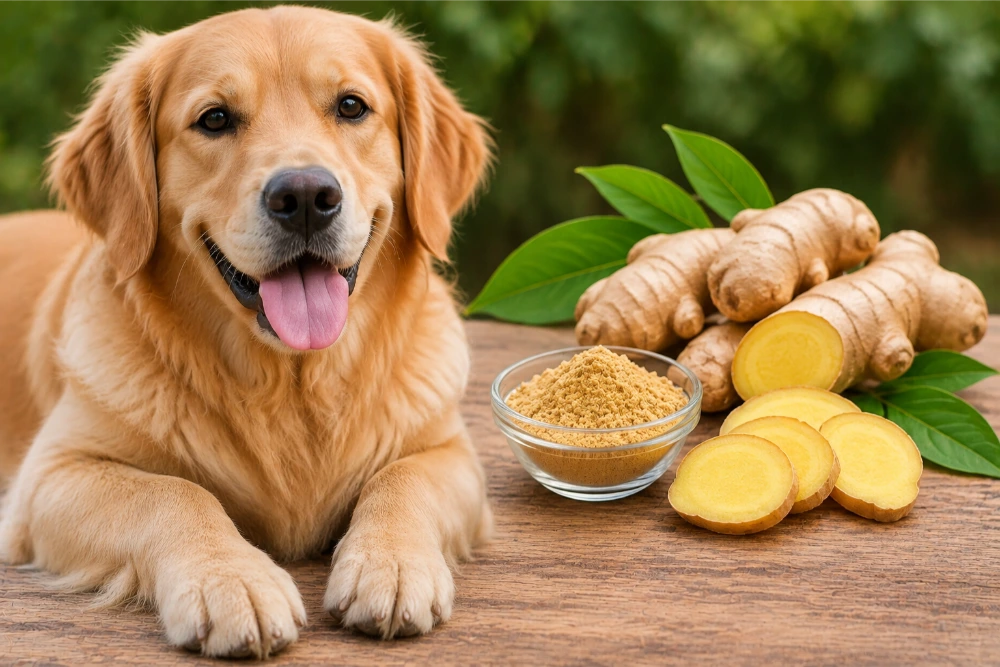
Can Dogs Eat Ginger? Benefits, Risks, and Safe Serving Tips
Yes, dogs can eat ginger in small amounts, provided it is prepared properly and their health conditions allow it. Fresh ginger root and plain ginger powder are generally considered suitable for many healthy dogs when offered sparingly. However, ginger is not necessary for a dog’s diet, and it should not be used to treat an illness without veterinary guidance.
Although ginger is often associated with easing nausea and reducing inflammation, its benefits are not fully established in dogs. Too much can upset your dog’s stomach, and ginger may interact with certain medications. Pickled ginger, sugary ginger treats, and gingerbread are also poor choices because of their added ingredients. Before sharing this spicy root with your pet, it helps to understand how to serve it safely and when to avoid it.
Can Dogs Eat Ginger Safely?
Ginger is generally safe for healthy adult dogs in small quantities. It is a root commonly used in cooking and traditional remedies, and its natural compounds include gingerol, which has antioxidant and anti-inflammatory properties. However, a food’s potential health benefits do not automatically make it appropriate for every dog.
The amount your dog can tolerate depends on factors such as body size, age, medical history, and current medications. A small amount of plain ginger mixed into regular dog food is generally a better option than offering a large piece of raw root or a processed ginger snack.
If your dog follows a prescription diet, has a chronic health condition, or takes medication, ask your veterinarian before introducing ginger. It should be treated as an optional food ingredient rather than a replacement for balanced dog food or prescribed treatment.
Is Ginger Good for Dogs?
Ginger may offer some potential benefits, but the evidence varies depending on the intended use. It is important to separate promising research and traditional uses from proven benefits in dogs.
1. May Help With Nausea
Ginger is widely known for its potential to ease nausea. Some veterinary uses involve helping manage nausea or vomiting, including in certain treatment settings. However, that does not mean ginger will reliably settle every dog’s upset stomach or prevent motion sickness.
If your dog frequently gets sick during car rides or experiences repeated vomiting, consult a veterinarian to identify the cause. Ginger should not be used to delay proper treatment.
2. Contains Antioxidant Compounds
Ginger contains compounds that have antioxidant activity. Antioxidants help protect cells from oxidative stress, which is involved in normal aging and various disease processes.
However, adding ginger to your dog’s food has not been shown to prevent disease or guarantee better long-term health. A complete diet, regular veterinary checkups, exercise, and appropriate preventive care remain more important.
Other foods also contain antioxidant compounds, including pomegranate. Read our guide on whether dogs can eat pomegranate to understand its nutritional properties and potential digestive risks.
3. May Have Anti-Inflammatory Properties
Gingerol and other compounds in ginger have been studied for their anti-inflammatory effects. This has led to interest in ginger as a possible supplement for conditions involving inflammation, including joint discomfort.
Nevertheless, ginger is not a proven replacement for veterinary arthritis treatment or prescribed pain relief. If your dog has stiff joints, limps, or struggles to stand comfortably, seek veterinary advice before trying a supplement.
4. May Support Digestive Comfort
Some research suggests ginger may influence digestive function, but evidence for its effectiveness in dogs is limited. It should not be assumed to relieve gas, bloating, diarrhea, or other digestive problems.
If your dog has persistent digestive symptoms, a veterinarian can help determine whether the cause is related to diet, infection, parasites, or another medical issue.

Plain yogurt may also be an occasional treat for dogs that tolerate dairy. Read our guide on whether yogurt is good for dogs to learn about its potential benefits and safe feeding practices.
How Much Ginger Can a Dog Eat?

There is no universally established, scientifically validated serving size for every dog. Recommendations vary among pet-care sources, and the right amount depends on the individual animal and the form of ginger being used.
For that reason, do not treat a general portion chart as a guaranteed safe dose. Ask your veterinarian to recommend an appropriate amount before feeding ginger intentionally, particularly if you plan to use it regularly.
| Dog size | Important feeding consideration |
| Extra-small or small dogs | Their smaller body size makes careful portion control especially important. |
| Medium-sized dogs | Do not assume they can tolerate a full teaspoon simply because they are larger than small dogs. |
| Large or giant dogs | A larger body size does not eliminate medication interactions or digestive risks. |
| Puppies, pregnant dogs, or dogs with medical conditions | Obtain veterinary advice before offering ginger. |
Start with the smallest amount your veterinarian approves and monitor your dog for any unusual reaction. Fresh ginger and dried ginger powder are not identical in concentration, so do not automatically substitute one form for another using the same measurement.
Ginger should remain an occasional addition, not a regular requirement. Your dog’s main diet should continue to provide the nutrients needed for healthy growth and maintenance.
Which Types of Ginger Can Dogs Eat?
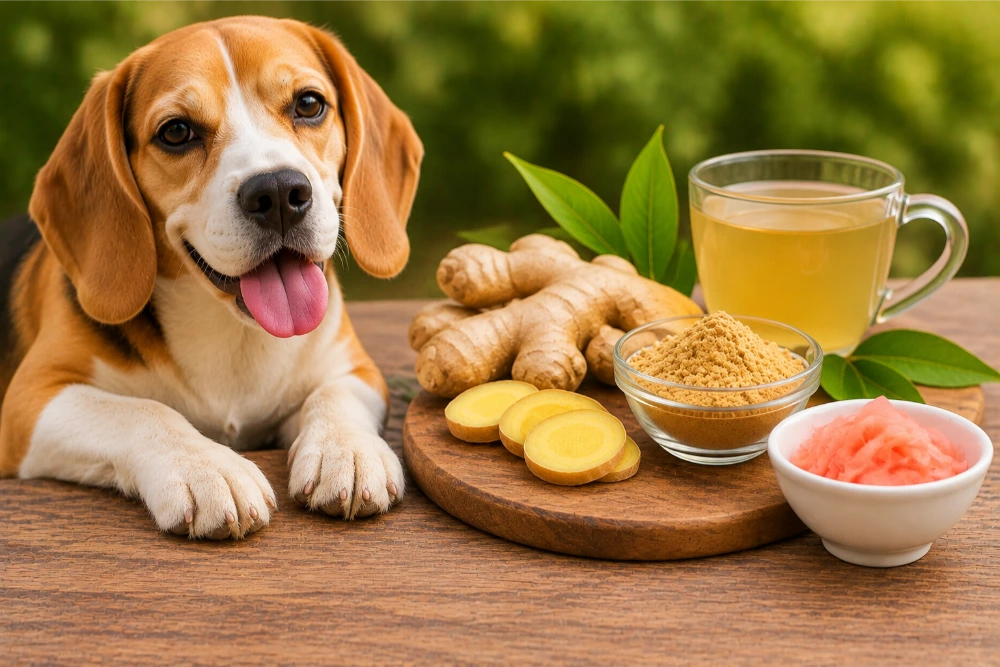
The form of ginger matters because processed foods often contain ingredients that are unsuitable for dogs.
Fresh Ginger Root
Plain fresh ginger is generally the simplest option to consider. Wash it, remove the skin, and grate or finely mince a small amount to reduce the risk of choking on a large piece.
Mix only the veterinarian-approved amount into your dog’s normal food. Avoid offering a thick slice or a large chunk of root.
Ground Ginger Powder
Plain ginger powder can also be suitable in small amounts for many dogs. Check the ingredient label to ensure it contains ginger alone rather than a spice blend, sweetener, or other additive.
Because dried powder is concentrated differently from fresh root, consult your veterinarian about the appropriate amount rather than using an equal volume.
Cooked Food Containing Ginger
A small amount of plain cooked food seasoned with ginger may be acceptable if every ingredient is dog-safe. However, many human dishes contain excess salt, oil, garlic, onions, or sauces that make them unsuitable for dogs.
If you want to share food with your pet, prepare a separate portion without potentially harmful seasonings.
The same care is important when sharing other human foods with your dog. Learn more about whether dogs can eat olives and which added ingredients should be avoided.
Ginger Tea
Do not assume that ginger tea made for humans is suitable for dogs. Human tea products may contain caffeine, sweeteners, or additional herbs and spices.
If your veterinarian recommends a ginger preparation, ask how to prepare and serve it. Avoid giving a home remedy to a dog with ongoing vomiting or other unexplained symptoms.
Pickled Ginger
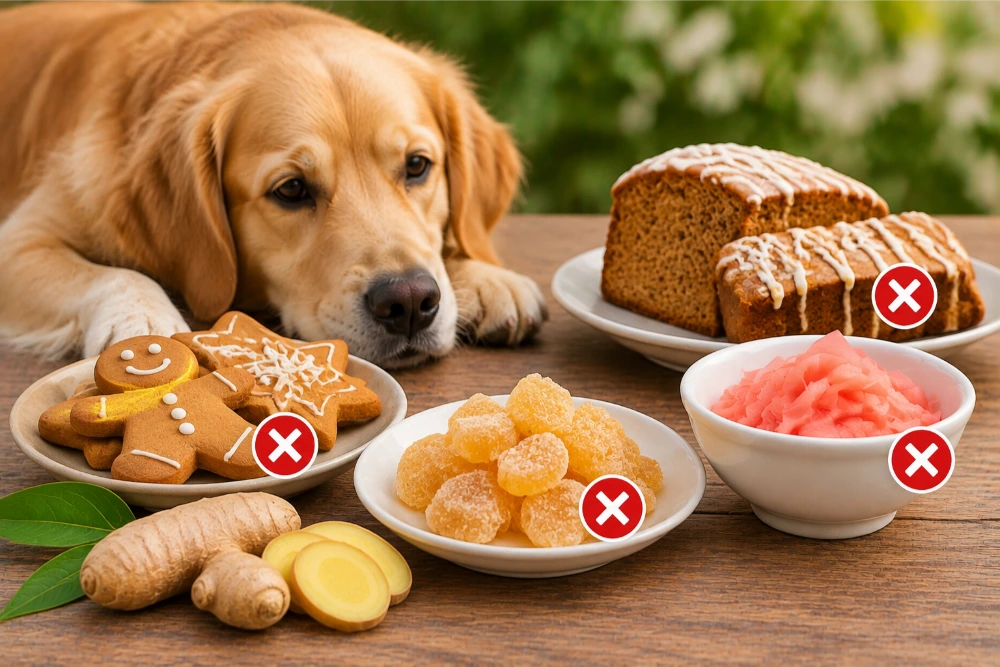
Pickled ginger, including the type served with sushi, is best avoided. It may contain vinegar, salt, sugar, and other ingredients that offer no nutritional advantage for dogs and can cause digestive upset.
A small accidental bite is not automatically an emergency, but check the ingredients and contact your veterinarian if your dog ate a large amount, has underlying health issues, or develops symptoms.
Gingerbread, Ginger Cookies, and Candied Ginger
Human gingerbread, cookies, and candied ginger are not good treats for dogs. They can contain large amounts of sugar and fat, while some recipes include nutmeg or other unsuitable ingredients. Certain sugar-free products may contain xylitol, which is highly toxic to dogs.
Avoid sharing these foods rather than assuming the ginger makes them healthy. If your dog eats a product containing xylitol, seek emergency veterinary assistance immediately.
What Are the Risks of Feeding Ginger to Dogs?
Although plain ginger is generally tolerated in small amounts, it is not risk-free.
Digestive Upset
Too much ginger may irritate your dog’s digestive system and cause vomiting, diarrhea, gas, or stomach discomfort. A dog that already has digestive symptoms may need veterinary assessment instead of another food ingredient.
Stop offering ginger if your dog develops an unusual reaction.
Medication Interactions
Ginger may affect blood clotting and could interact with medications that influence bleeding. This is particularly important for dogs receiving certain drugs or preparing for surgery.
Do not introduce ginger supplements without discussing them with your veterinarian, especially if your dog takes prescription medication.
Existing Health Conditions
Dogs with bleeding disorders, liver or kidney disease, diabetes, or other chronic conditions may need additional precautions. Ginger may be inappropriate in some circumstances, depending on the condition and the dog’s treatment plan.
Pregnant or nursing dogs should also receive veterinary guidance before being given ginger as a supplement.
Allergic Reactions
Some dogs may develop an adverse reaction to ginger. Possible warning signs include itching, a rash, skin irritation, or swelling.
Stop feeding ginger if you notice these symptoms. Facial swelling, difficulty breathing, or collapse requires immediate emergency veterinary care.
How to Introduce Ginger to Your Dog Safely
If your veterinarian confirms that ginger is appropriate for your dog, follow these practical steps.
- Choose plain ginger. Use fresh root or a single-ingredient ginger powder rather than a processed snack or seasoned food.
- Prepare it properly. Wash and peel fresh ginger, then grate or finely mince it. Avoid large pieces that could create a choking risk.
- Confirm the portion. Ask your veterinarian how much is suitable for your dog’s size, health, and intended use.
- Introduce it cautiously. Mix the approved amount into your dog’s regular food instead of offering a large quantity at once.
- Monitor your dog. Watch for vomiting, diarrhea, itching, swelling, or other unusual changes after introduction.
- Avoid routine supplementation without guidance. Ginger should not replace a balanced diet, veterinary treatment, or a prescribed medication.
If your dog refuses ginger, there is no need to persuade them to eat it. It is an optional ingredient, not an essential part of canine nutrition.
What Should You Do If Your Dog Eats Too Much Ginger?
If your dog accidentally eats more ginger than intended, first determine what was eaten, approximately how much was consumed, and whether the product contained additional ingredients.
For a small amount of plain ginger, a healthy dog may experience no problems, although digestive upset is possible. Contact your veterinarian if your dog eats a large or unknown quantity, takes medication that may interact with ginger, or has an underlying health condition.
Seek prompt veterinary advice if vomiting, diarrhea, weakness, or other concerning symptoms develop. If the food contained xylitol, chocolate, or another known canine toxin, contact an emergency veterinarian or animal poison control service immediately.
Do not induce vomiting or give another home remedy unless a veterinary professional specifically instructs you to do so.
Frequently Asked Questions
Final Verdict: Should You Give Your Dog Ginger?
Dogs can generally eat small amounts of plain ginger, but whether it is appropriate depends on their health, medications, and individual tolerance. Fresh ginger root and plain ginger powder are preferable to pickled ginger, gingerbread, or sugary snacks.
Although ginger has compounds with potentially useful properties, its benefits for common canine problems should not be overstated. Ask your veterinarian before using it to manage nausea, joint discomfort, or another health concern. A balanced diet and appropriate veterinary care should always come first.