Can Dogs Eat Olives? Benefits, Risks, and Safe Feeding Tips
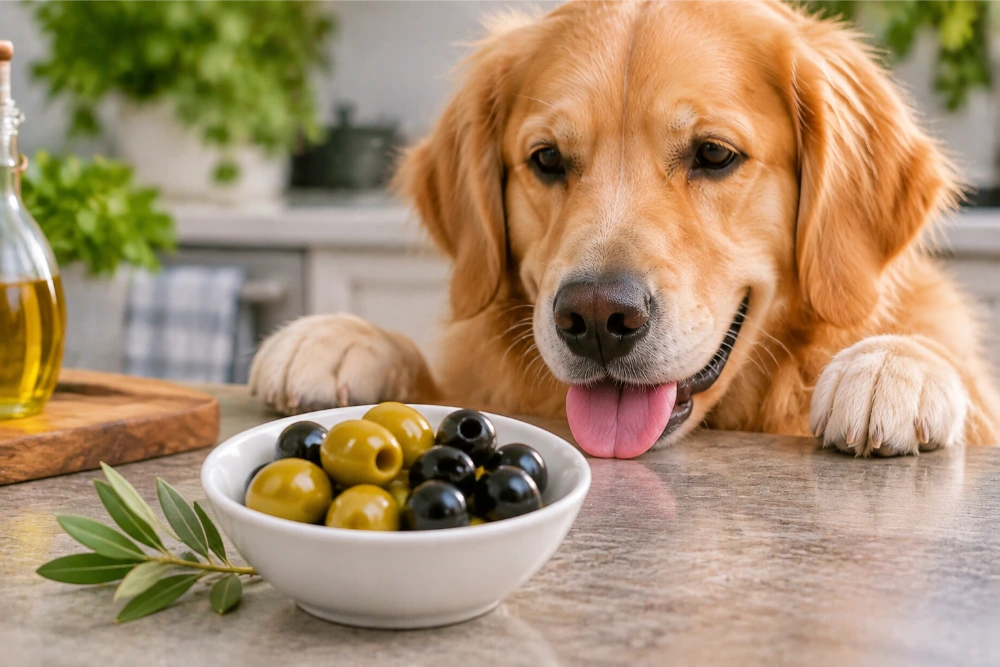
Olives are a popular ingredient in salads, pizzas, sandwiches, and Mediterranean dishes. If your dog watches you eat them, you may wonder whether sharing one is safe. So, can dogs eat olives, or should you keep them away from your pet?
Yes, dogs can eat a small amount of plain, pitted, unsalted olives occasionally. Olives are not inherently toxic to dogs, but their preparation matters. Olives packed in salty brine, stuffed with garlic, or mixed with certain seasonings can pose health risks. The hard pit can also cause choking, damage teeth, or create an intestinal blockage if swallowed.
Olives are not a necessary part of a dog’s diet, and their fat and sodium content makes them less suitable as a regular treat. If you want to share one with your dog, choose a plain olive, remove the pit completely, and offer only a tiny amount.
This guide explains whether green and black olives are safe for dogs, their possible benefits, which varieties to avoid, and what to do if your dog eats an olive accidentally.
Quick Answer: Can Dogs Eat Olives?
Yes, most healthy dogs can eat a small amount of plain, pitted, unsalted olive without problems. However, olives should remain an occasional treat rather than a regular part of your dog’s diet.
The main concerns are the pit, added salt, high-fat preparations, and potentially harmful ingredients in stuffed or marinated olives. Dogs with certain medical conditions may also need to avoid them.
| Type of olive | Is it safe for dogs? |
| Plain, pitted, unsalted olives | Generally acceptable in tiny amounts occasionally |
| Green olives | Acceptable if plain, pitted, and unsalted |
| Black olives | Acceptable if plain, pitted, and unsalted |
| Olives with pits | Avoid because of choking, dental injury, and blockage risks |
| Canned or jarred olives in brine | Best avoided because of high sodium content |
| Garlic-stuffed olives | Unsafe because garlic is toxic to dogs |
| Onion-stuffed olives | Unsafe because onions are toxic to dogs |
| Cheese-stuffed olives | Best avoided because of fat and possible digestive upset |
| Olives marinated in alcohol | Unsafe because alcohol is toxic to dogs |
| Spicy or heavily seasoned olives | Avoid because of added ingredients and possible digestive irritation |
| Olive oil | Not toxic in small amounts, but calorie-dense and unsuitable as an unnecessary dietary addition |
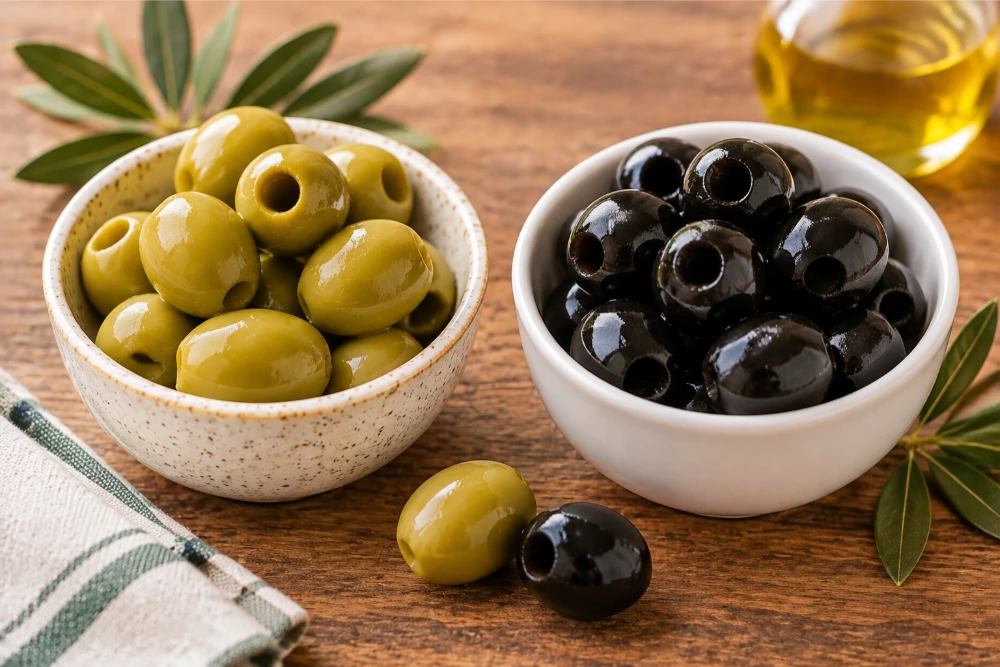
The simplest rule is to choose plain, pitted olives without added salt or seasonings—or skip them altogether and offer a dog-safe treat instead.
Are Olives Good for Dogs?
Olives contain nutrients that can be useful in human diets, but their benefits for dogs are limited. A complete and balanced dog food already provides the nutrients most healthy dogs need.
If your dog eats a tiny piece of plain olive, it may be an acceptable occasional treat. However, you should not add olives to your dog’s meals to improve nutrition or treat a health condition.
1. Olives Contain Healthy Fats
Olives contain monounsaturated fats, including oleic acid. These fats are part of the nutritional profile that makes olives popular in human diets.
Dogs need dietary fat for energy and normal bodily functions, but that does not mean extra fat from olives is necessary. Most dogs already receive appropriate amounts through their regular food.
Too many fatty treats can contribute to excess calorie intake and weight gain. Dogs with a history of pancreatitis or those following a low-fat diet should not receive olives without veterinary approval.
2. They Contain Antioxidants
Olives contain antioxidant compounds, including vitamin E and various plant polyphenols. Antioxidants help protect cells from oxidative damage.
However, eating an olive occasionally does not guarantee a measurable health benefit for your dog. There is no need to introduce olives specifically for their antioxidants when your dog’s regular food is nutritionally complete.
3. Olives Provide Small Amounts of Vitamins and Minerals
Depending on the variety and preparation, olives may contain small amounts of vitamin E, iron, copper, and other nutrients.
These nutrients contribute to normal bodily functions, but the amount your dog receives from an occasional olive is limited. Olives should not be used as a supplement or as a replacement for balanced dog food.
4. Olives Can Add Variety to Occasional Treats
Some dogs may enjoy the taste and texture of an olive. A tiny piece of plain olive can provide a different flavor from their usual treats.
Still, many dogs would benefit more from treats specifically designed for their nutritional needs. Olives are optional, and there is no reason to feed them if your dog does not enjoy them or has dietary restrictions.
Can Dogs Eat Green Olives?

Yes, dogs can eat a small amount of plain, pitted green olive occasionally, provided it contains no harmful ingredients.
Green olives are harvested before they fully ripen and are commonly processed in brine or other solutions. As a result, many green olives sold in grocery stores contain substantial amounts of sodium.
Before offering a green olive, check the label and make sure it is free from garlic, onions, spicy marinades, and other unsuitable additions.
Remove the pit completely and offer only a tiny amount. If the olive is heavily salted or soaked in brine, choose a different treat.
Can Dogs Eat Black Olives?
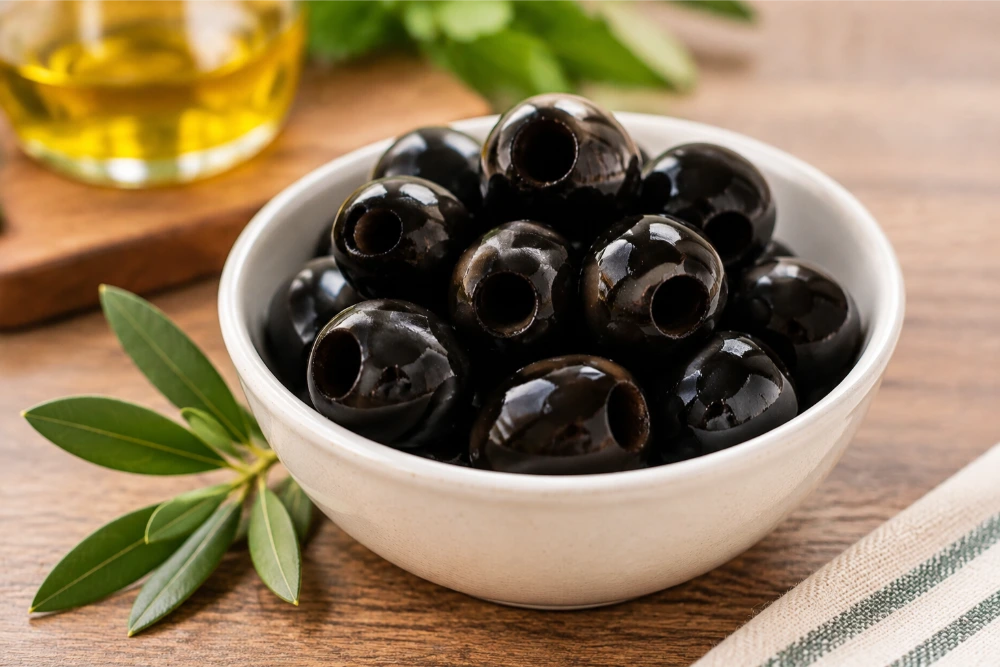
Plain, pitted black olives can also be suitable for dogs in very small amounts. Their color alone does not make them more dangerous than green olives.
However, many black olives sold in cans or jars contain added salt. Some are also marinated or seasoned, making them less appropriate for pets.
If you want to offer a black olive, select an unsalted variety without additional ingredients and remove the pit. Do not assume that an olive is safe simply because it is black, ripe, or labeled natural.
Both green and black olives should remain occasional treats rather than regular additions to your dog’s diet.
Can Dogs Eat Olives With Pits?
No. You should never intentionally give your dog an olive with its pit still inside.
Olive pits are hard and can cause several problems:
- Choking if the pit becomes lodged in the throat.
- Cracked or damaged teeth if your dog bites down on it.
- Intestinal blockage if the pit is swallowed.
- Digestive tract injury in some circumstances.
Even if your dog chews food carefully, you cannot rely on it to remove the pit safely.
Always remove the pit completely before offering an olive. If your dog swallows an olive pit, contact your veterinarian for advice, particularly if your dog is small or develops gagging, vomiting, abdominal discomfort, or difficulty passing stool.
Seek emergency veterinary care immediately if your dog is choking or struggling to breathe.
Can Dogs Eat Canned or Jarred Olives?
Canned and jarred olives are generally best avoided because they are commonly preserved in brine, which contains a considerable amount of salt.
Dogs need sodium in appropriate amounts, but excessive sodium intake can cause health problems. The risk depends on the amount consumed, the dog’s size, its health, and the sodium concentration of the food.
If your dog eats one small piece of a brined olive, it may not experience any problems. However, eating several salty olives or drinking the brine can create greater concern, especially for a small dog.
For an intentional treat, choose a plain, unsalted olive instead. If your dog consumes a large quantity of salty olives or develops vomiting, unusual thirst, lethargy, or neurological symptoms, contact a veterinarian promptly.
Can Dogs Eat Stuffed Olives?
Stuffed olives require particular caution because their fillings may contain ingredients that are unsuitable or toxic to dogs.
Garlic-Stuffed Olives
No. Do not give your dog olives stuffed with garlic.
Garlic belongs to the Allium family and can damage red blood cells in dogs, potentially leading to anemia. The level of risk depends on the amount consumed and the dog’s size, but garlic should not be intentionally fed to pets.
If your dog eats a garlic-stuffed olive, contact your veterinarian or an animal poison-control service for advice. Do not wait for symptoms to appear before seeking guidance.
Onion-Stuffed Olives
Onions are also toxic to dogs and can damage red blood cells. This applies to onions in different forms, including cooked, dried, or powdered ingredients.
Check the ingredient label carefully. If your dog eats an olive containing onion, contact your veterinarian for advice based on the quantity consumed and your dog’s size.
Cheese-Stuffed Olives
Cheese-stuffed olives are not the best choice for dogs. Cheese can be high in fat and may cause digestive upset in dogs that have difficulty digesting lactose.
Some cheese varieties also contain additional seasonings. Because the nutritional value of cheese-stuffed olives is limited for dogs, plain alternatives are preferable.
Pimento-Stuffed Olives
Pimento is a type of sweet pepper commonly used to fill olives. Plain pimento is not generally considered toxic to dogs, but the safety of a stuffed olive depends on its complete ingredient list and preparation.
Commercial products may contain brine, salt, oil, or other seasonings. If you want to offer an olive to your dog, plain and unsalted is the simpler choice.
Can Dogs Eat Olives in Olive Oil?
Olives served in oil are less suitable for dogs than plain olives. Although olive oil itself is not inherently toxic, it is calorie-dense and increases the fat content of the food.
Excess dietary fat can contribute to digestive upset and unwanted weight gain. Dogs with pancreatitis or certain gastrointestinal conditions may need to avoid additional fat.
Some oil-based marinades also contain garlic, onions, chili, or other seasonings that are unsuitable for dogs.
If you are preparing a treat for your pet, choose a plain, pitted olive without oil-based seasoning. There is no need to add olive oil to your dog’s food unless your veterinarian recommends a specific dietary adjustment.
How Many Olives Can a Dog Eat?
There is no universally established safe serving size for every dog. The appropriate amount depends on the dog’s size, overall diet, health, and the olive’s sodium and fat content.
For most dogs, skipping olives is perfectly fine. If you choose to offer one, a tiny piece of a plain, pitted, unsalted olive is a cautious starting point.
Keep these guidelines in mind:
- Introduce only a small amount when offering an unfamiliar food.
- Remove the pit completely.
- Avoid brined, salted, stuffed, and seasoned varieties.
- Count treats toward your dog’s daily calorie intake.
- Keep all treats combined to no more than about 10% of daily calories.
- Stop offering olives if your dog develops digestive symptoms.
- Consult your veterinarian before giving new foods to a dog with medical or dietary restrictions.
Olives should not replace regular dog food or become a daily snack. Other treats designed for dogs are usually easier to portion and manage.
What Happens If a Dog Eats an Olive?
The outcome depends on the olive’s ingredients, whether it contained a pit, how many were eaten, and your dog’s size and health.
If your dog eats one small piece of plain olive without a pit, it will often be fine. However, larger amounts may cause digestive upset, while pits and certain added ingredients create more serious risks.
Possible signs of a problem include:
- Vomiting.
- Diarrhea.
- Excessive thirst.
- Reduced appetite.
- Lethargy.
- Abdominal discomfort.
- Difficulty passing stool.
- Gagging or choking.
If the olive contained garlic, onions, alcohol, or another potentially harmful ingredient, contact your veterinarian promptly. Do not wait for symptoms to develop.
If your dog swallows a pit, seek veterinary advice even if it seems normal. A swallowed pit may cause an obstruction, and symptoms can take time to appear.
Do not induce vomiting or use home remedies unless a veterinary professional specifically instructs you to do so.
Are Olives Safe for Puppies?
Olives are not an ideal treat for puppies. Although a tiny amount of plain, pitted olive may not cause harm, puppies have specific nutritional needs and do not benefit from the extra salt or fat found in many commercial olives.
Puppies also tend to explore foods by chewing and swallowing them, making pits an unnecessary risk.
Choose treats designed for puppies and appropriate for their age and size. If your puppy accidentally eats an olive, check whether it contained a pit or harmful ingredients and contact your veterinarian if you have concerns.
What Are Safer Alternatives to Olives for Dogs?
If your dog enjoys trying foods from your plate, there are alternatives that are generally easier to incorporate into a balanced diet.
Plain yogurt can also be an occasional treat for dogs that tolerate dairy. Learn more in our guide on whether yogurt is good for dogs, including its benefits and safe feeding tips.
1. Carrots
Plain carrots can provide a crunchy, low-calorie treat. Cut them into pieces appropriate for your dog’s size to reduce choking risk.
2. Blueberries
Fresh blueberries can be offered in small amounts as an occasional treat. Wash them before serving and supervise dogs that tend to swallow food quickly.
3. Green Beans
Plain green beans without added salt, butter, garlic, or sauces can be a suitable treat for many dogs. They provide variety without the high sodium often found in olives.
Green beans can be a useful occasional treat for dogs when served plain and in moderation. Read our complete guide on whether green beans are good for dogs to learn about their benefits and safe serving methods.
4. Plain, Boneless Cooked Chicken
Plain chicken cooked thoroughly without bones or unsafe seasonings can be an appealing treat for many dogs. Keep portions appropriate and continue feeding complete and balanced dog food as the main diet.
Always remove every bone before sharing cooked chicken with your dog. Read our guide on whether dogs can eat chicken bones to understand the risks of cooked and raw chicken bones.
5. Commercial Dog Treats
Dog treats formulated for pets are convenient because you can select products suited to your dog’s size, age, and dietary needs. Follow the feeding instructions and keep treat portions controlled.
Introduce any new food gradually and stop offering it if your dog develops digestive upset or another unusual reaction.
How to Prevent Olive-Related Problems
A few simple precautions can help prevent accidental ingestion and unnecessary health risks.
- Store jars and cans of olives out of your dog’s reach.
- Keep olives with pits away from pets.
- Avoid sharing olives from pizzas, salads, or cocktails.
- Never offer garlic-stuffed or onion-stuffed olives.
- Do not let your dog drink olive brine or alcohol-containing marinades.
- Check ingredient labels before sharing any human food.
- Dispose of pits and food scraps in a secure trash container.
If you are unsure whether a particular olive product is suitable for your dog, choose a different treat rather than taking an unnecessary risk.
Frequently Asked Questions:
The Bottom Line:
Dogs can eat a tiny amount of plain, pitted, unsalted olive occasionally, but olives are not an essential or particularly useful treat for them. Their fat and sodium content, along with the risks posed by pits and added ingredients, makes careful selection important.
Avoid olives stuffed with garlic or onions, heavily salted varieties, and olives prepared with alcohol or unsuitable seasonings. Always remove the pit and keep portions small.
If your dog eats a plain olive accidentally, it will often be fine. However, contact your veterinarian if it swallows a pit, eats a large quantity of salty olives, consumes a potentially toxic filling, or develops concerning symptoms.
When choosing treats, plain dog-safe fruits, vegetables, and appropriately formulated dog treats are generally simpler alternatives.
This article is for general informational purposes and is not a substitute for veterinary advice.