
Is Yogurt Good for Dogs? Benefits, Risks, and Safe Feeding Tips
Is yogurt good for dogs? Many dog owners ask this question when their pets become interested in a container of yogurt. Although plain yogurt can be an occasional treat for some dogs, its suitability depends on the ingredients, lactose content, and your dog’s ability to digest dairy. Choosing the right type and serving an appropriate amount are important for keeping your pet safe.
Yes, most dogs can eat a small amount of plain, unsweetened yogurt if they tolerate dairy. Yogurt contains protein and calcium, and some varieties contain live bacterial cultures. However, it is not suitable for every dog. Many adult dogs have difficulty digesting lactose, and certain flavored or sweetened yogurts contain ingredients that can be dangerous to pets.
Plain Greek yogurt is often a practical choice because it generally contains more protein and less lactose than regular yogurt. Choose a product without added sweeteners, check the ingredient label carefully, and introduce it in a very small amount.
This guide explains the benefits of yogurt for dogs, which varieties are safest, how much to offer, and what to do if your dog eats yogurt containing an unsafe ingredient.
Quick Answer: Is Yogurt Good for Dogs?
Yes, plain, unsweetened yogurt can be an occasional treat for dogs that tolerate dairy. It provides protein and calcium, while some varieties contain live cultures. However, yogurt is not necessary for a dog’s diet, and its probiotic content does not guarantee a digestive health benefit.
Choose plain yogurt without added sweeteners, preferably in a lower-fat variety if appropriate for your dog. Never give your dog yogurt containing xylitol, a sweetener that can cause life-threatening poisoning. Avoid dairy products that trigger digestive problems, and consult your veterinarian before introducing yogurt to a dog with a medical condition or prescription diet.
Here is a quick overview of common yogurt varieties.
| Type of yogurt | Is it safe for dogs? |
| Plain, unsweetened yogurt | Generally suitable in small amounts for dogs that tolerate dairy |
| Plain Greek yogurt | Often a good option because it generally contains more protein and less lactose |
| Vanilla yogurt | Best avoided because it commonly contains added sugar or flavorings |
| Fruit-flavored yogurt | Best avoided because of added sugars and potentially unsuitable ingredients |
| Sugar-free yogurt | Check ingredients carefully; never give yogurt containing xylitol |
| Plain, low-fat yogurt | Often suitable if your dog tolerates dairy |
| Full-fat yogurt | Less suitable for dogs that need to limit dietary fat |
| Lactose-free yogurt | May be easier for some dogs to tolerate, but ingredients and fat content still matter |
| Frozen yogurt | Depends on ingredients; commercial desserts are not automatically dog-safe |
| Chocolate yogurt | Avoid because chocolate can be toxic to dogs |
| Yogurt with granola or candy | Avoid because toppings may contain chocolate, raisins, or other unsuitable ingredients |

The safest approach is to offer a small amount of plain yogurt rather than sharing a flavored dessert.
What Are the Benefits of Yogurt for Dogs?
Yogurt can provide several nutrients, but its benefits depend on the product, the amount consumed, and the individual dog’s dietary needs. It should complement a complete and balanced diet rather than replace regular dog food.
1. Yogurt Provides Protein
Protein supports muscle maintenance, tissue repair, and many other normal bodily functions. Yogurt contains dairy protein, which can contribute to a dog’s overall protein intake.
Greek yogurt generally contains more protein per serving than regular yogurt because the straining process removes some liquid whey. This makes plain Greek yogurt a convenient option when you want to offer a small dairy-based treat.
However, most dogs eating a nutritionally complete diet already receive the protein they need. Adding yogurt does not automatically improve their nutrition, particularly if it contributes unnecessary calories.
2. It Contains Calcium
Calcium is essential for healthy bones and teeth. It also supports normal muscle contraction, nerve signaling, and other important bodily functions.
Yogurt contains calcium, but the amount varies by product. Dogs should obtain the calcium they need primarily from a properly formulated diet rather than relying on human foods.
This is particularly important for growing puppies, whose nutritional requirements must be carefully balanced. Yogurt should not replace puppy food or be used as a homemade calcium supplement without veterinary guidance.
3. Some Yogurts Contain Live Cultures
Certain yogurts contain live bacterial cultures, commonly described as probiotics. These microorganisms may help support the gut microbiome, which plays a role in normal digestion and intestinal function.
However, not every yogurt contains the same strains or quantities of live cultures. Processing, storage, and product formulation can affect the cultures present.
A small serving of yogurt should not be treated as a reliable treatment for diarrhea, chronic digestive problems, or another medical condition. If your dog needs probiotic support, your veterinarian can recommend a product formulated for dogs with appropriate strains and dosing.
4. Yogurt Can Add Variety to Treats
Some dogs enjoy yogurt’s creamy texture and mild flavor. A small amount can provide variety when used as an occasional treat or food topper.
You can offer it from a spoon, mix a little into your dog’s regular food, or spread a small amount inside an appropriate food-dispensing toy.
Keep the portion modest, and avoid introducing yogurt when your dog is already experiencing unexplained vomiting or diarrhea.
Salmon is another food that can provide dogs with useful nutrients, including protein and omega-3 fatty acids. Read our guide on whether dogs can have salmon to understand its benefits, risks, and safe feeding methods.

What Is the Best Yogurt for Dogs?
The best yogurt for dogs is generally plain, unsweetened, and appropriate for their individual dietary needs. You do not need a product marketed as a superfood or a yogurt containing fruit, honey, or other added ingredients.
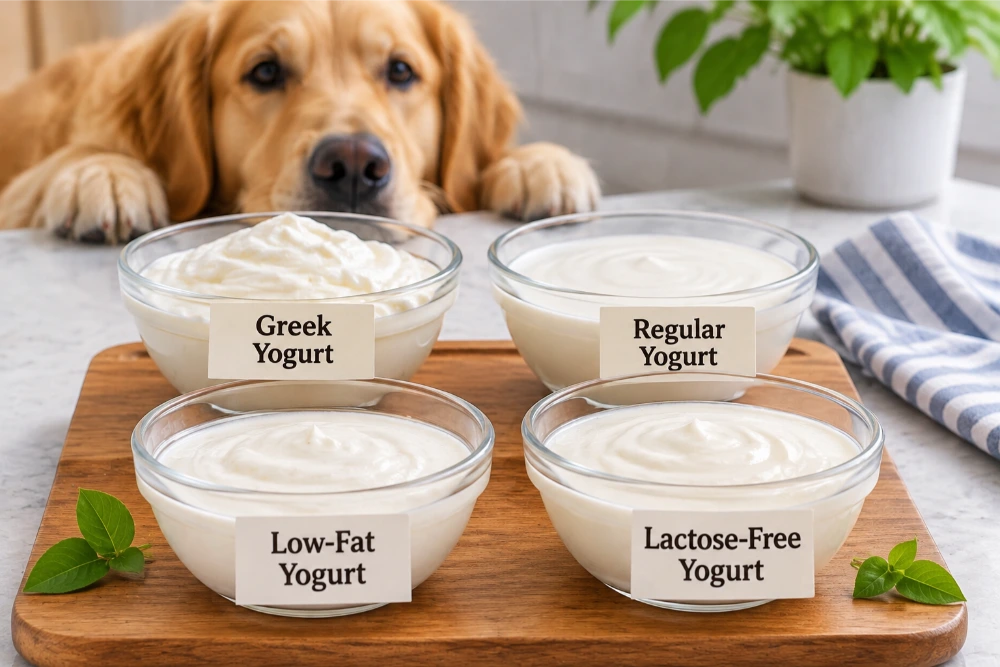
Plain Greek Yogurt
Plain Greek yogurt is often one of the better choices for dogs that tolerate dairy. It typically contains more protein and less lactose than regular yogurt, although the exact nutritional content varies by product.
Choose an unsweetened variety with a simple ingredient list. Check that it contains no xylitol, chocolate, or other unsuitable additives.
Greek yogurt is still a dairy product, so it can cause digestive upset in dogs that are sensitive to lactose. A small initial taste is more appropriate than offering a full serving.
Plain Regular Yogurt
Plain regular yogurt can also be suitable for dogs that tolerate dairy. It contains protein and calcium, but it generally has more lactose and less protein per serving than Greek yogurt.
Check the label for added sugar and sweeteners. Some products that appear healthy or natural contain additional ingredients that are unnecessary for dogs.
Plain Low-Fat Yogurt
Plain low-fat yogurt may be a reasonable option for dogs that need to limit their fat intake. However, low-fat does not automatically mean safe. You must still check the ingredients and consider your dog’s tolerance for dairy.
Dogs with a history of pancreatitis or a veterinarian-prescribed low-fat diet should not receive additional dairy without veterinary approval.
Lactose-Free Yogurt
Lactose-free yogurt may be easier for some lactose-sensitive dogs to tolerate because the lactose has been removed or broken down.
However, lactose-free products can still contain added sugar, flavorings, or considerable fat. They are not automatically suitable for every dog, especially one with a milk allergy.
Can Dogs Eat Vanilla or Fruit Yogurt?
It is better to avoid flavored yogurt unless you have carefully checked every ingredient. Vanilla and fruit varieties often contain added sugars, syrups, or other ingredients that provide little nutritional value to dogs.
Sugar-free varieties deserve particular caution because some products contain xylitol, a sweetener that is highly toxic to dogs.
Fruit-flavored yogurt should not be confused with plain yogurt served alongside a small amount of dog-safe fruit. Even then, check the ingredients and keep the portion small.\
If your dog enjoys different protein sources, tuna may also be something you have questions about. Read our guide on whether dogs can have tuna to learn about mercury risks, suitable varieties, and safe feeding practices.
How Much Yogurt Can a Dog Eat?

The appropriate amount depends on your dog’s size, calorie requirements, existing diet, health, and ability to tolerate dairy. There is no single serving size that works for every dog.
Start with a tiny taste of plain yogurt and observe your dog before offering more. For a small dog, around a quarter to half a teaspoon may be enough for an initial taste. For a larger dog, a small teaspoon may be a reasonable starting point.
These are cautious starting examples, not established daily serving limits. Your dog’s response and overall dietary needs should determine whether you offer yogurt again.
Keep these guidelines in mind:
- Introduce yogurt gradually rather than offering a large serving immediately.
- Count its calories toward your dog’s daily treat allowance.
- Keep all treats combined to no more than about 10% of daily calories, with the remainder coming from a complete and balanced diet.
- Check the yogurt’s fat and sugar content before serving it.
- Stop offering yogurt if your dog develops digestive symptoms.
- Ask your veterinarian about suitable portions if your dog has a medical condition or follows a therapeutic diet.
Yogurt is optional, so there is no need to feed it every day. If your dog already receives plenty of treats, adding another food may simply increase its calorie intake.
If you are looking for other low-calorie treat options for your dog, green beans can be a suitable choice when served plain and in moderation. Read our guide on whether green beans are good for dogs to learn about their benefits, serving sizes, and safe preparation methods.
Can Dogs Eat Yogurt Every Day?
Some dogs may tolerate a small amount of plain yogurt regularly, but daily feeding is not necessary. Yogurt should remain a supplemental treat rather than a routine requirement.
Regular servings can add calories and fat to your dog’s diet. They can also cause recurring digestive problems if your dog has difficulty digesting lactose.
If your goal is to improve your dog’s digestive health, do not rely on yogurt alone. A balanced diet, appropriate hydration, and veterinary advice are more important than adding a particular human food.
If you want to include yogurt regularly, discuss the amount with your veterinarian, especially if your dog has digestive sensitivities, diabetes, pancreatitis, or another condition requiring dietary management.
Can Puppies Eat Yogurt?
Puppies may tolerate a tiny amount of plain, unsweetened yogurt, but it is not an essential part of their diet.
Growing puppies need food formulated to provide the right balance of calories, protein, fats, vitamins, and minerals for development. Yogurt cannot replace that nutrition.
Puppies can also experience digestive upset from dairy, so do not assume that a young puppy will tolerate it simply because the product is plain.
If you decide to introduce yogurt, start with a very small amount and monitor for loose stools, gas, vomiting, or other unusual symptoms. Ask your veterinarian first if your puppy has a sensitive stomach, an existing medical issue, or a special feeding plan.
Can Dogs Eat Frozen Yogurt?
Dogs can eat frozen plain yogurt if they tolerate the ingredients, but ordinary frozen yogurt sold for people is not automatically a safe treat.
Commercial frozen yogurt may contain added sugar, chocolate, candy pieces, syrups, or artificial sweeteners. Some ingredients can be harmful to dogs, while excess sugar and fat can contribute to digestive problems and unwanted weight gain.
A simpler alternative is to freeze a small amount of plain, unsweetened yogurt in an ice cube tray or spread a thin layer inside a suitable food-dispensing toy.
Before freezing yogurt for your dog:
- Check the full ingredient list.
- Confirm that the product contains no xylitol or other harmful ingredients.
- Use a small portion that fits your dog’s calorie needs.
- Avoid large, very hard frozen pieces that may be unsuitable for your dog’s chewing ability.
- Supervise your dog while it enjoys the treat.
Freezing does not remove lactose or make an unsuitable ingredient safe. If your dog cannot tolerate dairy, choose a different treat.
Is Yogurt Bad for Dogs? Risks to Consider
Yogurt is not inherently toxic to dogs, but certain products and feeding habits can cause problems. The main concerns involve dairy intolerance, added ingredients, excess calories, and dietary fat.
Lactose Intolerance
Lactose is the natural sugar found in milk and other dairy products. Many dogs have a reduced ability to digest lactose as they mature, although tolerance varies between individuals.
Yogurt may contain less lactose than milk, particularly Greek yogurt, but it is not necessarily lactose-free.
Signs of digestive intolerance can include:
- Gas or bloating.
- Loose stools or diarrhea.
- Vomiting.
- Abdominal discomfort.
- Reduced appetite following digestive upset.
If these symptoms appear after your dog eats yogurt, stop feeding it. Contact your veterinarian if symptoms are severe, persist, or occur alongside weakness, significant pain, or other concerning changes.
Xylitol Poisoning
Xylitol is a sugar substitute found in some sugar-free and reduced-sugar products. It is highly toxic to dogs and can cause a dangerous drop in blood sugar and potentially severe liver injury.
Never feed your dog yogurt containing xylitol. Check the ingredient list instead of relying on the front of the package, which may describe the product as sugar-free or low-sugar.
If your dog eats yogurt that contains xylitol, contact an emergency veterinarian or animal poison-control service immediately. Do not wait for symptoms to develop.
Added Sugar and Unnecessary Calories
Sweetened yogurt can add calories without providing a meaningful benefit to your dog’s diet. Frequent high-calorie treats may contribute to weight gain, particularly when added on top of regular meals.
Dogs with diabetes or weight-management needs may require more careful control over their food and treats.
Plain yogurt without added sugar is the better choice, provided your dog tolerates dairy.
High Fat Content
Some yogurts contain considerable fat, particularly full-fat varieties and rich dessert products. Large amounts of fatty food can cause digestive upset and may contribute to pancreatitis in susceptible dogs.
Dogs with a history of pancreatitis or those following a veterinarian-directed low-fat diet should not receive yogurt without approval from their veterinarian.
Milk Allergy
Lactose intolerance and a milk allergy are different problems. Lactose intolerance involves difficulty digesting a sugar, while a food allergy involves an immune response to a food component.
A dog with a milk allergy may develop itching, skin irritation, ear problems, vomiting, or diarrhea. These symptoms can have other causes, so they do not confirm an allergy by themselves.
If your dog has a suspected dairy allergy, avoid experimenting with different yogurt products and ask your veterinarian for guidance.
How to Safely Feed Yogurt to Your Dog
If your dog tolerates dairy and you want to introduce yogurt, follow a few simple steps.
Step 1: Choose plain yogurt. Select an unsweetened product with a simple ingredient list. Plain Greek yogurt is often a practical starting choice.
Step 2: Check the label. Avoid xylitol, chocolate, excessive added sugar, and unsuitable mix-ins. Do not assume that a sugar-free product is safe.
Step 3: Start with a tiny amount. Offer a small taste rather than a full spoonful or an entire serving.
Step 4: Monitor your dog. Watch for gas, bloating, diarrhea, vomiting, itching, or other unusual symptoms. Stop feeding yogurt if a reaction occurs.
Step 5: Keep portions controlled. If your dog tolerates the yogurt, offer it occasionally in an amount that fits its overall diet and calorie needs.
Step 6: Maintain balanced nutrition. Continue feeding complete and balanced dog food as the main source of nutrition. Yogurt should not replace a substantial portion of your dog’s regular meals.
If your dog follows a prescription diet or has a medical condition, consult your veterinarian before introducing new foods.
What Should You Do If Your Dog Eats Yogurt?
The appropriate response depends on the type of yogurt, the amount consumed, your dog’s size, and whether symptoms develop.
If your dog eats a small amount of plain, unsweetened yogurt and behaves normally, monitor it for digestive upset. A little yogurt may cause no problems in a dog that tolerates dairy, while another dog may develop loose stools or gas.
If your dog eats a large quantity, check the product label and consider its fat and sugar content. Contact your veterinarian for advice if your dog has a relevant medical condition, develops symptoms, or has eaten a substantial amount.
If the yogurt contains xylitol, seek emergency veterinary advice immediately. The same applies if the product contains chocolate or another potentially toxic ingredient in a concerning amount.
Do not induce vomiting or give home remedies unless a veterinary professional specifically instructs you to do so. Keep the packaging available so you can tell your veterinarian exactly what your dog ate.
Frequently Asked Questions:
The Bottom Line:
Yogurt can be an occasional treat for dogs that tolerate dairy, but it is not necessary for a healthy diet. Plain, unsweetened Greek yogurt is often a practical option because it generally contains more protein and less lactose than regular yogurt.
Choose a product with a simple ingredient list, avoid xylitol and unsuitable mix-ins, and introduce only a small amount at first. Watch for signs of digestive intolerance, and be particularly cautious with dogs that have pancreatitis, food allergies, diabetes, or other dietary restrictions.
Most importantly, yogurt should remain a small addition to a complete and balanced diet. If your dog needs help with digestive problems or probiotic support, consult your veterinarian rather than relying on yogurt as a treatment.
This article is for general informational purposes and is not a substitute for veterinary advice.






One Comment