Dog Food Safety Fridge Chart (Free Printable)
Safe and unsafe human foods for dogs on one page, with what to do in an emergency. Print it, stick it on the fridge, and share it with everyone who feeds your dog.
Free for personal use. US Letter size, prints in color or black and white.
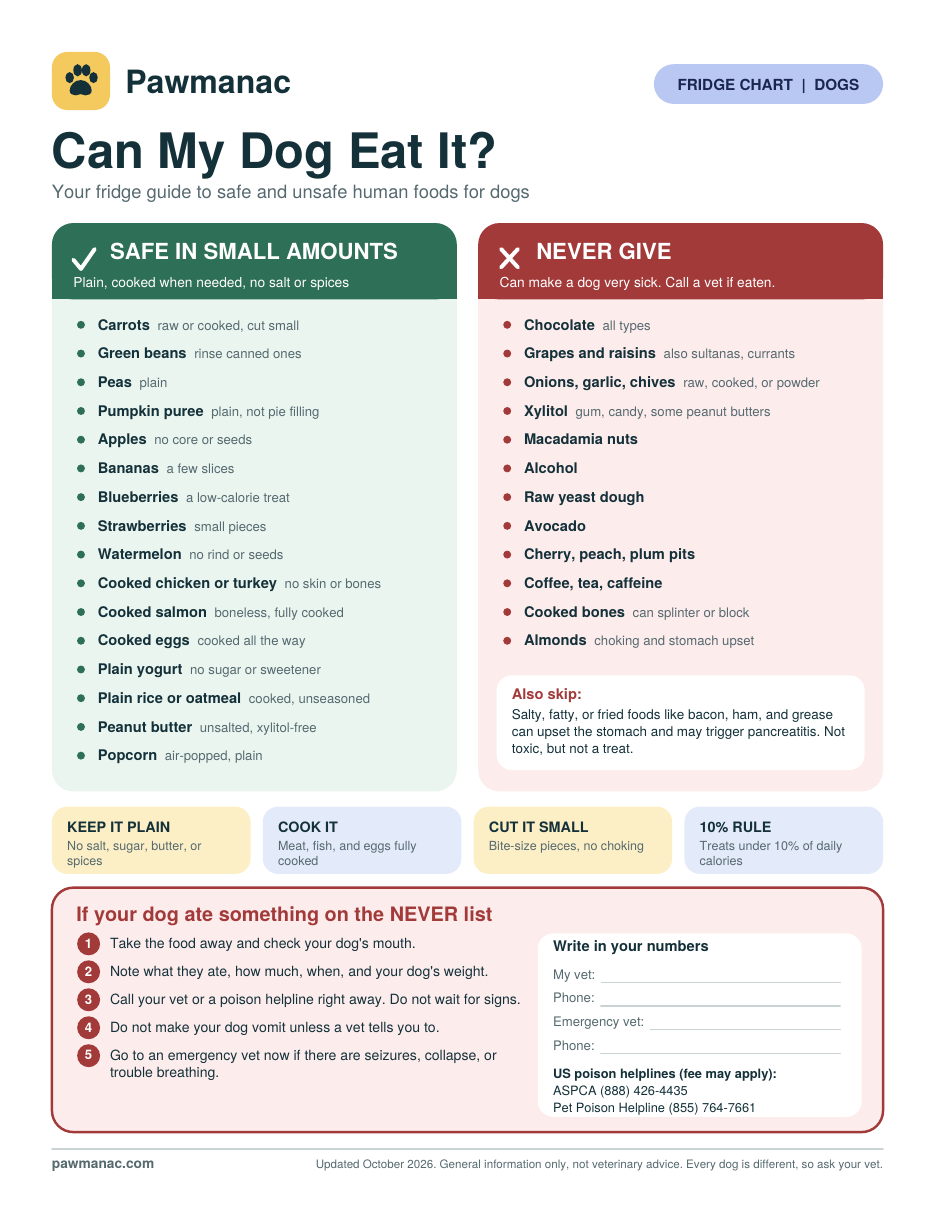
What dogs can and cannot eat
Plain carrots, green beans, cooked chicken, cooked eggs, and blueberries are good examples of safe foods in small amounts. Chocolate, grapes, raisins, onions, garlic, macadamia nuts, alcohol, and anything with xylitol can make a dog very sick. The full lists are below, and also on the printable chart.
Safe in small amounts
Plain, cooked when needed, no salt or spices
- Carrots raw or cooked, cut small
- Green beans rinse canned ones
- Peas plain
- Pumpkin puree plain, not pie filling
- Apples no core or seeds
- Bananas a few slices
- Blueberries a low-calorie treat
- Strawberries small pieces
- Watermelon no rind or seeds
- Cooked chicken or turkey no skin or bones
- Cooked salmon boneless, fully cooked
- Cooked eggs cooked all the way
- Plain yogurt no sugar or sweetener
- Plain rice or oatmeal cooked, unseasoned
- Peanut butter unsalted, xylitol-free
- Popcorn air-popped, plain
Never give
Can make a dog very sick. Call a vet if eaten.
- Chocolate all types
- Grapes and raisins also sultanas, currants
- Onions, garlic, chives raw, cooked, or powder
- Xylitol gum, candy, some peanut butters
- Macadamia nuts
- Alcohol
- Raw yeast dough
- Avocado
- Cherry, peach, plum pits
- Coffee, tea, caffeine
- Cooked bones can splinter or block
- Almonds choking and stomach upset
Also skip: salty, fatty, or fried foods like bacon, ham, and grease. They are not toxic, but they can upset the stomach and may trigger pancreatitis.
Four rules for sharing food
If your dog ate something on the never list
- Take the food away and check your dog’s mouth.
- Note what they ate, how much, when, and your dog’s weight.
- Call your vet or a poison helpline right away. Do not wait for signs.
- Do not make your dog vomit unless a vet tells you to.
- Go to an emergency vet now if there are seizures, collapse, or trouble breathing.
US poison helplines (a fee may apply): ASPCA Animal Poison Control (888) 426-4435 and Pet Poison Helpline (855) 764-7661. The printable chart has space to write in your own vet’s number.
How to use your fridge chart
- Print it on regular paper, or on card stock for a longer life.
- Put it on the fridge, where the whole family sees it, and near your dog’s food area if you can.
- Write your vet’s and emergency vet’s numbers in the boxes.
- Show kids, guests, and pet sitters. Most accidents happen when someone does not know the rules.
- On A4 paper, choose “fit to page” when you print.
Get the chart by email
Enter your email and we will send you the PDF. We only use your email to send the chart. No spam.
Frequently asked questions
Is the fridge chart free?
Yes. It is free to print and share for personal use. If you want to share it online, please link to this page.
Does the chart cover every food?
No. It covers the most common foods owners ask about. For more, see our full guide to human foods dogs can eat, and always check with your vet if you are unsure.
Can I make one for my cat?
This chart is for dogs. Some foods that are safe for dogs are not safe for cats. We plan to add a cat version, and you can browse our cat guides in the meantime.
Keep reading
Sources
- American Kennel Club: People Foods Dogs Can and Can’t Eat, akc.org
- NC State Veterinary Hospital: Healthy Human Food Treats for Pets
- Tufts University Petfoodology: Does an Apple a Day Keep the Vet Away?
- UC Davis Nutrition Support Service: Treat Guidelines for Dogs
- MedVet: Human Foods Cats and Dogs Can Eat and Foods to Avoid, medvet.com
This chart is general information, not veterinary advice. Every dog is different, so ask your vet. Read our disclaimer. Last updated: November 2026. This chart has not been reviewed by a veterinarian. Found an error? Email kbrownpatrick685@gmail.com.