Can Dogs Eat Chicken Bones? Risks, Symptoms, and What to Do
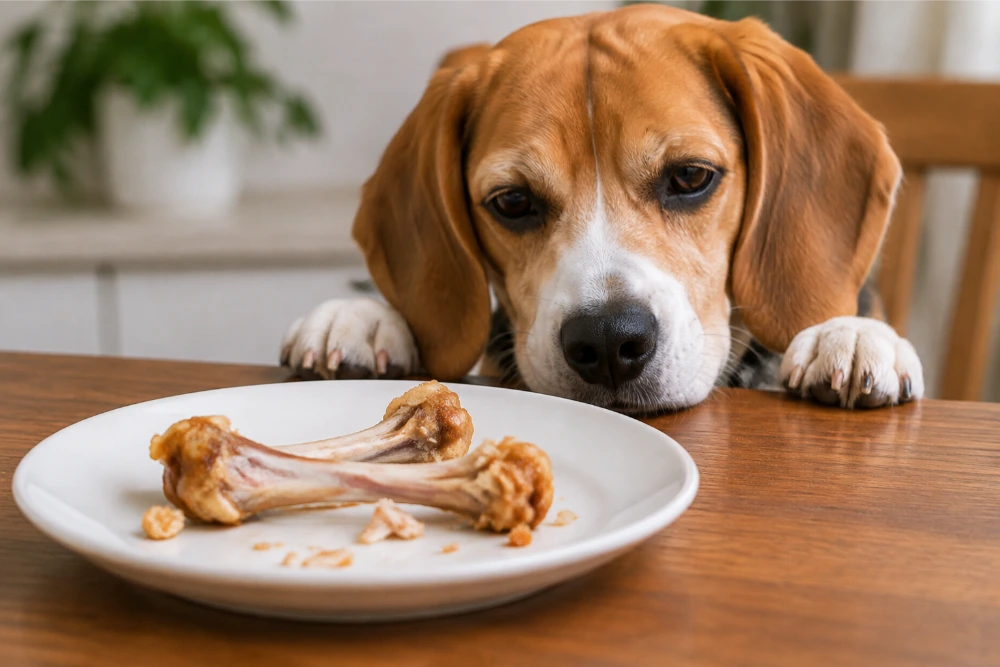
Dogs often grab chicken bones from dinner plates, kitchen counters, or trash cans before their owners can stop them. If your dog has eaten a chicken bone, you may wonder whether it will pass naturally or cause a serious problem.
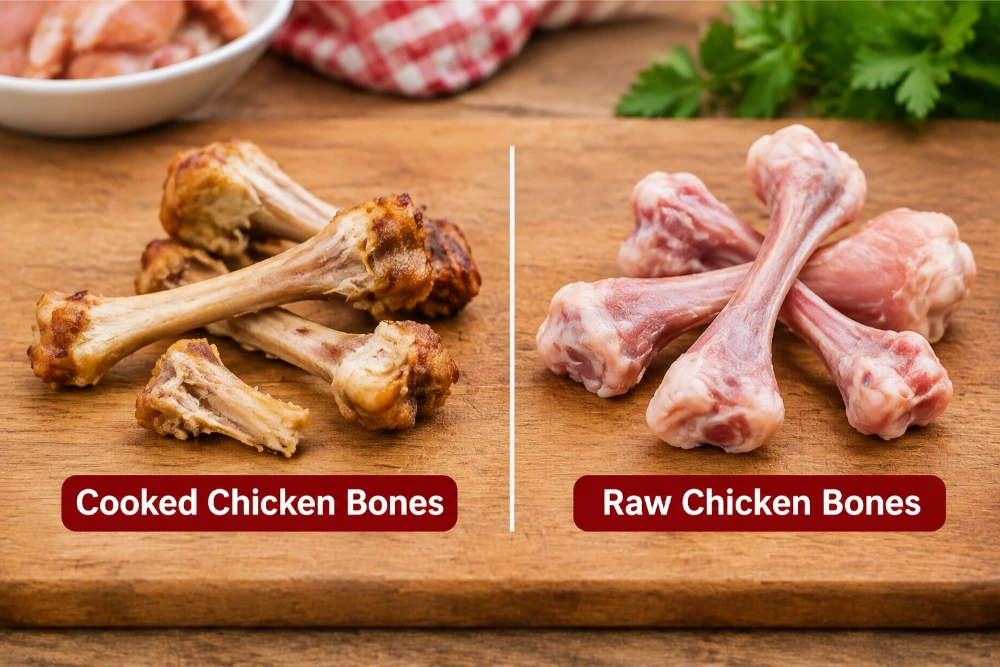
No, dogs should not be given chicken bones, whether cooked or raw. Cooked chicken bones can become brittle and break into sharp fragments, while raw chicken bones can also cause choking, digestive blockages, injuries, and bacterial exposure.
If your dog has already swallowed a chicken bone, contact your veterinarian promptly for advice. Seek emergency veterinary care immediately if your dog is choking, struggling to breathe, or showing severe distress. Do not induce vomiting or try home remedies unless a veterinarian specifically instructs you to do so.
This guide explains why chicken bones are dangerous, what symptoms to watch for, what to do after accidental ingestion, and which alternatives are safer for dogs that enjoy chewing.
Quick Answer: Can Dogs Eat Chicken Bones?
No. Chicken bones are not recommended for dogs because they can cause choking, damage the digestive tract, or become lodged in the esophagus or intestines. Cooked bones are particularly concerning because they can splinter into sharp pieces, while raw bones can carry harmful bacteria.
A dog may swallow a chicken bone without immediately developing symptoms, but that does not guarantee it is safe. Complications can develop later as the bone moves through the digestive system.
Here is a quick overview of common situations.
| Situation | What dog owners should know |
| Cooked chicken bones | Unsafe because they can splinter and cause internal injuries |
| Raw chicken bones | Not recommended because of choking, blockage, injury, and bacterial risks |
| Chicken wing bones | Can cause choking, splintering injuries, or digestive obstruction |
| Chicken drumstick bones | Can become lodged or cause injury if swallowed |
| Small bone fragments | Can still injure the digestive tract or contribute to a blockage |
| Dog swallowed a chicken bone | Contact a veterinarian promptly |
| Dog choking on a bone | Seek emergency veterinary care immediately |
| Dog seems normal after swallowing a bone | Do not assume everything is fine; follow your veterinarian’s advice |
| Plain, boneless cooked chicken | Generally suitable for many dogs in appropriate portions, without unsafe seasonings |
The safest choice is to remove all chicken bones before giving chicken to your dog and dispose of leftovers where your pet cannot reach them.
Why Are Chicken Bones Dangerous for Dogs?
Chicken bones may look small enough for a dog to chew or swallow, but their size does not make them harmless. The risks depend on whether the bones are cooked or raw, how they are chewed, the amount swallowed, and the dog’s size and health.
1. Cooked Chicken Bones Can Splinter
Cooking makes chicken bones more brittle. When a dog chews them, they may break into sharp fragments that injure the mouth, throat, stomach, or intestines.
In severe cases, fragments can puncture the digestive tract and cause internal bleeding, infection, or an obstruction that requires veterinary treatment.
This is why you should never give your dog leftover bones from roasted, baked, grilled, fried, or boiled chicken.
2. Chicken Bones Can Cause Choking
A chicken bone can become lodged in a dog’s mouth, throat, or airway. A piece that gets stuck may interfere with swallowing or prevent normal breathing.
Warning signs can include gagging, repeated coughing, excessive drooling, pawing at the mouth, or difficulty breathing.
If your dog is struggling to breathe, treat it as an emergency. Do not push your fingers blindly into the throat, as this could force the bone deeper or cause injury.
3. Bones Can Block the Digestive Tract
Not every swallowed bone fragment passes through a dog’s digestive system without complications. A fragment may become lodged in the esophagus, stomach, small intestine, or another part of the digestive tract.
A blockage can interfere with the movement of food and waste. Depending on its location and severity, treatment may involve imaging, endoscopy, or surgery.
Signs of a possible blockage include vomiting, loss of appetite, abdominal discomfort, lethargy, and difficulty passing stool. These symptoms warrant prompt veterinary attention.
4. Sharp Fragments Can Damage Internal Tissues
Sharp bone fragments may scrape or puncture tissues as they move through the digestive system. Injuries can lead to bleeding, inflammation, or a potentially life-threatening infection if intestinal contents leak into the abdomen.
A dog may initially appear comfortable even when a complication is developing. That is why it is important to seek veterinary advice after a known ingestion rather than relying only on your dog’s immediate behavior.
5. Raw Chicken Bones Can Carry Harmful Bacteria
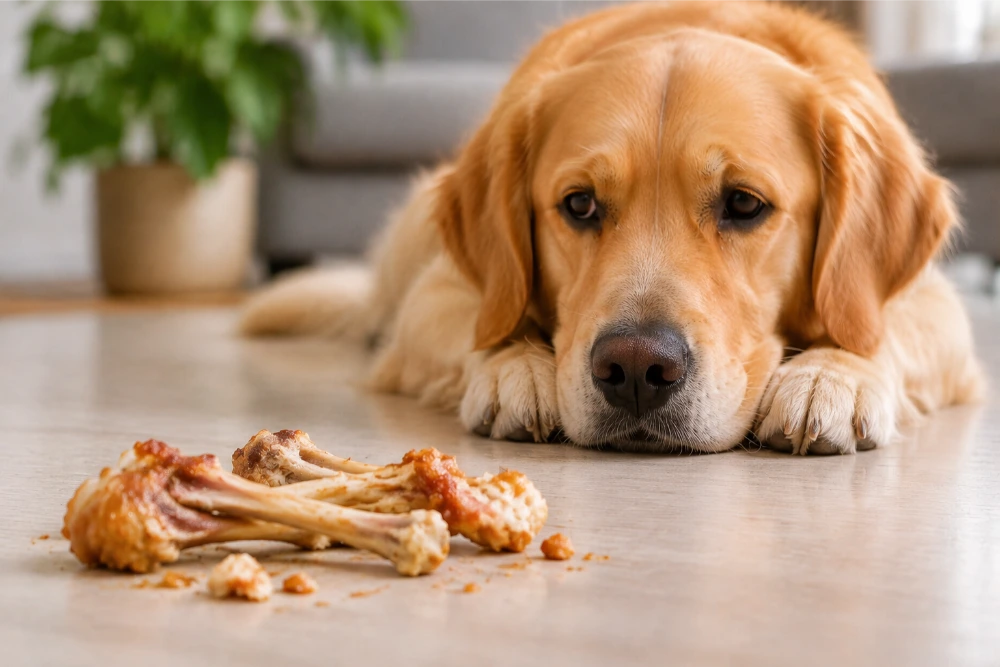
Raw chicken and its bones may carry bacteria, including Salmonella and Campylobacter. These organisms can make dogs sick and may also spread to people through contaminated surfaces, food bowls, or contact with feces.
Raw bones are not a safe alternative to cooked bones. Although they may be less brittle, they still present physical and bacterial risks.
Can Dogs Eat Cooked Chicken Bones?
No. Dogs should not be given cooked chicken bones.
Whether the bones come from a roasted chicken, grilled wings, fried chicken, or a boiled meal, cooking can make them brittle and more likely to break into sharp fragments.
Even if your dog has chewed bones before without an obvious problem, that does not mean future ingestion will be safe. A bone may break differently, become lodged, or cause an injury that is not immediately visible.
If you are preparing chicken for your dog, remove every bone before serving it. Plain, thoroughly cooked chicken meat without bones, skin, or harmful seasonings is a safer option for many dogs when offered in appropriate portions.
Can Dogs Eat Raw Chicken Bones?
No. Raw chicken bones are also not recommended for dogs.
Some owners believe raw bones are safe because they are less brittle than cooked bones. However, raw bones can still become lodged in the mouth or throat, cause choking, damage teeth, and create digestive obstructions.
Raw chicken also introduces a risk of bacterial contamination. This can be particularly concerning for puppies, older dogs, dogs with weakened immune systems, and households with people who are more vulnerable to foodborne illness.
Do not switch from cooked bones to raw bones as a way to make chewing safer. If your dog enjoys chewing, choose an appropriate alternative designed for dogs instead.
What Happens If a Dog Eats a Chicken Bone?
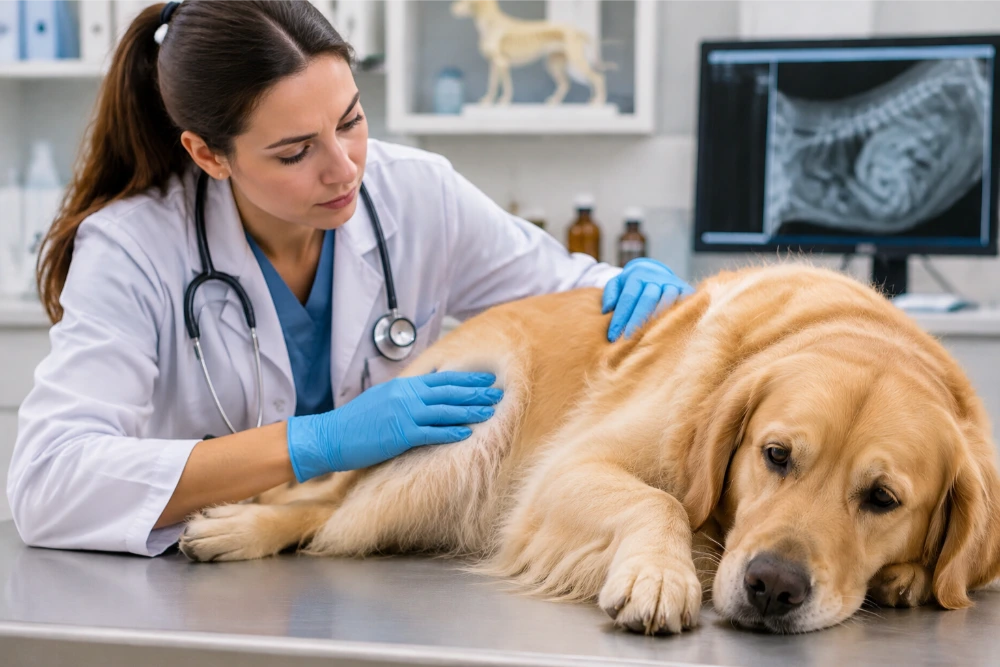
The outcome varies. Some dogs may pass a swallowed bone without complications, while others can develop choking, injury, or a digestive blockage.
Several factors influence the risk:
- The type of bone: Cooked bones can splinter, while raw bones also carry physical and bacterial risks.
- The size of the bone: Large pieces may become lodged, while smaller fragments can still cause injury.
- The dog’s size: A bone that is small relative to one dog may pose a greater obstruction risk for another.
- The amount swallowed: Multiple bones or a large quantity of fragments can increase concern.
- The dog’s health: Puppies and dogs with existing medical conditions may need additional consideration.
- The time since ingestion: Some complications may not become apparent immediately.
Your veterinarian can use these details to determine whether your dog needs an examination, imaging, monitoring, or treatment. There is no reliable way to predict the outcome based on bone size or the dog’s behavior alone.
What Should You Do If Your Dog Eats a Chicken Bone?
If your dog has swallowed a chicken bone, stay calm but take the situation seriously. Follow these steps while arranging veterinary guidance.
Step 1: Check Your Dog for Immediate Distress
Look for difficulty breathing, choking, repeated gagging, excessive drooling, or obvious distress.
If your dog is struggling to breathe or appears to be choking, seek emergency veterinary care immediately.
Step 2: Contact Your Veterinarian Promptly
Even if your dog seems normal, call your veterinarian and explain what happened. Do not wait for symptoms before seeking advice.
Be ready to share:
- Your dog’s approximate weight and age.
- Whether the bone was cooked or raw.
- The type of chicken bone, such as a wing or drumstick.
- The approximate amount swallowed.
- When your dog ate it.
- Whether your dog has shown any unusual symptoms.
This information helps the veterinary team assess the situation and recommend the next step.
Step 3: Do Not Induce Vomiting
Never try to make your dog vomit after swallowing a chicken bone unless your veterinarian specifically directs you to do so.
Bringing a sharp fragment back up can injure the esophagus or create additional complications. Do not give hydrogen peroxide, medications, or other home remedies without veterinary instructions.
Step 4: Do Not Force Food or Home Remedies
You may hear advice to feed bread, rice, pumpkin, or other foods to help a swallowed bone pass. However, these remedies are not guaranteed to prevent injury and may be inappropriate depending on the circumstances.
Do not force your dog to eat or drink. Ask your veterinarian whether food or water should be offered and follow the instructions you receive.
Step 5: Follow the Recommended Monitoring or Treatment Plan
Your veterinarian may recommend an examination or diagnostic imaging, depending on the situation. In some cases, careful monitoring may be appropriate; in others, prompt intervention may be necessary.
Follow the specific instructions provided by the veterinary team. If symptoms appear or your dog’s condition changes, contact the veterinarian again immediately.
Symptoms to Watch for After a Dog Eats a Chicken Bone
Symptoms can develop immediately or later, so continue observing your dog according to your veterinarian’s advice.
Emergency warning signs
- Difficulty breathing or choking.
- Severe or repeated gagging.
- Collapse or extreme weakness.
- Severe abdominal pain.
- Repeated vomiting, particularly with blood.
Other concerning symptoms
- Excessive drooling.
- Difficulty swallowing.
- Loss of appetite.
- Lethargy or unusual behavior.
- Abdominal tenderness or bloating.
- Diarrhea or bloody stool.
- Straining to defecate or passing very little stool.
Seek emergency care for breathing difficulties, collapse, or severe distress. Other symptoms after bone ingestion also require prompt veterinary advice because they can indicate irritation, injury, or obstruction.
Can a Dog Pass a Chicken Bone Naturally?
Sometimes, a dog may pass a swallowed chicken bone without developing complications. However, this is not guaranteed, and there is no way to establish safety simply because the dog appears normal.
A bone can become lodged or cause injury as it moves through the digestive system. Symptoms may also take time to appear.
If your dog has swallowed a chicken bone, contact your veterinarian rather than waiting to see whether it passes. Follow the recommended monitoring instructions and seek further care if your dog develops vomiting, abdominal discomfort, appetite changes, or difficulty passing stool.
Do not attempt to speed up the process with laxatives, extra food, or other home treatments unless your veterinarian specifically recommends them.
Are Chicken Bones More Dangerous for Puppies?
Chicken bones can be especially concerning for puppies because they are still developing and may be more vulnerable to choking or obstruction. Their small size can also affect the risk posed by a particular bone fragment.
Puppies may chew or swallow objects quickly, particularly when exploring new foods. A bone that an adult dog has swallowed without an obvious problem can still create a serious complication in a puppy.
Never give a puppy chicken bones as a chew or treat. If your puppy swallows one accidentally, contact your veterinarian promptly and explain its age, size, and the type of bone involved.
What Are Safer Alternatives to Chicken Bones?
Dogs often enjoy chewing, but they do not need chicken bones to maintain a healthy diet. There are alternatives that can provide enrichment without the same risks associated with sharp bone fragments.
Plain yogurt can also be an occasional treat for dogs that tolerate dairy. Read our guide on whether yogurt is good for dogs to learn about its benefits and safe feeding tips.
1. Appropriately Sized Dog Chews
Choose a chew specifically designed for dogs, taking your pet’s size, chewing strength, and eating habits into account. Supervise chewing and remove the product if it breaks into pieces or becomes small enough to swallow whole.
Green beans can also be a suitable low-calorie treat for dogs when served plain and in moderation. Learn more about whether green beans are good for dogs.
No chew is completely risk-free, so follow the manufacturer’s guidance and your veterinarian’s recommendations.
2. Veterinary-Approved Dental Chews
Dental chews can provide an outlet for chewing and may help reduce plaque when used appropriately. Look for products carrying the Veterinary Oral Health Council (VOHC) seal where relevant, and select a size suited to your dog.
Dental chews should complement, not replace, appropriate dental care.
3. Food-Dispensing Toys
Food-dispensing toys encourage dogs to work for small portions of their regular food or suitable treats. They can provide mental stimulation without requiring a bone.
Choose a durable product designed for your dog’s chewing behavior and supervise use when introducing a new toy.
4. Plain, Boneless Cooked Chicken
If your dog enjoys chicken, plain, thoroughly cooked boneless meat can be a suitable occasional food for many dogs.
Remove all bones and avoid garlic, onions, excessive salt, rich sauces, and other unsuitable seasonings. Keep portions appropriate and continue feeding a complete and balanced dog food as the main diet.
Salmon is another protein option for dogs when properly prepared and served without bones. Read our guide on whether dogs can have salmon to learn about its benefits and safe feeding methods.
How to Prevent Dogs From Eating Chicken Bones
Preventing access is the most reliable way to reduce the risk of accidental bone ingestion.
- Remove all bones before sharing suitable chicken meat with your dog.
- Put leftover bones directly into a secure trash container.
- Keep trash cans covered and inaccessible to pets.
- Avoid leaving dinner plates or food scraps unattended.
- Ask guests not to feed your dog chicken bones.
- Teach your dog a reliable “leave it” and “drop it” cue using reward-based training.
- Supervise your dog around outdoor cooking areas, picnics, and barbecues.
If your dog grabs a bone, avoid turning the situation into a chase. When it is safe to do so, use a trained drop cue or offer an appropriate trade. If the bone has already been swallowed, contact your veterinarian rather than attempting to retrieve it blindly from the throat.
Frequently Asked Questions:
The Bottom Line:
Dogs should not eat chicken bones, whether cooked or raw. Cooked bones can splinter into sharp fragments, while raw bones can cause choking, obstruction, injuries, and bacterial exposure.
If your dog swallows a chicken bone, contact your veterinarian promptly, even if your pet appears normal. Seek emergency care immediately for choking, breathing difficulties, collapse, or severe distress. Do not induce vomiting or try home remedies without veterinary instructions.
To protect your dog, remove bones from chicken before serving it, secure food waste, and choose appropriate dog chews or plain boneless chicken instead. A few simple precautions can help prevent a potentially serious emergency.
This article is for general informational purposes and is not a substitute for veterinary advice.