Can Dogs Have Tuna? Benefits, Risks, and Safe Feeding Tips
Your dog may come running the moment you open a can of tuna. Its strong smell can make it an appealing addition to your dog’s meal, especially if your pet enjoys fish. But before sharing a spoonful, you need to know whether tuna is safe for dogs and how often it can be offered.
The answer is not as simple as yes or no. Dogs can eat small amounts of certain types of tuna, but mercury exposure, added salt, preparation methods, and portion size all matter. Tuna is rich in protein and contains omega-3 fatty acids, yet these benefits do not make it an ideal everyday treat.
Canned tuna also differs from freshly cooked tuna, and not every variety is equally suitable. Raw tuna presents additional food-safety concerns, while tuna packed in brine, oil, or seasoned sauces may contain ingredients that are inappropriate for dogs.
This guide explains whether dogs can have tuna, which types are safer, how much to offer, what to do if your dog eats tuna accidentally, and which fish may be better choices for regular feeding.
Quick Answer: Can Dogs Have Tuna?
Yes, some healthy adult dogs can have a small amount of plain, fully cooked tuna as an occasional treat. If you choose canned tuna, a lower-mercury variety such as skipjack or light tuna packed in water without added salt or seasonings is a more cautious option.
However, tuna should not become a regular protein source outside a complete and balanced diet. Tuna can contain mercury, which accumulates in fish and may cause serious health problems when exposure becomes excessive. Raw tuna should be avoided because it can carry harmful microorganisms and parasites.
Here is a quick overview.
| Type of tuna | Is it suitable for dogs? |
| Plain, fully cooked tuna | Small amounts occasionally, with veterinary guidance when needed |
| Canned light tuna in water | A small amount may be suitable if it has no added salt or seasonings |
| Canned tuna in brine | Best avoided because of its high sodium content |
| Tuna packed in oil | Best avoided because of the extra fat and calories |
| Raw tuna | Avoid because of food-safety risks |
| Tuna with garlic, onion, or sauces | Avoid; some ingredients are toxic to dogs |
| Tuna mixed with mayonnaise | Not recommended because of the extra fat and calories |
| Tuna as a daily meal replacement | Not suitable as a substitute for complete and balanced dog food |
The safest choice is to keep tuna occasional, plain, and appropriately portioned rather than treating it as a routine part of your dog’s diet.
Is Tuna Good for Dogs?
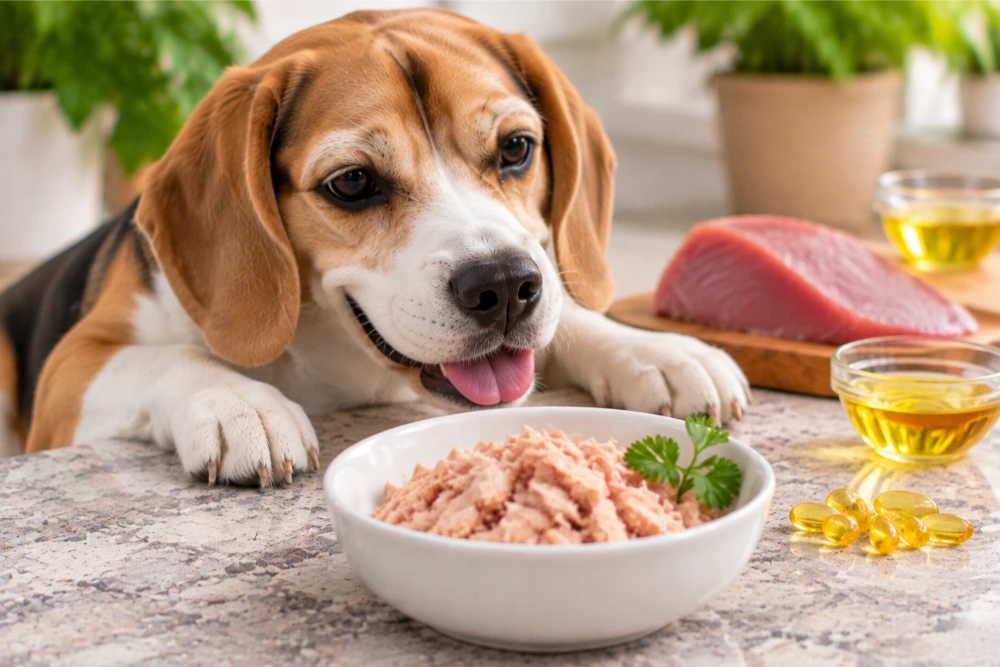
Tuna contains nutrients that dogs need, but the benefits depend on how much they eat and whether the fish is suitable for them. A small amount can provide useful nutrients, although dogs eating a complete and balanced diet generally do not need extra tuna to meet their nutritional requirements.
1. Tuna Provides Protein
Protein helps maintain muscles and supports the repair and growth of body tissues. Tuna is a protein-rich fish, which explains why fish ingredients are used in some commercial dog foods.
However, feeding extra tuna does not automatically improve your dog’s diet. The food your dog already eats should provide the protein it needs for its age and activity level.
2. It Contains Omega-3 Fatty Acids
Tuna contains omega-3 fatty acids, which play important roles in normal body functions. These fats are associated with skin and coat health and help support normal inflammatory responses.
However, the amount and type of omega-3 fatty acids vary with the tuna species and preparation. Tuna should not be treated as a substitute for a veterinary-recommended omega-3 supplement.
3. Tuna Provides Vitamins and Minerals
Tuna contains nutrients such as vitamin B12, niacin, selenium, and other minerals that support normal metabolism and bodily functions.
These nutrients can contribute to a dog’s overall nutritional intake, but a small serving of tuna is not necessary if your pet already receives a complete and balanced diet.
4. Some Dogs Enjoy Its Strong Smell
Tuna’s distinctive smell may make it appealing to dogs that are interested in fish. Some owners may consider using a tiny amount to encourage a dog to investigate its food.
However, if your dog regularly refuses its normal meals, do not rely on tuna to solve the problem. Persistent appetite changes can indicate an underlying health issue and deserve veterinary attention.
Why Is Tuna Risky for Dogs?
The main concern with feeding tuna is not that the fish is inherently poisonous to dogs. It is that tuna can contain mercury, and repeated exposure can allow this heavy metal to accumulate in the body.
Other concerns include excessive sodium, added oils, unsafe seasonings, raw-fish contamination, and choking hazards from bones. Understanding these risks helps you make a more informed decision before offering tuna to your pet.
Mercury Accumulation
Mercury enters aquatic environments and can accumulate in fish over time. Larger, longer-lived predatory fish often contain more mercury than smaller fish because of their position in the food chain.
Tuna includes several species with different mercury levels. Albacore and some larger tuna species can contain more mercury than skipjack, which is commonly sold as canned light tuna.
Cooking does not remove mercury from fish. Therefore, even thoroughly cooked tuna should not become a frequent part of your dog’s diet.
Possible signs of significant mercury exposure include:
- Loss of coordination or difficulty walking.
- Tremors or unusual movements.
- Weakness or marked lethargy.
- Changes in vision or other neurological abnormalities.
- Digestive symptoms or other unexplained health changes.
These signs are not specific to mercury poisoning and can occur with other illnesses. If your dog has eaten tuna repeatedly over an extended period and develops unusual symptoms, contact your veterinarian. Do not wait for symptoms if you already suspect a significant exposure.
Too Much Sodium
Some canned tuna contains added salt or is packed in brine. Excessive sodium can be harmful, especially for dogs with certain health conditions.
Check the product label carefully. Choose tuna packed in water without added salt rather than assuming that every can of tuna is suitable for dogs.
Excess Fat From Oil
Tuna packed in oil contains additional fat and calories. Some dogs may experience digestive upset after eating oily foods, and high-fat foods can contribute to pancreatitis in susceptible dogs.
For this reason, plain tuna packed in water is a more suitable choice if you decide to offer a small amount.
Bones and Food-Safety Problems
Fresh tuna may contain bones that can cause choking or injure the digestive tract. Carefully check the fish and remove all bones before serving it.
Raw or undercooked tuna also carries a risk of bacterial or parasitic contamination. Freezing or searing fish does not guarantee that it is safe for your dog. Fully cook the fish and avoid serving raw tuna.
Can Dogs Eat Canned Tuna?

Yes, a small amount of suitable canned tuna may be offered to some healthy adult dogs occasionally. However, the type of tuna and its packing liquid are important.
The American Kennel Club and Purina both advise caution because of mercury and the additional salt or oil found in some canned products.
Canned Tuna in Water
Canned tuna in water is generally the more suitable option if you choose to share tuna with your dog.
Look for a product that:
- Contains plain tuna and water.
- Has no added salt, if possible.
- Contains no garlic, onions, spices, or sauces.
- Uses a lower-mercury variety, such as skipjack or canned light tuna.
Drain the tuna and offer only a small amount. Water-packed tuna is not automatically low in mercury, so the species still matters.
Canned Tuna in Brine
It is best to avoid tuna packed in brine. Brine contains salt, and the sodium content can be unnecessarily high for dogs.
If you have already given your dog a small bite, do not panic. Check the ingredients and amount consumed, and contact your veterinarian if your dog ate a large quantity or has a health condition that makes sodium intake particularly important.
Canned Tuna in Oil
Tuna packed in oil is not the best choice for dogs because it adds fat and calories. Although a tiny accidental taste may not cause a problem, it is better to choose plain tuna in water for any occasional serving.
Canned Tuna With Added Flavors
Avoid flavored tuna, spicy tuna, tuna salad, and products containing garlic, onions, or rich sauces.
Ingredients that are safe for people may not be appropriate for dogs. When in doubt, do not share the product.
Can Dogs Eat Raw Tuna?
No. Raw tuna is not recommended for dogs because it can contain bacteria or parasites that may cause illness.
Raw fish also presents additional nutritional concerns. Certain raw fish contain thiaminase, an enzyme that breaks down thiamine, also known as vitamin B1. The presence and activity of this enzyme vary by fish species, but it is another reason not to make raw fish a routine part of a dog’s diet.
If you want to offer tuna, cook it thoroughly without salt, oil, garlic, onions, or seasoning. Remove all bones and allow the fish to cool before serving.
Raw tuna is also different from a small amount of plain cooked tuna in terms of food-safety risk. Do not assume that a dog can safely eat raw fish simply because it is a natural food.
How Much Tuna Can a Dog Eat?
There is no universally established tuna serving size that is safe for every dog. The appropriate amount depends on the dog’s size, health, diet, the type of tuna, and how often it has already eaten fish.
Veterinary nutrition guidance generally favors keeping treats limited and maintaining a complete and balanced main diet. Because tuna’s mercury content varies, the safest approach is to discuss the appropriate amount with your veterinarian rather than relying on a fixed portion chart.
For general context, some feeding guides suggest a teaspoon or tablespoon as a small taste, depending on the dog’s size. That is not a guarantee of safety, and it should not be interpreted as a recommended daily serving.
When considering tuna for your dog:
- Start by asking whether tuna is appropriate for your pet’s health and diet.
- Choose a suitable, plain product with no added salt or seasoning.
- Offer only a tiny amount if your veterinarian agrees.
- Do not feed tuna every day or use it as a regular meal replacement.
- Stop offering it if your dog develops digestive symptoms or another adverse reaction.
Remember that the usual guideline of keeping treats to no more than 10% of daily calories does not mean tuna can safely make up that entire allowance. Mercury exposure and other factors still matter.
If you are looking for other low-calorie treat options, discover whether green beans are good for dogs and how they can fit into a balanced feeding routine.
Can Puppies Eat Tuna?
It is best to avoid offering tuna to puppies unless your veterinarian specifically advises that it is appropriate.
Puppies are growing and need carefully balanced nutrition to support bone development, muscles, and other body systems. Their small size also makes portion control more difficult.
Tuna adds mercury exposure without providing a necessary benefit when a puppy is already eating a suitable complete and balanced puppy food.
If you want to introduce fish to a puppy’s diet, ask your veterinarian about appropriate alternatives and preparation methods. Do not replace puppy food with tuna or use fish as the main protein source without a professionally formulated diet.
Can Dogs Eat Tuna Every Day?
No. Tuna should not be a daily treat or a regular addition to your dog’s meals.
The main reason is mercury exposure. Repeated feeding can increase the amount of mercury your dog consumes over time, and cooking does not eliminate it.
There is also little reason to add tuna regularly when a complete and balanced dog food already supplies the nutrients your pet needs. If you want to provide fish more frequently, discuss lower-mercury options with your veterinarian.
A fish-based commercial dog food formulated to meet recognized nutritional standards is different from feeding extra tuna from a can. Commercial diets are formulated to supply nutrients in appropriate proportions.
Can Dogs Eat Tuna Mixed With Mayonnaise, Pasta, or Other Foods?
It depends on the other ingredients, but most prepared tuna dishes are best kept away from dogs.
Tuna With Mayonnaise
Tuna mixed with mayonnaise contains extra fat and calories. It may also contain seasonings or other ingredients that are unsuitable for dogs.
Plain tuna is a better option if your veterinarian approves an occasional taste.
Tuna Pasta
Plain, cooked pasta is not generally toxic to dogs in small amounts, but tuna pasta often includes salt, butter, sauces, garlic, onions, or other ingredients that make it unsuitable.
Avoid sharing a prepared tuna pasta dish unless every ingredient has been checked and is appropriate for your dog.
Tuna Sandwiches
Tuna sandwiches can contain mayonnaise, pickles, onions, salty bread, and seasonings. Some sandwich ingredients may be harmful to dogs, and the overall dish is not a good treat choice.
Offer a small amount of plain, suitable tuna instead of a prepared sandwich.
Tuna With Garlic or Onions
Never give your dog tuna prepared with garlic or onions. These ingredients can damage a dog’s red blood cells and may cause serious illness.
If your dog eats tuna containing either ingredient, contact your veterinarian for advice based on the amount consumed and your dog’s size.
What Should You Do If Your Dog Eats Tuna Accidentally?
If your dog steals a small bite of plain, cooked tuna or a little water-packed canned tuna, there is usually no reason to panic. Tuna is not inherently toxic to dogs, and a small accidental taste is unlikely to cause mercury poisoning.
The next step depends on the type and amount of tuna your dog ate.
If Your Dog Ate a Small Amount of Plain Tuna
Check whether the tuna was cooked, whether it contained added ingredients, and approximately how much your dog consumed. If your dog is acting normally, monitor it for digestive upset.
If Your Dog Ate a Large Amount
Contact your veterinarian for advice, especially if your dog is small, has an existing medical condition, or has eaten tuna repeatedly over time. Do not try to make your dog vomit unless a veterinary professional specifically instructs you to do so.
If Your Dog Ate Tuna With Garlic, Onions, or Other Harmful Ingredients
Contact your veterinarian promptly. Garlic and onions can be toxic to dogs, and the risk depends on the ingredients and quantity consumed.
If Your Dog Ate Raw Tuna
Contact your veterinarian for advice, particularly if the fish was spoiled or your dog develops vomiting, diarrhea, weakness, or other unusual symptoms.
Watch for Concerning Symptoms
Seek veterinary advice if your dog develops persistent vomiting, diarrhea, unusual lethargy, or other concerning changes. Tremors, loss of coordination, collapse, or difficulty breathing require urgent veterinary attention.
Mercury poisoning is more commonly a concern with repeated exposure than with one tiny taste. If your dog has been eating tuna regularly, tell your veterinarian the type, approximate quantity, and frequency rather than waiting for symptoms.
What Fish Is Safer for Dogs Than Tuna?
If your dog enjoys fish, you have several alternatives that may be more appropriate for regular feeding. Fish species with generally lower mercury levels can offer protein and omega-3 fatty acids without the same degree of concern associated with many tuna varieties.
The American Kennel Club identifies fish such as whitefish, herring, flounder, and Arctic char as options used in dog food. Salmon is another option when thoroughly cooked and prepared correctly.
Before introducing fish into your dog’s diet, learn more about whether dogs can have salmon, its nutritional benefits, and how to prepare it safely.
| Fish | How to serve it |
| Salmon | Fully cooked, plain, and completely deboned |
| Whitefish | Cooked thoroughly without seasoning or added salt |
| Herring | Properly cooked and free from bones and unsuitable additives |
| Flounder | Fully cooked, plain, and deboned |
| Arctic char | Cooked thoroughly without sauces or seasonings |
| Cod | Plain, fully cooked, and deboned |
These fish are not automatically suitable for every dog. Portion size, individual health, preparation, and total dietary balance still matter.
Avoid raw fish, smoked fish with high sodium content, heavily seasoned seafood, and fish preparations containing garlic or onions. If your dog needs a special diet, ask your veterinarian which fish, if any, is appropriate.
Frequently Asked Questions:
The Bottom Line:
Dogs can have small amounts of suitable tuna occasionally, but it is not an ideal everyday treat. Tuna provides protein, omega-3 fatty acids, vitamins, and minerals, yet its mercury content makes frequent feeding a concern.
If you decide to share tuna with your dog, choose a lower-mercury variety, preferably packed in water without added salt, and offer only a small amount. Fresh tuna should be thoroughly cooked and deboned. Avoid raw tuna, tuna packed in brine or oil, and prepared dishes containing garlic, onions, or rich sauces.
Puppies and dogs with medical conditions may need additional precautions, so check with your veterinarian before introducing tuna into their diets.
Most importantly, remember that your dog does not need extra tuna to receive balanced nutrition if it already eats a complete and balanced dog food. If you want to offer fish more regularly, ask your veterinarian about suitable lower-mercury alternatives.
This article is for general informational purposes and is not a substitute for veterinary advice.