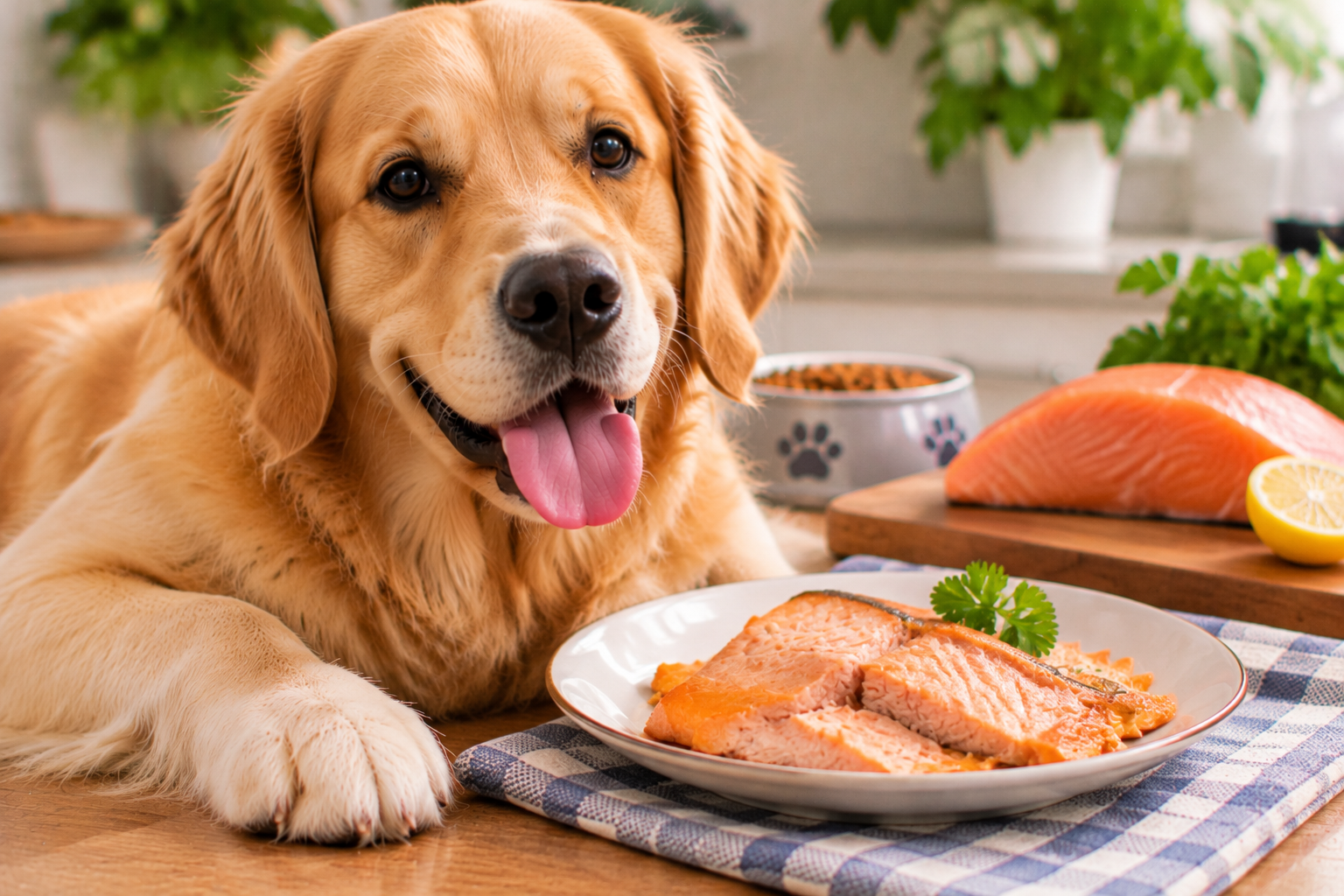
Can Dogs Have Salmon? Benefits, Risks, and How to Feed It Safely
Can dogs have salmon? Yes, dogs can eat salmon when it is thoroughly cooked, plain, and completely free of bones. Salmon contains protein and omega-3 fatty acids, which support several important functions in a dog’s body. However, raw or undercooked salmon can expose dogs to harmful parasites and bacteria. Before sharing salmon with your pet, it is important to understand the preparation methods and safety precautions.
Yes, dogs can eat salmon when it is thoroughly cooked, plain, and completely free of bones. However, raw or undercooked salmon can expose dogs to harmful parasites and bacteria. In some regions, raw salmon can carry the parasite associated with salmon poisoning disease, a potentially fatal illness in dogs.
The preparation method, portion size, and your dog’s health all matter. Smoked salmon, heavily seasoned fish, and salmon prepared with garlic or onions should be avoided. Even plain cooked salmon should be offered in moderation rather than replacing your dog’s regular food.
In this guide, you’ll learn about the benefits of salmon for dogs, how to prepare it safely, which salmon products to avoid, and what to do if your dog eats raw salmon or swallows a fish bone.
Quick Answer: Can Dogs Eat Salmon?
Yes, most healthy dogs can eat a small amount of plain, thoroughly cooked salmon as an occasional treat. Remove all bones, avoid added salt and seasonings, and allow the fish to cool before serving.
Salmon provides protein, omega-3 fatty acids, and other nutrients. However, it should not replace a complete and balanced dog food. Raw or undercooked salmon is unsafe because it may contain parasites or bacteria, including the organism responsible for salmon poisoning disease in certain regions.
Here is a quick overview of common salmon products.
| Type of salmon | Is it safe for dogs? |
| Plain, fully cooked salmon | Generally safe in small portions |
| Baked or steamed salmon | Suitable when thoroughly cooked and deboned |
| Raw salmon | Avoid because of parasite and bacterial risks |
| Undercooked salmon | Avoid |
| Smoked salmon | Best avoided because of its high sodium content |
| Canned salmon | Some plain varieties may be suitable; check ingredients and bones |
| Salmon skin | Small amounts of plain, thoroughly cooked skin may be suitable for some dogs |
| Salmon bones | Do not intentionally feed them |
| Salmon with garlic or onions | Avoid because these ingredients are toxic to dogs |
| Salmon cooked in rich sauces or excessive oil | Best avoided |
The safest approach is to prepare a small, separate portion of plain salmon for your dog rather than sharing a seasoned meal.
Is Salmon Good for Dogs?

Salmon can be a nutritious addition to a dog’s diet when prepared correctly and served in appropriate amounts. It contains several nutrients that support normal bodily functions, although dogs eating complete and balanced food generally do not need extra salmon to meet their nutritional requirements.
1. Salmon Provides High-Quality Protein
Protein supports muscle maintenance, tissue repair, and normal growth. Salmon is a protein-rich fish that can contribute to your dog’s nutritional intake.
However, adding extra salmon does not automatically make your dog’s diet healthier. The amount of protein your dog needs depends on its age, activity level, health, and existing food.
2. It Contains Omega-3 Fatty Acids
Salmon contains omega-3 fatty acids, including EPA and DHA. These fats support normal inflammatory responses and play important roles in various bodily functions.
Omega-3 fatty acids are also associated with skin and coat health. However, salmon should not be treated as a replacement for a veterinarian-recommended supplement, particularly when a specific dose is needed for a medical condition.
3. Salmon Provides Vitamins and Minerals
Salmon contains nutrients such as vitamin B12, vitamin D, selenium, and other minerals that contribute to normal metabolism and body functions.
These nutrients can be useful components of a dog’s diet, but their presence does not make salmon a complete food. Your dog’s main meals should continue to provide the appropriate balance of essential nutrients.
4. It Can Add Variety to Your Dog’s Treats
Some dogs enjoy the taste and texture of cooked salmon. A small portion can provide variety when used as an occasional treat or food topper.
If your dog has food sensitivities or follows a prescription diet, check with your veterinarian before introducing salmon. A new protein source is not automatically suitable for every dog.
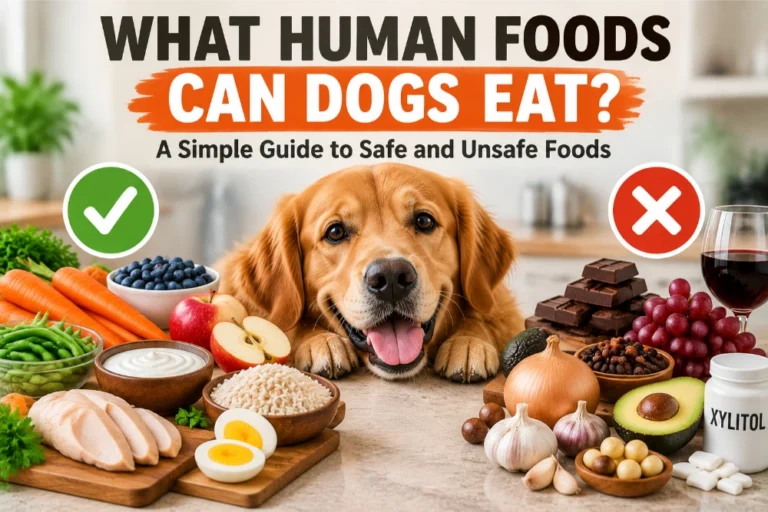
Tuna is another fish that some dog owners consider as an occasional treat. However, its mercury content and preparation methods require special attention. Read our guide on whether dogs can have tuna to understand its benefits, risks, and safe feeding practices.
How to Prepare Salmon for Dogs
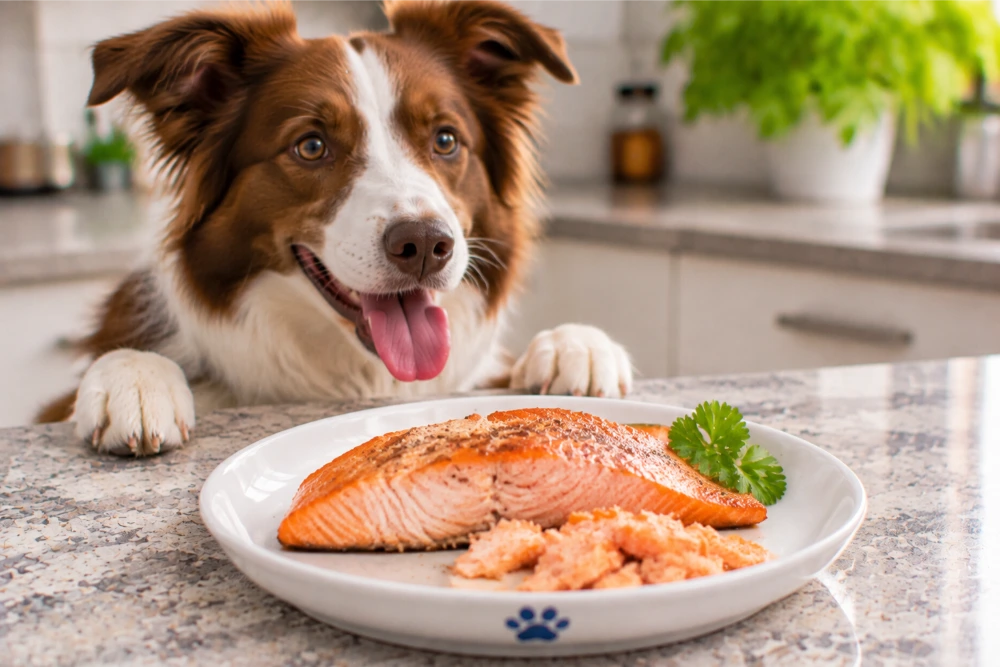
The safest way to serve salmon is to cook it thoroughly without adding salt, seasonings, sauces, or unnecessary fat.
Follow these steps before offering salmon to your dog:
- Choose fresh salmon from a reliable source and check that it has been stored properly.
- Remove visible bones before cooking, then inspect the fish again before serving.
- Bake, steam, or poach the salmon until it is thoroughly cooked throughout.
- Do not add garlic, onions, butter, excessive oil, salt, or seasoning blends.
- Allow the fish to cool to a safe temperature.
- Break it into small pieces appropriate for your dog’s size.
- Offer a small portion and monitor your dog for digestive upset.
Avoid relying on appearance alone to decide whether the fish is cooked. The thickest part should reach a safe internal temperature; standard food-safety guidance recommends 145°F (63°C) for fish.
Do not feed spoiled salmon or fish that has been stored improperly. Cooking is not a reliable way to make spoiled food safe.
Can Dogs Eat Raw Salmon?
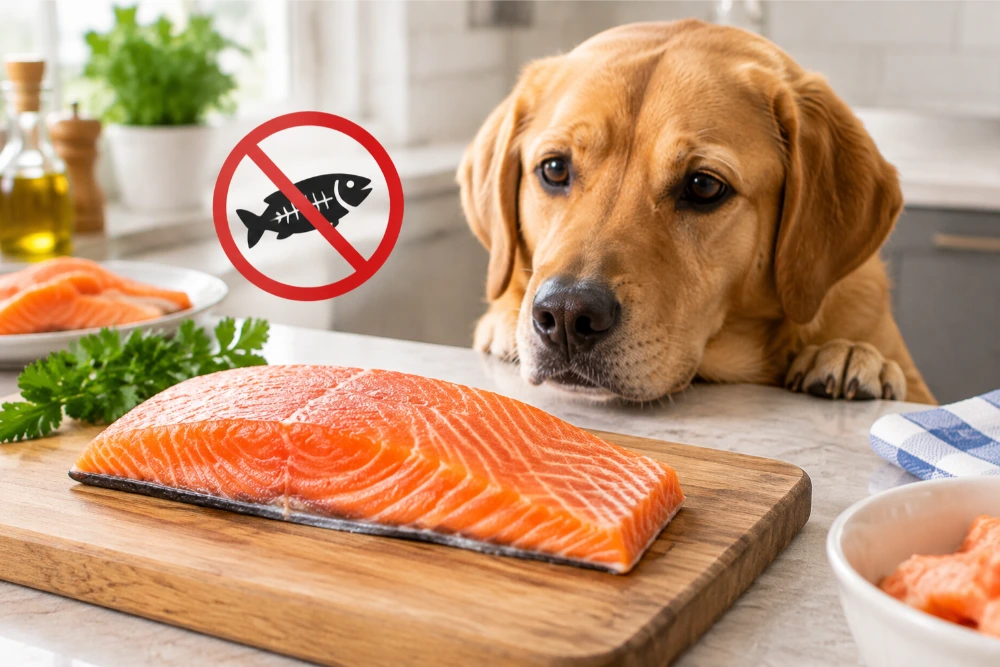
No. Raw salmon should not be fed to dogs because it can contain harmful parasites and bacteria.
One particularly serious concern is salmon poisoning disease, which can occur when dogs eat certain raw or undercooked fish carrying an infected parasitic fluke. The parasite can transmit a bacterial organism that causes illness.
This disease is associated with parts of the Pacific Northwest, including areas of California, Oregon, and Washington. It can be fatal without appropriate treatment.
What Are the Symptoms of Salmon Poisoning Disease?
Signs may include:
- Vomiting.
- Diarrhea, sometimes with blood.
- Fever.
- Loss of appetite.
- Weakness or lethargy.
- Weight loss.
- Swollen lymph nodes.
Symptoms may not appear immediately after a dog eats infected fish. Therefore, a dog that initially seems fine may still need veterinary attention after a known exposure.
If your dog eats raw salmon from a river, stream, or coastal area where salmon poisoning disease occurs, contact your veterinarian promptly. Do not wait for symptoms to develop.
Raw salmon from a store is not automatically safe either. Although the specific risk of salmon poisoning disease depends on the fish’s origin and exposure, raw fish can carry other pathogens and parasites.
Thorough cooking is the safer choice.
Can Dogs Eat Cooked Salmon?
Yes. Plain, thoroughly cooked salmon is generally the best way to offer this fish to dogs.
Baked, steamed, or poached salmon can be suitable when it is completely cooked, deboned, and prepared without harmful ingredients.
Avoid serving salmon that has been fried in large amounts of oil or prepared with rich sauces. Excessive fat can cause digestive upset and may contribute to pancreatitis in susceptible dogs.
If you prepare salmon for your family, set aside a small, unseasoned portion for your dog before adding spices, sauces, or other ingredients.
Can Dogs Eat Salmon Skin?
Dogs can eat a small amount of thoroughly cooked salmon skin if it is plain, free from bones, and prepared without seasoning. However, salmon skin contains fat, so it may not suit every dog.
Avoid deep-fried salmon skin or skin prepared with butter, garlic, heavy seasoning, or excessive oil.
Dogs with pancreatitis, a history of digestive problems, or a prescribed low-fat diet should not receive salmon skin without veterinary approval.
Can Dogs Eat Smoked Salmon?
Smoked salmon is not a recommended treat for dogs. It is often high in sodium, and some products contain additional seasonings or ingredients that are unsuitable for pets.
Even when smoking has cooked the fish, the salt content makes it a less suitable choice than plain, freshly cooked salmon.
If your dog accidentally eats a small piece, check the ingredients and monitor for unusual symptoms. Contact your veterinarian if your dog eats a large quantity or has a medical condition that makes sodium intake particularly important.
Can Dogs Eat Canned Salmon?
Some canned salmon can be suitable for dogs in small amounts, but the product label matters.
Choose plain salmon packed in water without added salt, sauces, or seasonings. Check the texture carefully and remove any bones that are firm or sharp.
Some canned salmon products contain soft bones that are intended to be eaten, but you should not assume every product is appropriate for every dog. When uncertain, choose a boneless product or consult your veterinarian.
Freshly cooked salmon is often the simpler option because you can control its preparation and ingredients.
Can Dogs Eat Salmon Bones?
No. You should not intentionally feed your dog salmon bones.
Fish bones can be small and sharp, potentially causing choking or injuring the mouth, throat, or digestive tract. Cooking does not guarantee that every bone is safe to swallow.
Before serving salmon, carefully inspect the flesh and remove any bones you find. Buying a boneless fillet can make preparation easier, but it is still important to check it before serving.
If your dog swallows a bone, do not induce vomiting or attempt to remove a bone lodged deep in its throat. Contact your veterinarian for advice, especially if your dog is gagging, drooling excessively, vomiting, or showing signs of pain.
How Much Salmon Can a Dog Eat?
The appropriate serving depends on your dog’s size, calorie requirements, activity level, overall diet, and health.
There is no single salmon portion that is suitable for every dog. A small dog generally needs less than a large dog, and dogs with medical conditions may need stricter dietary limits.
For an occasional treat, start with a few small, plain pieces rather than offering an entire fillet. Observe how your dog responds before considering another serving.
Keep these points in mind:
- Introduce salmon gradually.
- Count salmon toward your dog’s overall treat allowance.
- Keep all treats combined to no more than about 10% of daily calories.
- Ensure the main diet remains complete and balanced.
- Ask your veterinarian about portions if your dog needs to lose weight or follows a prescription diet.
The 10% guideline is a general treat rule, not a recommended salmon serving size. Your dog’s individual needs should determine the amount.
If you are looking for other low-calorie treat options, green beans can be a good choice for some dogs. Read our guide on whether green beans are good for dogs to learn about their nutritional benefits, serving sizes, and safe preparation methods.
Can Puppies Eat Salmon?
Puppies can generally eat a small amount of plain, thoroughly cooked salmon if it is completely deboned and cut into manageable pieces.
However, puppies need carefully balanced nutrition to support healthy growth. Their main food should be formulated for their life stage, and salmon should not replace a substantial portion of their regular meals.
Introduce new foods gradually and watch for vomiting, diarrhea, itching, or other unusual symptoms.
If your puppy has a sensitive stomach, an existing health condition, or a special feeding plan, consult your veterinarian before adding salmon to its diet.
Can Dogs Eat Salmon Every Day?
Salmon can be included in some professionally formulated dog foods, but adding extra salmon to your dog’s meals every day is not automatically appropriate.
Regular additions can increase calorie intake and disrupt nutritional balance if they replace too much of the main diet. Fatty portions may also be unsuitable for dogs with certain health conditions.
If you want salmon to become a regular protein source, consider a complete and balanced commercial dog food formulated with salmon. Alternatively, consult a veterinary nutritionist about a properly balanced homemade diet.
For most dogs, a small amount of plain cooked salmon is best treated as an occasional addition rather than a daily requirement.
Can Dogs Eat Salmon With Seasoning?
Plain salmon is the safest choice. Avoid preparing your dog’s portion with garlic, onions, excessive salt, heavy sauces, butter, or rich marinades.
Garlic and onions are toxic to dogs and can damage their red blood cells. Excess fat may cause digestive problems and can contribute to pancreatitis in susceptible dogs.
If you are preparing salmon for the family, set aside a small, unseasoned portion for your dog before adding seasonings.
Can Salmon Make Dogs Sick?
Yes. Salmon can make dogs sick if it is raw, undercooked, spoiled, contaminated, or prepared with unsuitable ingredients. Some dogs may also experience digestive upset when introduced to fish or fatty foods.
The main risks include:
- Salmon poisoning disease from certain infected raw or undercooked fish.
- Bacterial or parasitic contamination.
- Choking or injury from fish bones.
- Digestive upset from excessive fat or unfamiliar food.
- Adverse reactions in dogs with fish allergies or sensitivities.
If your dog develops persistent vomiting, diarrhea, abdominal pain, weakness, or other concerning symptoms after eating salmon, contact your veterinarian.
If the salmon was raw or undercooked and came from a region associated with salmon poisoning disease, seek veterinary advice promptly even if your dog appears normal.
What to Do If Your Dog Eats an Entire Salmon Fillet
If your dog steals an entire salmon fillet, the next steps depend on how the fish was prepared, whether it contained bones, and your dog’s size.
A large portion of plain, cooked salmon may cause vomiting, diarrhea, or abdominal discomfort, especially in a small dog or one that is not accustomed to fatty foods.
Step 1: Check How the Salmon Was Prepared
Determine whether the fish was raw, undercooked, smoked, seasoned, or cooked with garlic or onions. These details help your veterinarian assess the risk.
Step 2: Check for Bones
If the fillet contained bones, tell your veterinarian. Do not induce vomiting or attempt to remove a bone lodged deep in the throat.
Step 3: Consider the Quantity and Your Dog’s Size
A whole fillet represents a much larger serving for a small dog than for a large dog. The amount consumed and your dog’s health history will help determine the appropriate response.
Step 4: Contact Your Veterinarian When Needed
Seek advice if your dog ate a large portion, consumed raw salmon, swallowed bones, or ate salmon containing potentially harmful ingredients.
Step 5: Watch for Symptoms
Monitor your dog for vomiting, diarrhea, abdominal pain, weakness, loss of appetite, or unusual behavior. Severe symptoms require prompt veterinary attention.
If your dog ate raw salmon from a region where salmon poisoning disease occurs, contact your veterinarian immediately rather than waiting for symptoms.
Frequently Asked Questions:
The Bottom Line:
Dogs can eat salmon, and plain, thoroughly cooked salmon can be a nutritious occasional treat. It provides protein and omega-3 fatty acids that support normal bodily functions, including skin and coat health.
Preparation is the most important factor. Choose fresh salmon, cook it thoroughly, remove all bones, and avoid salt, garlic, onions, sauces, and excessive oil. Do not feed raw or undercooked salmon because it can carry harmful parasites and bacteria, including the organism responsible for salmon poisoning disease in dogs.
Keep portions appropriate for your dog’s size and overall diet. If your dog has pancreatitis, food allergies, a sensitive stomach, or a prescription diet, consult your veterinarian before offering salmon.
With safe preparation and sensible portions, salmon can be a useful addition to your dog’s treat options without replacing the complete and balanced nutrition your pet needs.
This article is for general informational purposes and is not a substitute for veterinary advice.





One Comment