Can Dogs Eat Avocado?
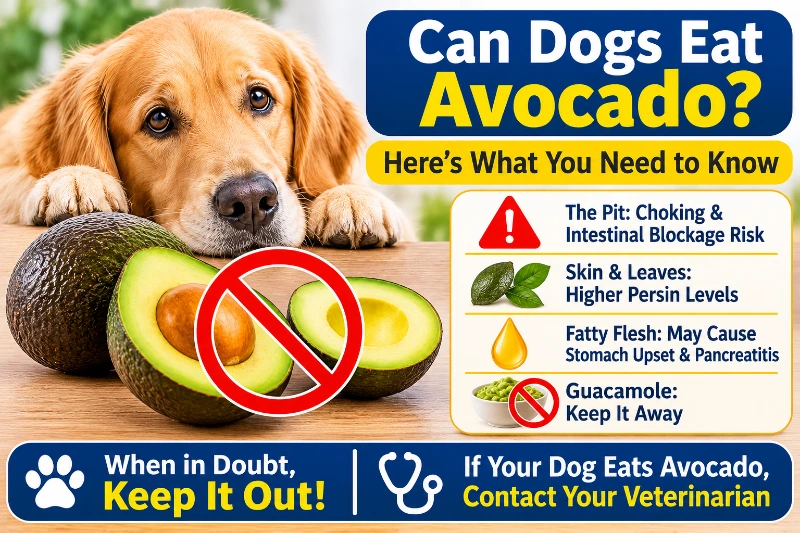
Can Dogs Eat Avocado? This one is not a simple yes or no. Avocado has a scary reputation because it contains a toxin called persin — but dogs are far more resistant to persin than the animals it truly endangers, and a small amount of ripe flesh is usually tolerated. The real dangers for dogs are more mechanical: a pit that can choke a dog or block his intestines, and a fatty flesh that can upset the stomach and, in some dogs, trigger pancreatitis.
So avocado is not a poison on the level of chocolate or onions, but it is not a recommended treat either. This guide explains where the persin risk actually applies, why the pit sends dogs to surgery, how much flesh is reasonable, and which avocado foods — guacamole above all — are a firm no.
The quick answer:
A small piece of ripe avocado flesh, occasionally, is unlikely to harm most healthy dogs — but there is no nutritional need for it. Never give your dog the pit, a choking and gut-blockage hazard that often needs surgery to remove. Never give the skin or leaves, which carry more persin. And never share guacamole, which usually contains onion, garlic and salt. If your dog swallows a pit or eats a large amount of avocado, call your vet or ASPCA Animal Poison Control at (888) 426-4435.
Avocado verdict at a glance:
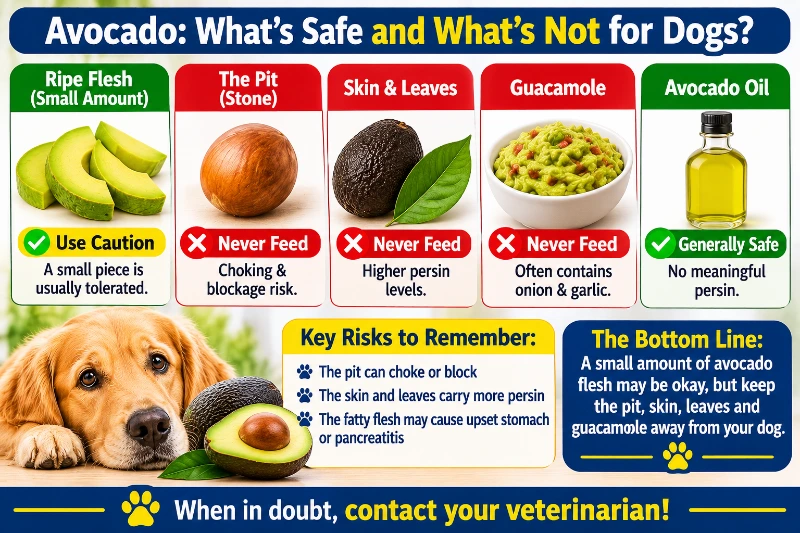
| Form | Verdict | Why |
| Ripe flesh, small amount | Caution — occasional only | Dogs resist persin fairly well, but the flesh is very high in fat |
| The pit (stone) | Never feed | Choking hazard and a common cause of intestinal blockage needing surgery |
| Skin and leaves | Never feed | Higher persin levels than the flesh; also tough and hard to digest |
| Guacamole | Never feed | Usually contains onion, garlic, salt and sometimes lime or chili — several problems at once |
| Avocado oil | Generally safe | Contains no meaningful persin; used in some dog foods and coat supplements |
| Large amounts of flesh | Avoid | The fat load can cause vomiting and diarrhea, and pancreatitis in prone dogs |
In this guide:
- What persin is — and why dogs react differently from other animals
- The real risk: the pit
- The fat problem: stomach upset and pancreatitis
- Guacamole and other avocado foods to avoid
- How much avocado can a dog eat?
- What to do if your dog ate avocado
What persin is — and why dogs react differently:
Persin is a fungicidal compound found throughout the avocado plant — in the leaves, bark, skin and pit, and in smaller amounts in the flesh — and it is genuinely dangerous to some animals. Birds are extremely sensitive, and horses, cattle, goats and sheep can be seriously poisoned, with damage to the heart and mammary tissue. This is where avocado’s toxic reputation comes from, and for those species it is fully deserved.
Dogs (and cats) are comparatively resistant. Veterinary references generally class avocado as a mild risk for dogs: a healthy dog eating some ripe flesh will usually digest it without drama — the flesh holds the least persin. That is why avocado and avocado oil appear as ingredients in some commercial dog foods.
Resistant does not mean immune, though. Large amounts of persin-containing material — especially skin, leaves or unripe fruit — can still cause vomiting and diarrhea in dogs, and the flesh brings its own separate problems, unrelated to persin — and those are the problems that actually land dogs at the vet.
The real risk: the pit:
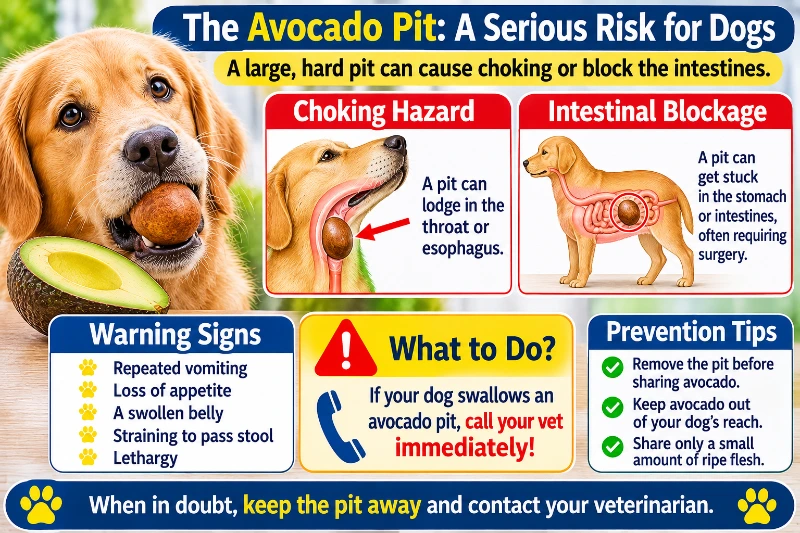
The avocado pit is the most dangerous part of the fruit for a dog, and it has nothing to do with poison. It is large, round, hard and slippery — exactly the size and shape to be swallowed whole by a medium or large dog, and nearly impossible to pass.
A swallowed pit can cause two emergencies. First, choking: a pit can lodge in the throat or esophagus, blocking the airway or pressing on it. Second, and more commonly, intestinal blockage: the pit travels to the stomach or intestines and gets stuck. A blockage stops food and fluid moving through the gut, and the trapped section of intestine can die. This is a surgical emergency — removing a stuck avocado pit is a well-known reason for abdominal surgery in dogs.
Signs of a blockage include repeated vomiting, loss of appetite, a painful or swollen belly, straining or failing to pass stool, and growing lethargy. If you know or suspect your dog swallowed a pit, do not wait for signs: call your vet straight away. A pit that is still in the stomach is far easier and cheaper to retrieve than one that has moved into the intestines.
The practical rule is simple. If you eat avocado at home, treat the pit like you would a chicken bone or a corn cob: straight into a bin the dog cannot raid, never left on a counter or plate.
The fat problem: stomach upset and pancreatitis:
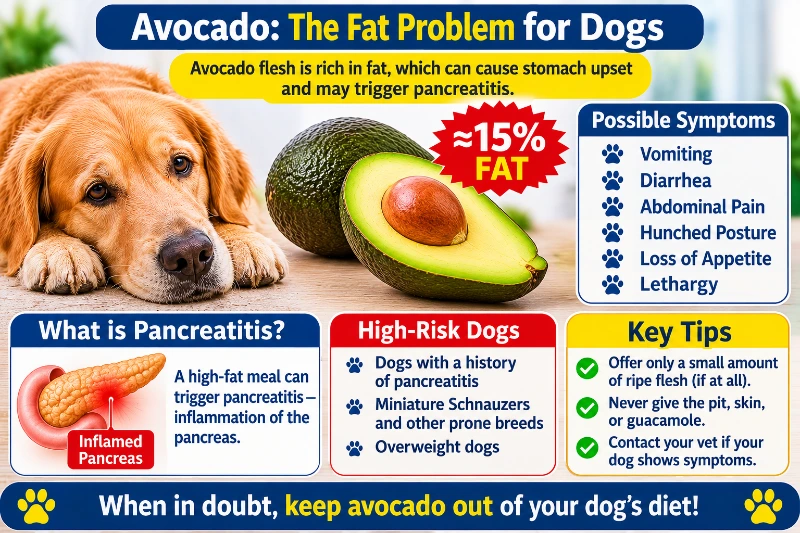
Avocado flesh is exceptionally rich — roughly 15% fat by weight, and around 160 calories in half a fruit. For dogs, that fat load is the second real risk. A dog who eats a lot of avocado flesh may develop vomiting and diarrhea simply because the meal is far richer than his system is used to.
The consequences can be more serious. High-fat meals are a known trigger for pancreatitis, inflammation of the pancreas, which ranges from painful and miserable to life-threatening. Dogs that have had pancreatitis before, and breeds prone to it such as Miniature Schnauzers, are at particular risk. Signs of pancreatitis include repeated vomiting, a hunched or “praying” posture from abdominal pain, loss of appetite, diarrhea and lethargy — and it needs a vet, not a wait-and-see.
There is also the slower problem: calories. Regular sharing adds up, and extra weight quietly shortens dogs’ lives and worsens joint problems. A food can be non-toxic and still be a poor habit — avocado is exactly that.
Guacamole and other avocado foods to avoid:
However you judge plain flesh, prepared avocado dishes are a different matter:
Guacamole is a no. Classic guacamole contains onion and often garlic — both damage a dog’s red blood cells, as explained in our guide to whether dogs can eat onions — plus salt, and often lime juice and chili. Even “plain” store-bought guacamole usually includes onion and garlic powder.
Avocado on toast, salads and sushi usually come mixed with seasonings, dressings or other ingredients your dog does not need, and the pit and skin are nearby. Keep human plates human.
Avocado oil is the exception. Properly produced avocado oil contains no meaningful persin and is generally considered safe for dogs — it appears in some dog foods and skin-and-coat supplements. A small amount is fine, though as pure fat it carries the same pancreatitis and calorie cautions in large amounts.
Skin and leaves are out. If you grow an avocado plant indoors, keep it out of reach: the leaves carry the most persin in the whole plant, and chewing them is the one avocado exposure most likely to make a dog genuinely ill.
How much avocado can a dog eat?
If you choose to share avocado at all, treat it as an occasional taste, not a serving — your dog gains nothing nutritionally that his own food does not already provide. As a rough ceiling for a healthy adult dog:
| Dog size | Weight | Maximum occasional amount of ripe flesh |
| Small dog | Under 15 lb (under 7 kg) | One or two thin slices |
| Medium dog | 15–50 lb (7–23 kg) | Up to a quarter of a fruit |
| Large dog | Over 50 lb (over 23 kg) | Up to half a fruit |
Rules that matter more than the amounts: flesh only, fully ripe, no skin attached, pit removed and binned first, and never for dogs with a history of pancreatitis, dogs on low-fat diets, or overweight dogs. Skip it entirely for puppies — their stomachs are easily upset and they need balanced puppy food, not rich extras. New to avocado? Start with one small piece and watch for vomiting or soft stool over the next day.
For the bigger picture of which people-foods are genuinely safe, which are caution foods like this one, and which are never-feed, see our pillar guide to what human foods can dogs eat. Avocado sits in the middle category — and most dogs are just as happy with a safer treat such as a few blueberries or a piece of carrot.
What to do if your dog ate avocado:
What matters is what was eaten:
- Ate some flesh: In most cases, just monitor. Watch for vomiting, diarrhea, appetite loss or lethargy over the next 24–48 hours. Call your vet if signs appear, if they last more than a day, or if your dog has had pancreatitis before.
- Swallowed the pit: Call your vet immediately, even if your dog seems fine. Do not wait for blockage signs, and do not induce vomiting — a pit can lodge in the throat on the way back up. Your vet will decide whether to retrieve it or monitor with imaging.
- Ate skin, leaves or a lot of flesh: Call your vet or ASPCA Animal Poison Control at (888) 426-4435 and describe the amount. Expect to monitor closely for the stomach and pancreatitis signs listed above.
- Ate guacamole: Treat it as an onion-and-garlic exposure too. Call your vet and tell them the ingredients — red-blood-cell damage from onion develops over days, so this needs professional advice even if your dog looks well.
Our emergency guide to what to do if your pet ate something toxic covers the first steps for any suspect food, including what details to have ready when you call.
Dogs get into avocado in predictable ways — pits fished out of bins, fruit dropped at barbecues, guacamole bowls on low tables. A moment of bin discipline prevents nearly all of it. The same care applies to other borderline treats: foods like pomegranate are safe in the right form and amount, but “safe” people-food should always be a small, deliberate treat, never whatever the dog can reach.
Frequently Asked Questions:
The Bottom Line:
Avocado is not a true poison for dogs the way onions or chocolate are, but it earns its caution label: the pit can choke or block, the skin and leaves carry the most persin, and the fatty flesh can upset stomachs and trigger pancreatitis. If you share it at all, share only a little ripe flesh, pit binned and skin removed — and never guacamole. When in doubt, choose a safer treat and keep the avocado for yourself.
Sources:
- ASPCA Animal Poison Control — avocado and persin guidance for pets
- Merck Veterinary Manual — avocado (persin) toxicosis across species
- Pet Poison Helpline — avocado ingestion in dogs: the pit and foreign-body risk
- VCA Hospitals — pancreatitis in dogs and high-fat food triggers
- American Kennel Club (AKC) — can dogs eat avocado?