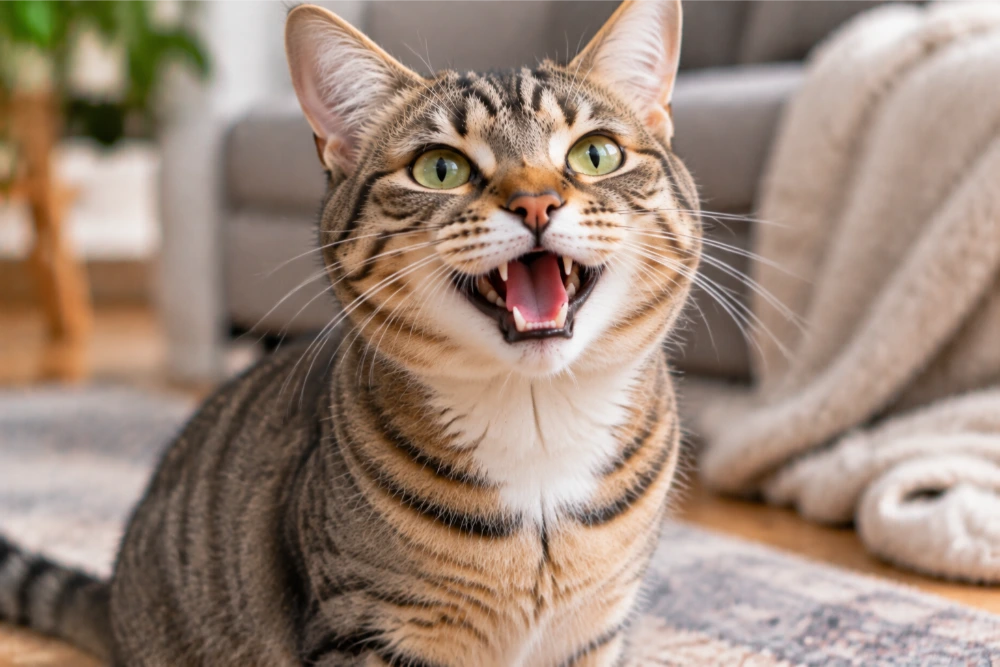
Why Is My Cat Meowing So Much? 12 Reasons and What to Do
Your cat has been meowing all morning. You have checked the food bowl, refreshed the water, and tried giving it attention, but the meowing continues. Maybe your cat also wakes you up at night, follows you around the house while vocalizing, or suddenly starts making sounds you have never heard before.
If you’re wondering, “Why is my cat meowing so much?” the answer depends on your cat’s age, routine, environment, and overall health.
Cats meow to communicate with people. They may be hungry, seeking attention, asking to play, feeling stressed, or responding to changes around them. However, excessive meowing can sometimes indicate pain, illness, hormonal behavior, or age-related changes.
This guide explains 12 common reasons cats meow excessively, how to understand different types of vocalization, why kittens and older cats may meow more, and what you can do to help your cat. You’ll also learn when excessive meowing requires veterinary attention.
Quick Answer: Why Is My Cat Meowing So Much?
Cats meow frequently for several reasons, including hunger, attention-seeking, boredom, greeting their owners, stress, and wanting access to a particular room or outdoor area. Some cats are naturally more vocal than others, while unspayed or unneutered cats may yowl when seeking a mate.
However, a sudden increase in meowing can also indicate pain, urinary problems, thyroid disease, high blood pressure, sensory changes, or cognitive dysfunction in older cats. The most important clues are when the meowing happens, whether anything triggers it, and whether your cat has other symptoms.
Here’s a quick overview.
| Possible reason | Common signs | What you can do |
| Hunger or thirst | Meowing near bowls or around mealtimes | Check food, water, and feeding routines |
| Attention-seeking | Following you or vocalizing when you’re busy | Schedule regular interaction |
| Boredom | Restlessness or seeking play | Provide toys and enrichment |
| Greeting | Meowing when you arrive home | Respond calmly |
| Stress or fear | Hiding or vocalizing after a change | Provide a safe space |
| Litter box problems | Meowing near the box or avoiding it | Clean the box and monitor bathroom habits |
| Mating behavior | Loud, persistent yowling | Discuss spaying or neutering with your vet |
| Pain or illness | New vocalization or other behavior changes | Arrange a veterinary examination |
| Age-related changes | Night time crying or confusion | Have your senior cat evaluated |
| Learned behavior | Meowing repeatedly after receiving food or attention | Meet genuine needs and reinforce calmer behavior |
These signs can help you identify possibilities, but they do not establish a diagnosis. Your cat’s usual behavior and any recent changes are important when deciding what to do next.
12 Reasons Your Cat Is Meowing So Much
1. Your Cat Is Hungry or Wants Food
Hunger is one of the most common reasons cats meow at their owners. Your cat may start vocalizing before its usual mealtime, follow you into the kitchen, or sit beside its food bowl while looking at you.
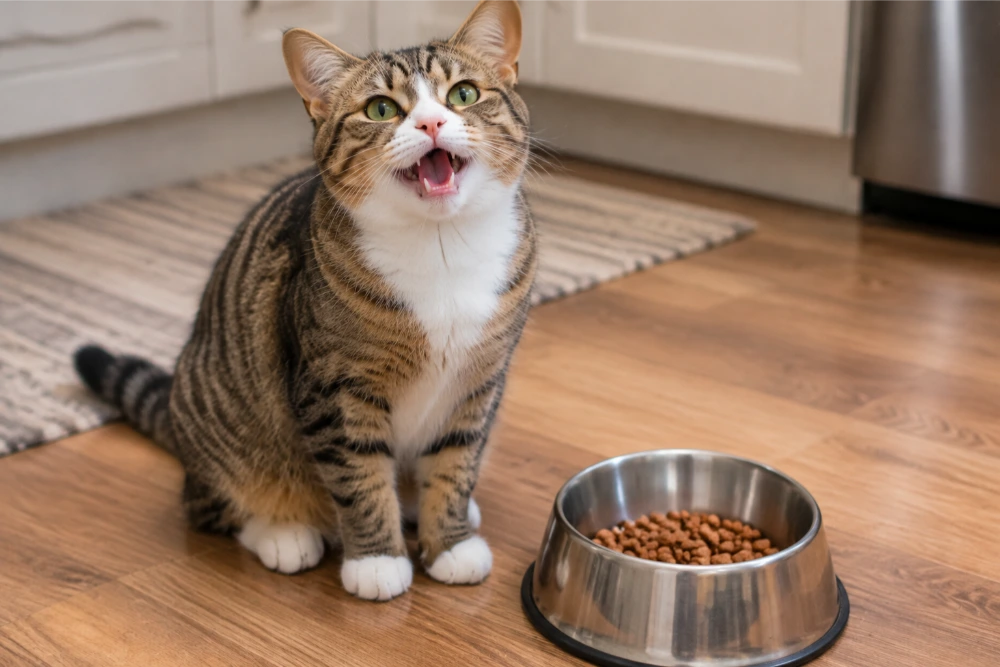
Cats learn daily routines quickly. If you regularly feed your cat at the same time, it may begin asking for food before you are ready. Some cats also associate opening a cupboard, walking toward the kitchen, or handling a food container with mealtime.
However, frequent meowing does not always mean your cat needs more food. Your cat may have learned that vocalizing results in treats, even when it has already eaten enough.
What to do:
- Feed your cat at consistent times.
- Make sure its daily food allowance is appropriate for its age, weight, and health.
- Consider puzzle feeders or veterinarian-approved feeding strategies if your cat becomes restless between meals.
- Avoid giving extra treats every time your cat meows.
- Contact your veterinarian if increased hunger occurs alongside weight loss, increased thirst, or other unusual symptoms.
If your cat suddenly seems constantly hungry, don’t assume it is simply being demanding. Some medical conditions can increase appetite and vocalization.
2. Your Cat Wants Attention or Affection
Some cats are naturally sociable and enjoy interacting with their owners throughout the day. They may meow when you sit down to work, walk into another room, or stop giving them attention.
Your cat may also rub against your legs, follow you around, jump onto your lap, or make short vocalizations when you speak to it.
For these cats, meowing can be a way to start an interaction. They may want petting, companionship, play, or simply a response from someone they trust.
Cats that spend long periods alone may also vocalize more when their owners return.
What to do:
Set aside regular time for interaction. Offer gentle petting if your cat enjoys it, speak calmly, or engage in a short play session.
You can also reward calm behavior by giving attention when your cat is quiet and relaxed. However, never ignore persistent meowing automatically. First, make sure your cat has access to food, water, a clean litter box, and anything else it needs.
3. Your Cat Is Bored and Wants to Play
A bored cat may meow repeatedly because it needs more activity and stimulation.
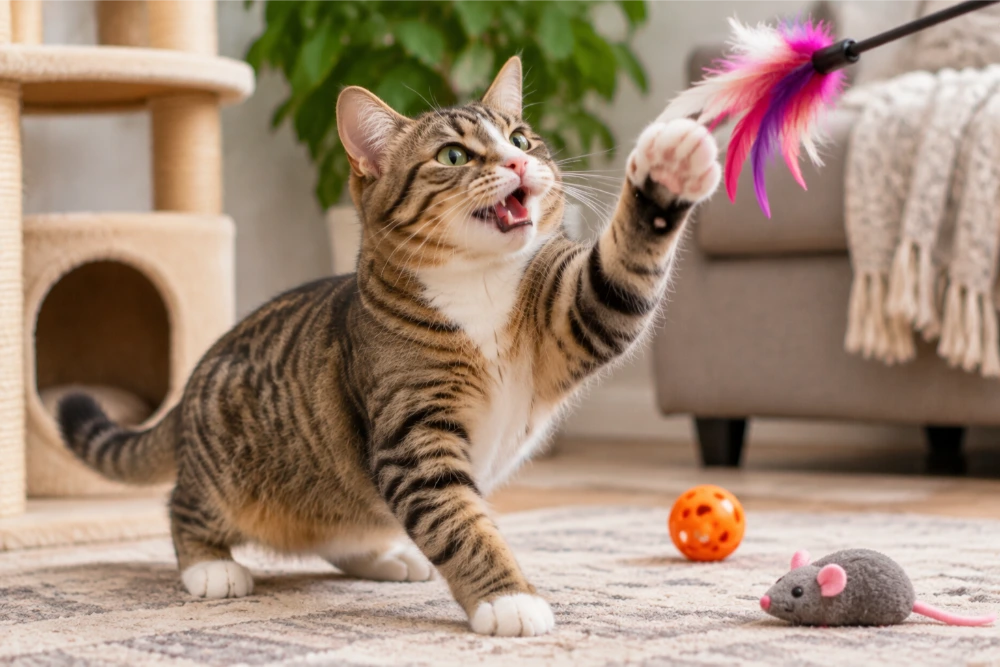
Indoor cats especially benefit from opportunities to explore, climb, stalk, chase, and investigate their surroundings. Without enough enrichment, some cats become restless and seek interaction by vocalizing.
You might notice your cat meowing while carrying a toy, staring at you from across the room, running around the house, or repeatedly approaching you and walking away.
Kittens and young adult cats may be particularly energetic, although cats of any age can become bored.
What to do:
- Schedule several short play sessions throughout the day.
- Use wand toys, toy mice, or other suitable toys that encourage chasing.
- Provide scratching posts, climbing structures, and comfortable observation spots.
- Rotate toys to keep familiar objects interesting.
- Try food puzzles that encourage your cat to work for part of its food.
- Create a predictable daily routine that includes play and rest.
Never use your hands or feet as toys, especially if your cat tends to bite during play.
If your cat also bites, pounces on your ankles, or attacks moving objects, read our guide to why your cat bites you for additional behavior tips.
4. Your Cat Is Greeting You
Not every meow indicates a problem. Some cats vocalize when their owners return home, enter a room, or approach them after being away.
These greeting sounds may be brief and accompanied by an upright tail, relaxed posture, rubbing against your legs, or walking toward you.
Your cat may also respond when you speak to it. Some cats appear to enjoy these short exchanges and develop recognizable vocal habits with familiar people.
Adult cats commonly use meowing to communicate with humans, although their vocal behavior varies between individuals.
What to do:
If your cat meows to greet you and otherwise behaves normally, you can respond with a calm greeting, gentle petting, or a little interaction.
There is generally no reason to discourage ordinary greeting behavior unless it becomes disruptive. Even then, it is better to establish a predictable routine than to punish your cat for communicating.
5. Your Cat Wants to Go Somewhere
Some cats meow at doors, windows, or gates because they want access to a particular area.
Your cat might want to enter a closed bedroom, explore another room, reach a favorite resting spot, or go outdoors. If you frequently open the door after hearing a meow, your cat may learn that vocalization is an effective way to get access.
Cats can also become frustrated when they see birds or other animals outside but cannot reach them.
What to do:
Check whether your cat has access to its usual spaces and whether anything has changed in the household.
If your cat wants to go outside, consider safer alternatives, such as supervised outdoor time in a secure enclosure or a properly managed harness routine if your cat tolerates it.
Avoid allowing your cat to roam unsupervised simply to stop the meowing. Outdoor access carries risks, including traffic, fights, parasites, and exposure to infectious diseases.
If your cat repeatedly meows at a closed door, decide whether access is appropriate and establish a consistent routine.
6. Your Cat Is Stressed or Frightened
Cats can become vocal when something in their environment makes them feel uncomfortable or unsafe.
Common triggers include moving to a new home, introducing another pet, unfamiliar visitors, loud noises, changes in routine, or conflict with another cat.
A stressed cat may meow more frequently than usual, hide, pace, avoid certain rooms, or become unusually clingy. Some cats hiss or growl when frightened.
Changes involving the litter box, food location, sleeping area, or access to familiar hiding places can also contribute to stress.
What to do:
Start by identifying anything that has changed recently. Give your cat access to a quiet retreat where it can rest without being disturbed.
If you have multiple cats, provide separate food and water stations, litter boxes, resting places, and escape routes to reduce competition.
Introduce new pets and household changes gradually whenever possible. Avoid forcing your cat to interact with unfamiliar people or animals.
If excessive meowing continues or is accompanied by hiding, reduced appetite, aggression, or other behavioral changes, consult your veterinarian. Stress may be contributing, but pain or illness should not be overlooked.
7. Your Cat Has a Dirty Litter Box or Another Unmet Need
Sometimes, persistent meowing is your cat’s way of drawing attention to something in its environment.
Your cat may be uncomfortable using a dirty litter box, unable to reach its usual water source, or frustrated because a familiar resource has moved.
Some cats vocalize near the litter box when they need to eliminate or when using the box has become uncomfortable.
The location of the meowing can provide useful clues. For example, a cat that repeatedly vocalizes near its water bowl may be asking for water, while a cat that cries in or around the litter box may need closer attention.
What to do:
- Provide fresh water and clean food bowls.
- Scoop the litter box regularly and clean it as needed.
- Make sure your cat can easily access its resources.
- Check that another pet is not blocking access to food, water, or litter.
- Monitor urination and bowel movements.
Important: If your cat repeatedly enters the litter box, strains, cries, or produces little or no urine, seek urgent veterinary care. A urinary blockage, particularly in male cats, can be life-threatening. Do not assume the problem is simply a dirty litter box.
8. Your Cat Is in Heat or Looking for a Mate
Unspayed female cats and unneutered male cats may meow or yowl loudly because of reproductive hormones.
A female cat in heat may become unusually affectionate, roll on the floor, rub against objects, raise her hindquarters, and make persistent calling sounds. These behaviors can be especially noticeable at night.
Unneutered males may yowl, pace, attempt to escape, or become restless when they detect a female cat in heat nearby.
This type of vocalization can sound much louder and more intense than ordinary meowing.
What to do:
If your cat is not spayed or neutered, discuss the benefits, timing, and suitability of the procedure with your veterinarian.
Keep your cat securely indoors and away from intact cats if you do not intend to breed it. Do not punish your cat for hormonally driven vocalization.
Spaying or neutering often reduces mating-related calling, although it may not eliminate meowing caused by other behavioral or medical factors.
9. Your Cat Is Naturally Vocal
Some cats are simply more talkative than others.
Breed tendencies can influence vocal behavior. Siamese cats, for example, are well known for being vocal, and some other breeds may also communicate frequently.
Individual personality matters just as much. One cat may communicate through short, occasional sounds, while another may vocalize throughout the day.
If your cat has always been talkative, eats normally, remains active, and shows no other concerning changes, frequent meowing may be part of its usual behavior.
What to do:
Learn your cat’s normal vocal patterns and pay attention to changes rather than judging the behavior solely by how often it meows.
Provide regular interaction and meet its needs consistently. If the meowing becomes substantially more frequent, sounds different, or occurs alongside other symptoms, arrange a veterinary assessment.
A naturally vocal personality should not be used to dismiss a sudden change in behavior.
10. Your Cat Is Experiencing Pain or Illness
Excessive meowing can sometimes be a sign that something is wrong physically.
Cats often hide signs of discomfort, so a noticeable increase in vocalization deserves attention, especially if your cat has usually been quiet.
Possible medical causes include painful conditions, urinary tract problems, digestive discomfort, dental disease, and other illnesses. Some conditions, including hyperthyroidism and high blood pressure, can also contribute to increased vocalization, particularly in older cats.
Watch for accompanying signs such as:
- Reduced appetite or unusual hunger.
- Vomiting or diarrhea.
- Increased thirst or urination.
- Hiding or withdrawing from family members.
- Difficulty jumping or walking.
- Repeated litter box visits.
- Sensitivity when touched.
- Changes in grooming habits.
These signs do not identify a specific illness, but they can help your veterinarian determine what needs to be investigated.
What to do:
Contact your veterinarian if your cat’s meowing increases suddenly, seems distress-related, or occurs with other behavioral or physical changes.
Seek urgent veterinary care if your cat has difficulty breathing, collapses, experiences seizures, or strains to urinate without producing urine.
Do not give your cat human painkillers or other medication unless specifically directed by a veterinarian.
11. Your Older Cat Is Meowing More Because of Age-Related Changes
If your senior cat has started meowing more frequently, particularly at night, it is worth investigating rather than assuming the behavior is simply part of getting older.
Older cats may develop medical conditions that affect their behavior, sleep, senses, and comfort. Possible causes include hyperthyroidism, high blood pressure, kidney disease, hearing or vision loss, and feline cognitive dysfunction.
A senior cat with cognitive changes may become disoriented, wander around the house, appear confused, or vocalize when family members are asleep.
Changes in hearing or vision can also affect how a cat navigates its surroundings and responds to familiar people.
What to do:
Arrange a veterinary examination if an older cat develops new or persistent excessive meowing. Your veterinarian may recommend blood tests, urine testing, blood pressure measurement, or other investigations depending on the symptoms.
At home, maintain familiar routines, keep food and water easily accessible, and provide comfortable resting areas. Night lights and clear pathways may help some cats that struggle to navigate in low light.
Never assume that persistent crying in a senior cat is inevitable or untreatable. Identifying an underlying condition may improve its comfort and quality of life.
12. Your Cat Has Learned That Meowing Gets Results
Cats can learn which behaviors produce a response from their owners.
If your cat meows and you immediately provide food, open a door, offer a toy, or start petting it, the behavior may become more frequent because it has been rewarded.
This does not mean your cat is being deliberately difficult. It has simply learned that vocalization can be an effective way to communicate.
For example, a cat that receives a treat every time it meows near the kitchen may begin doing so even when it is not hungry.
What to do:
First, make sure that your cat’s genuine needs are met and that there is no medical reason for the vocalization.
If your veterinarian has ruled out relevant health concerns and the meowing is clearly attention-seeking, reward calm behavior rather than repeatedly responding to demands.
For example, wait for a brief quiet moment before offering attention, a toy, or a scheduled activity. Use the same approach consistently.
Do not yell at, frighten, or physically punish your cat. If the behavior is persistent or difficult to change, a veterinarian or qualified feline behavior professional can help you develop a suitable plan.
Why Is My Cat Meowing So Much at Night?
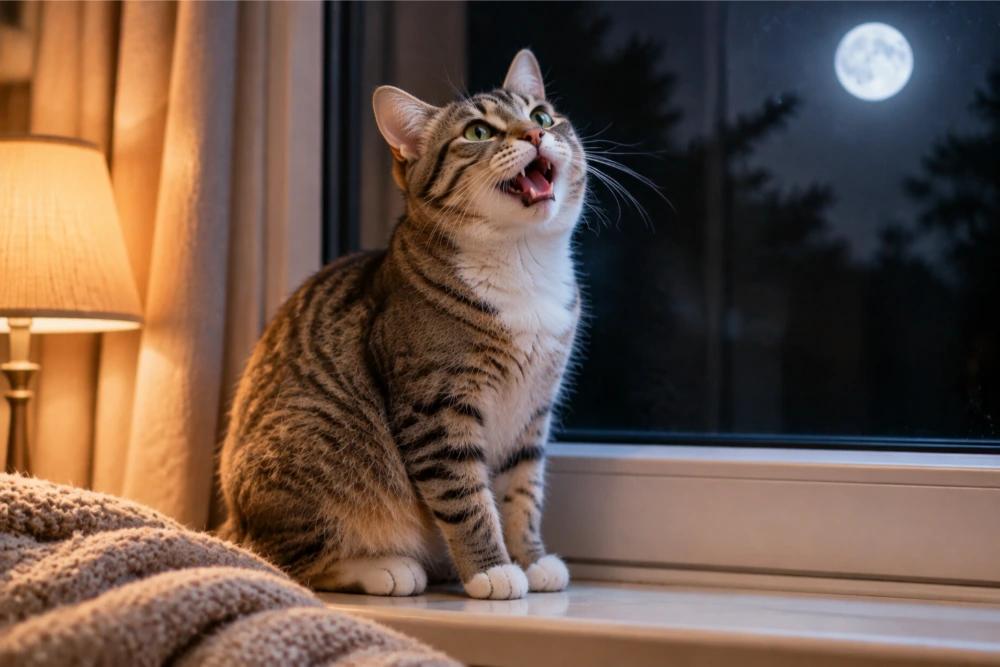
Nighttime meowing is a common problem for cat owners. Your cat may begin calling around midnight, wake you before sunrise, or wander through the house making repeated sounds.
Cats are crepuscular, meaning they are naturally more active around dawn and dusk. Their activity patterns can therefore differ from the human sleep schedule.
However, nighttime vocalization can have several causes.
Your Cat Has Energy to Burn
A cat that sleeps for much of the day may be more active when you are trying to rest. If it lacks opportunities to play, explore, and hunt through appropriate activities, it may seek stimulation at night.
What helps: Schedule interactive play sessions during the day and in the evening. Provide suitable toys and enrichment, and maintain a consistent bedtime routine.
Your Cat Wants Food or Attention
If your cat has learned that meowing wakes you up, it may continue vocalizing because it expects a response.
What helps: Establish consistent meal and play schedules. If all of your cat’s needs are met and a veterinarian has ruled out relevant concerns, avoid rewarding attention-seeking meowing with food or play every time.
Your Cat Is Stressed or Disoriented
Changes in the home, unfamiliar sounds, or conflict with other pets may contribute to nighttime vocalization. Senior cats may also become more vocal because of medical or cognitive changes.
What helps: Keep the sleeping area comfortable, provide familiar resting places, and investigate any new behavioral changes.
Your Cat May Have an Underlying Health Problem
Pain, thyroid disease, high blood pressure, and cognitive changes can contribute to excessive nighttime vocalization, particularly in older cats.
What helps: Arrange a veterinary examination if nighttime meowing is new, persistent, or accompanied by other symptoms.
Do not assume that every nighttime meow is a behavioral issue. Check your cat’s needs and health before attempting to reduce the noise.
Why Is My Kitten Meowing So Much?
Kittens often meow to communicate their needs because they are still developing and learning how to interact with their environment.
A kitten may meow when it is hungry, cold, frightened, separated from familiar companions, or looking for attention. It may also vocalize when it wants to play or explore.
Young kittens can become distressed when separated from their mother or littermates, particularly if they are very young or have only recently entered a new home.
Common Reasons Kittens Meow
- Hunger: Your kitten may need appropriately timed meals suited to its age and developmental stage.
- Seeking comfort: A new environment can feel unfamiliar, and your kitten may need a safe, warm resting place.
- Loneliness: Some kittens vocalize when separated from familiar people or animals.
- Play and exploration: Kittens often make sounds while exploring and interacting.
- Discomfort or illness: Persistent distress vocalization can indicate that something is wrong.
How to Help a Meowing Kitten
Provide age-appropriate food, fresh water when appropriate, a safe resting area, and regular gentle interaction. Establish a predictable routine and give your kitten time to adjust to its surroundings.
If the kitten is very young, has not been eating, seems weak, has diarrhea, or continues crying despite having its basic needs met, contact a veterinarian promptly. Young kittens can deteriorate quickly when ill.
Never assume that persistent crying is merely a normal kitten habit.
Why Is My Cat Meowing and Following Me Everywhere?
If your cat follows you from room to room while meowing, it may be seeking attention, anticipating food, or wanting to participate in what you’re doing.
Sometimes, cats also maintain eye contact while seeking attention, so understanding why your cat stares at you can provide additional clues about its behavior.
Some cats are strongly attached to their owners and prefer to remain nearby. Others follow people because they have learned that certain activities lead to food, play, or access to a favorite space.
However, a sudden change in clinginess or following behavior can also occur when a cat feels anxious, uncomfortable, or unwell.
Observe whether your cat appears relaxed and playful or restless and distressed.
What you can do:
- Offer regular interaction and play.
- Maintain consistent feeding times.
- Provide comfortable resting places in different rooms.
- Encourage independent play with suitable toys.
- Watch for other changes in appetite, sleep, or behavior.
If your cat suddenly becomes unusually clingy or vocal, particularly if it is an older cat, discuss the change with your veterinarian.
Why Is My Cat Meowing but Not Making Any Sound?
Sometimes a cat appears to meow without producing an audible sound. This may be a normal individual behavior, a very quiet vocalization, or a change in the way your cat produces sounds.
If your cat has always made occasional silent or nearly silent meows and otherwise behaves normally, it may simply be part of its communication style.
However, if your cat’s voice suddenly becomes hoarse, weak, or absent, a health problem may be responsible. Upper respiratory infections and inflammation affecting the voice box are among the possible causes.
Look for accompanying symptoms such as sneezing, nasal discharge, watery eyes, difficulty swallowing, or reduced appetite.
What to do: Contact your veterinarian if the change is sudden, persistent, or accompanied by other symptoms. Seek urgent care if your cat has difficulty breathing or is struggling to swallow.
How to Stop Your Cat From Meowing So Much
The best way to reduce excessive meowing is to identify why it is happening. Trying to stop the sound without addressing its cause may leave your cat hungry, stressed, uncomfortable, or unwell.
Step 1: Identify When the Meowing Happens
Notice whether your cat vocalizes before meals, at night, near the litter box, when you leave the house, or after seeing another animal.
Timing and location can help you identify patterns. Keeping a short record of when the meowing happens can also help you explain the behavior to your veterinarian.
Step 2: Check Your Cat’s Basic Needs
Make sure your cat has appropriate food, fresh water, a clean litter box, comfortable resting places, and opportunities for activity.
Check whether another pet or a closed door is preventing access to something your cat normally uses.
Step 3: Establish a Predictable Routine
Consistent meal times, regular play, and familiar daily activities can help reduce frustration for some cats.
If your cat becomes vocal at night, offer appropriate activity during the day and establish a calm evening routine.
Step 4: Provide More Environmental Enrichment
Offer climbing structures, scratching posts, interactive toys, puzzle feeders, and safe places to observe the outdoors.
Rotate toys to maintain interest, and use short play sessions that allow your cat to stalk, chase, and catch a suitable toy.
Step 5: Avoid Reinforcing Attention-Seeking Meowing
If a veterinarian has ruled out relevant medical concerns and your cat’s needs are met, avoid automatically giving food or attention in response to every demand.
Instead, reinforce calm behavior and provide attention at predictable times. This approach is appropriate only when you have good reason to believe the meowing is attention-seeking rather than a sign of distress or an unmet need.
Step 6: Never Punish Your Cat for Vocalizing
Yelling, hitting, spraying water, or frightening your cat is not an appropriate solution. Punishment may increase fear and stress without addressing the reason for the meowing.
Use positive reinforcement and consistent routines instead.
Step 7: Consult a Veterinarian When Necessary
If the meowing is sudden, persistent, unusually intense, or accompanied by other changes, arrange a veterinary examination.
Your veterinarian may ask about your cat’s age, medical history, eating habits, litter box behavior, and the timing of the vocalization. Depending on the findings, further tests may be needed to investigate possible medical causes.
How to Tell Whether Your Cat’s Meowing Is Normal
There is no single number of meows that determines when a cat is being excessively vocal. Some cats communicate frequently throughout the day, while others are naturally quieter.
The most useful comparison is your cat’s usual behavior.
Your cat’s tail movements can also reveal its emotional state, so learning about cat tail meanings can help you understand its body language more clearly.
| Situation | What it may suggest | What to do |
| Brief meows around mealtime | Normal food-related communication | Check the feeding routine |
| Short meows when you return home | Greeting behavior | Respond calmly |
| Frequent meowing followed by play | Wants activity or interaction | Offer a suitable toy |
| Repeated nighttime meowing | Activity patterns, attention-seeking, stress, or illness | Check needs and monitor for changes |
| Sudden, persistent vocalization | Possible discomfort or a health problem | Contact your veterinarian |
| Meowing with repeated straining in the litter box | Possible urinary problem | Seek urgent veterinary care if little or no urine passes |
| New vocalization in an older cat | Possible medical, sensory, or cognitive changes | Arrange a veterinary assessment |
| Hoarse or suddenly changed voice | Possible respiratory or voice-box problem | Contact your veterinarian |
A change in vocalization is often more informative than the absolute amount of noise. A cat that has always been talkative may be perfectly healthy, while a normally quiet cat that suddenly starts crying repeatedly may need medical attention.
When Should You Take Your Cat to the Vet for Excessive Meowing?
You should not automatically assume that excessive meowing is behavioral. Some medical conditions initially cause subtle changes in activity or vocalization.
Contact your veterinarian if your cat:
- Suddenly starts meowing much more than usual.
- Cries when touched or handled.
- Shows a persistent change in voice.
- Develops changes in appetite, thirst, or weight.
- Hides more often or becomes unusually restless.
- Makes repeated trips to the litter box.
- Has difficulty jumping, walking, or moving comfortably.
- Is an older cat with new nighttime vocalization or confusion.
Seek urgent veterinary care if your cat struggles to urinate, has difficulty breathing, collapses, experiences a seizure, or appears severely disoriented.
When arranging an appointment, try to note when the meowing occurs, how long it lasts, and whether it is accompanied by other symptoms. A short video can also help your veterinarian understand the behavior.
Depending on your cat’s symptoms, the examination may include a physical assessment, blood tests, urine testing, blood pressure measurement, or other investigations.
The appropriate next steps depend on the cause, so avoid giving medication or starting a treatment without veterinary guidance.
Frequently Asked Questions:
The Bottom Line:
If you’re wondering, “Why is my cat meowing so much?” remember that meowing is one of the main ways cats communicate with people. Your cat may be hungry, bored, seeking attention, greeting you, asking to go somewhere, or reacting to stress.
The key is to understand your cat’s normal behavior and notice when something changes. Check its basic needs, provide regular play and enrichment, and maintain a predictable routine. If the vocalization is new, persistent, or accompanied by other symptoms, consult a veterinarian rather than assuming it is simply a habit.
With patience, observation, and appropriate care, you can better understand what your cat is communicating and help it feel comfortable at home.
This article is for general informational purposes and is not a substitute for veterinary advice.