Cat-Safe Flowers: 11 Beautiful Flowers That Are Safe for Cats
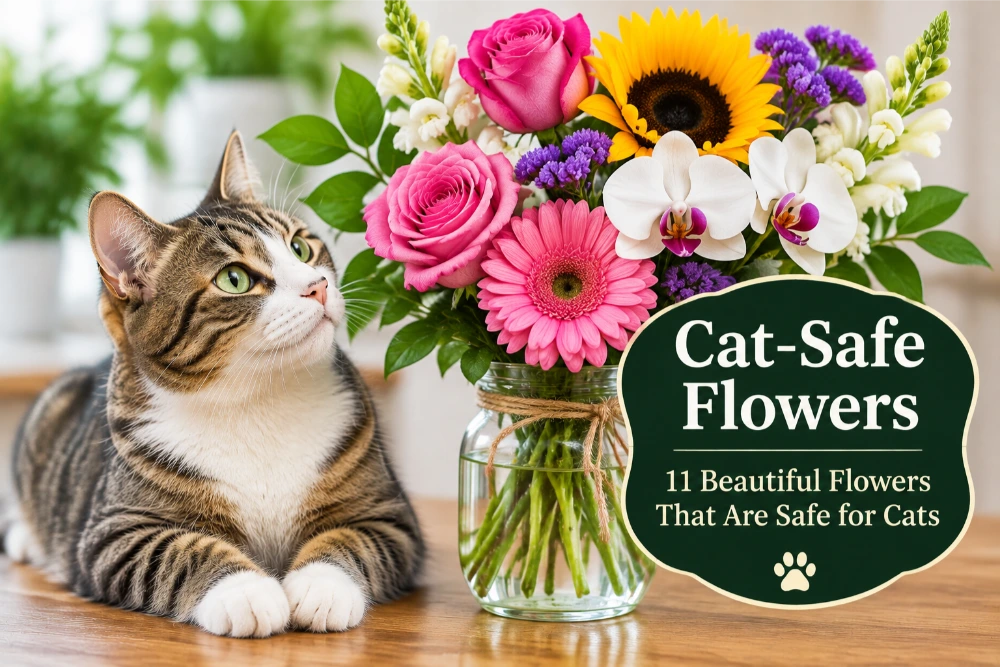
You don’t have to give up fresh flowers just because you have a cat. Many beautiful flowers can be kept in homes with cats, including roses, sunflowers, orchids, and gerbera daisies. The key is choosing the correct flower species and understanding that a plant considered non-toxic can still cause stomach upset if your cat chews or eats it.
Some popular bouquet flowers, particularly true lilies and daylilies, can cause life-threatening kidney damage in cats. Even small amounts of pollen or plant material can be dangerous. Before bringing a bouquet home, check every flower and filler plant rather than relying on the bouquet’s overall appearance or a florist’s general description.
This guide covers cat-safe flowers, flowers to avoid, tips for choosing pet-friendly bouquets, and what to do if your cat comes into contact with a potentially toxic plant.
What Are Cat-Safe Flowers?
Cat-safe flowers are flowers classified as non-toxic to cats by reliable veterinary or animal-poison-control resources. They are generally a better choice for homes with curious pets, especially cats that like to sniff, paw at, or chew fresh plants.
However, non-toxic does not mean completely harmless. Eating flowers or other plant material can still cause vomiting, diarrhea, or stomach discomfort. Thorns, sharp stems, vase water, and floral preservatives can also create risks.
Before buying flowers, identify the exact species and check its scientific name against a trusted plant-safety database. Common names can be confusing, and flowers with similar names may have very different toxicity profiles.
11 Cat-Safe Flowers to Choose for Your Home
These flowers are recognized as non-toxic to cats by established animal-safety resources. Even so, keep bouquets away from pets to prevent chewing, accidental ingestion, and other hazards.
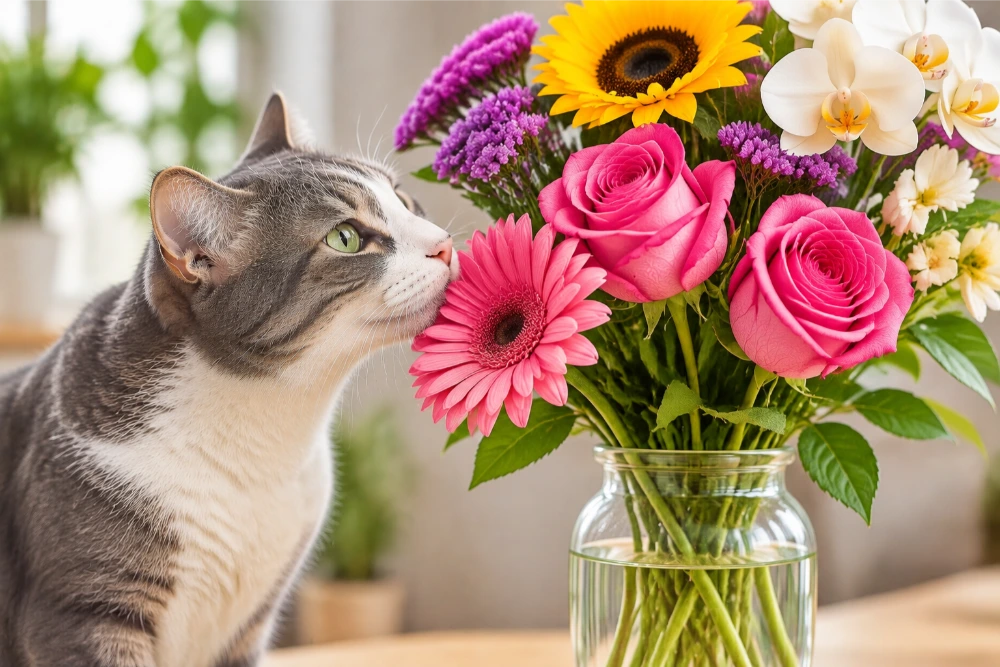
1. Roses
Roses are a classic choice for bouquets, anniversaries, and everyday home decoration. They come in many colors, including red, white, pink, yellow, and orange, making them easy to match with different interior styles.
Roses are considered non-toxic to cats, but their stems have thorns that can injure a curious cat’s mouth, paws, or skin. Remove or trim thorns where practical, clean up fallen petals, and keep the arrangement somewhere your cat cannot reach.
2. Sunflowers
Sunflowers add bright yellow petals and a cheerful appearance to a room. They work well in simple arrangements and seasonal bouquets, especially when paired with other cat-friendly flowers.
Sunflowers are considered non-toxic to cats. However, you should still prevent your cat from chewing the petals, leaves, or stems. Large amounts of plant material can cause digestive upset, even when the plant itself is not classified as toxic.
3. Gerbera Daisies
Gerbera daisies are popular for their vivid colors and large, daisy-shaped blooms. Available in shades such as pink, red, orange, yellow, and white, they can add color to a home without relying on flowers known to be toxic to cats.
Gerbera daisies are considered non-toxic to cats. They are a useful option for pet owners who want a colorful bouquet, but they should still be displayed out of reach to discourage nibbling.
4. Orchids
Orchids are elegant flowers that suit bedrooms, living rooms, offices, and other indoor spaces. Common varieties, including Phalaenopsis orchids, are considered non-toxic to cats.
Their long-lasting blooms also make them attractive alternatives to some traditional bouquet flowers. Choose an identified orchid species and keep the pot, growing medium, and decorative accessories away from curious paws.
5. Snapdragons
Snapdragons have tall flower spikes with multiple blooms along each stem. They are available in a variety of colors and can add height and texture to a mixed bouquet.
Snapdragons are considered non-toxic to cats and can be a suitable alternative to certain flowers that pose greater risks. As with other cut flowers, remove fallen plant material and discourage your cat from chewing the stems.
6. Freesia
Freesias are known for their delicate, colorful blooms and pleasant fragrance. They are often used in decorative arrangements and can complement roses, gerbera daisies, and other flowers.
Freesias are listed among flowers considered non-toxic to cats. Their fragrance does not make them completely risk-free, however, so avoid allowing your cat to eat them or drink the water in which they are displayed.
7. Asters
Asters produce daisy-like flowers in colors such as purple, pink, blue, and white. They are a good option for adding texture and seasonal color to a floral arrangement.
Asters are considered non-toxic to cats according to established plant-safety references. Choose correctly identified asters because common plant names can refer to different species, and keep the flowers away from cats that frequently chew greenery.
8. Statice
Statice is a popular filler flower used to add texture and color to bouquets. Its small, papery blooms can help arrangements retain their decorative appearance even as other flowers begin to fade.
Statice is considered non-toxic to cats and can be used in some pet-conscious floral designs. Check that the arrangement contains no toxic companion flowers, and do not assume every filler plant is safe simply because statice is included.
9. Zinnias
Zinnias are colorful flowers that work well in gardens and cut-flower arrangements. Their rounded blooms come in several shades, including pink, red, orange, yellow, and white.
Zinnias are classified as non-toxic to cats. They can be a practical option for pet owners who enjoy bright floral displays, although cats should not be encouraged to eat them.
10. Lisianthus
Lisianthus flowers have soft, rose-like blooms and are often used in elegant bouquets. They come in colors such as white, pink, purple, and lavender.
Lisianthus is listed among flowers considered non-toxic to pets, including cats. It can be a suitable choice for special occasions when you want an attractive arrangement without selecting a flower known for severe feline toxicity.
11. African Violets
African violets are compact flowering plants often grown indoors in pots. Their small purple, pink, or white blooms can brighten windowsills and shelves without taking up much space.
African violets are considered non-toxic to cats. Even so, place them somewhere your cat cannot dig in the soil, knock over the pot, or chew the leaves and flowers.
Which Flowers Are Toxic to Cats?
Some popular flowers can cause serious illness in cats. Knowing which ones to avoid is just as important as choosing cat-safe varieties.
| Flower | Main concern |
| True lilies and daylilies | Can cause severe, potentially fatal kidney failure |
| Tulips | Can cause vomiting, diarrhea, and other signs of poisoning, especially after bulb ingestion |
| Daffodils | Can cause vomiting and other serious effects, particularly if bulbs are eaten |
| Azaleas | Can cause digestive, cardiovascular, and other serious problems |
| Carnations | Can cause gastrointestinal irritation |
| Iris | Can cause digestive upset, with greater concern following ingestion of rhizomes |
| Begonias | Can irritate the mouth and digestive tract |
| Lily of the valley | Can cause dangerous heart rhythm abnormalities |
| Amaryllis | Can cause vomiting, diarrhea, and other signs of poisoning |
| Chrysanthemums | Can cause gastrointestinal upset and other toxic effects |
The level of risk varies by species, the part of the plant eaten, and the amount consumed. When a flower is identified as toxic, do not bring it into a home where your cat could access it.
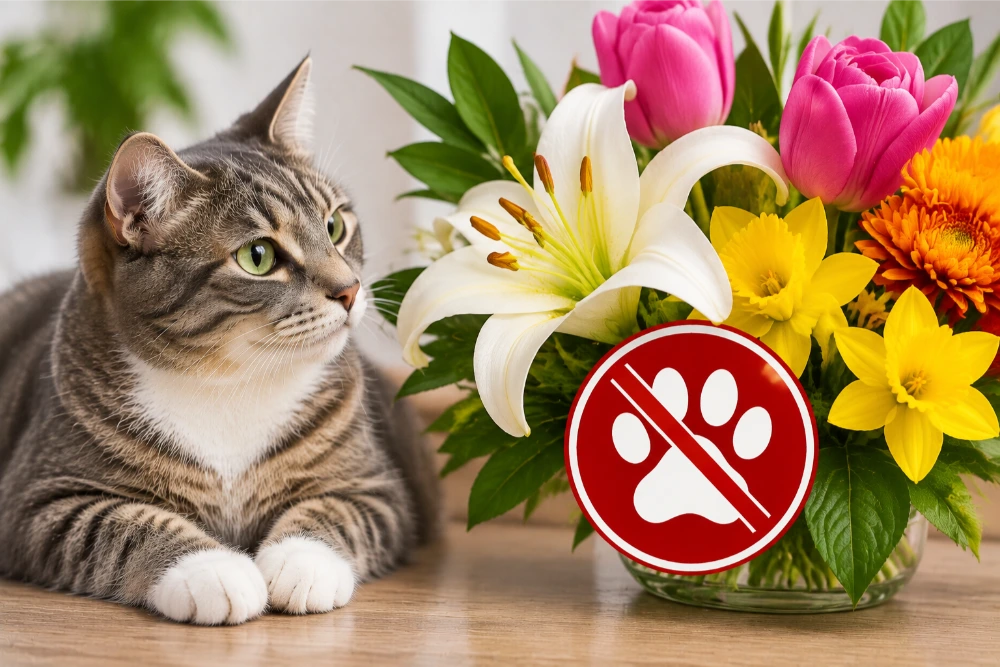
Why Are Lilies Especially Dangerous to Cats?
True lilies in the Lilium genus and daylilies in the Hemerocallis genus are among the most dangerous flowers for cats. Even a small exposure can cause severe kidney damage.
Potentially dangerous parts include the petals and flowers, leaves and stems, pollen that lands on a cat’s fur or paws, and water from a vase containing these lilies.
A cat can be exposed by brushing against a flower and later grooming pollen from its coat. You should never rely on placing lilies on a high shelf or in a bouquet that appears difficult to reach.
Some other plants also use the word “lily” in their common names but cause different types of poisoning. For example, peace lilies and calla lilies can irritate a cat’s mouth and digestive tract, while lily of the valley can affect the heart. The safest approach is to identify the exact species rather than judge a plant by its common name.
If you suspect your cat has touched, licked, or eaten a true lily or daylily, contact an emergency veterinarian immediately, even if your cat appears healthy. Do not wait for symptoms to develop.
How to Choose a Cat-Safe Flower Bouquet
A bouquet can contain several types of flowers, decorative greenery, and filler plants. Checking only the main flower is not enough to determine whether the entire arrangement is suitable for a home with cats.
Ask for the Exact Flower Names
Ask your florist to identify every flower and foliage component in the arrangement. If a plant is described only as a lily, daisy, or another broad common name, request its specific identity before deciding whether it is safe.
Check Filler Flowers and Greenery
Small filler flowers and decorative leaves can also pose risks. Baby’s breath, ivy, and other greenery should not automatically be considered safe simply because they are commonly included in bouquets.
Verify each component using a reliable veterinary or animal-poison-control plant database.
Avoid Unidentified Mixed Bouquets
If you receive a bouquet and cannot identify all its contents, do not assume it is cat-safe. Ask the florist for a list of the included species and keep the arrangement inaccessible until you have verified them.
Check Floral Preservatives
Some bouquets come with packets of flower food. These products are not intended for cats to eat, and their ingredients vary. Keep the packets, prepared solution, and vase water away from your pet.
Consider Your Cat’s Behavior
Some cats ignore flowers, while others enjoy chewing leaves, batting at petals, or climbing onto tables. If your cat frequently investigates plants, the safest option is to avoid bringing flowers into accessible areas.
Understanding your cat’s body language can also help you recognize its behavior around unfamiliar objects and plants. Read our guide on cat tail meanings to learn what different tail movements may indicate.
How to Keep Flowers Safe Around Cats
Choosing a non-toxic flower is an important first step, but safe placement and handling also matter.
- Place arrangements in an area your cat cannot access rather than relying on a high table.
- Remove fallen petals, leaves, and pollen promptly.
- Keep vase water and flower-food packets away from your cat.
- Do not use essential oils or chemical sprays on flowers within your cat’s reach.
- Check whether plants used in outdoor arrangements or gardens are safe for cats.
- Recheck flower labels when buying new varieties, even if they look similar to a previously purchased bouquet.
If your cat regularly chews plants, consider offering cat grass grown specifically for pets. It provides a more appropriate alternative for cats that enjoy nibbling greenery, although it should still be kept clean and monitored.
Some cats also explore unfamiliar objects by biting or chewing them. Learn more about why cats bite their owners and what different biting behaviors may mean.
What Should You Do If Your Cat Eats a Flower?
The right response depends on the flower involved and the amount your cat may have eaten. Do not assume that a cat is safe simply because it appears normal immediately after exposure.
Follow these steps:
- Identify the flower if possible. Keep its label or take a photograph to help your veterinarian determine the species.
- Remove access to the plant. Move the bouquet or plant away from your cat and prevent other pets from reaching it.
- Contact a veterinarian. If the flower is toxic, the species is unknown, or your cat shows unusual symptoms, seek veterinary advice promptly.
- Watch for concerning signs. Vomiting, drooling, diarrhea, weakness, reduced appetite, and unusual behavior may indicate a problem. However, serious poisoning can occur before obvious symptoms appear.
- Do not attempt home treatments. Never induce vomiting or give home remedies unless specifically instructed by a veterinary professional.
For suspected lily exposure, seek emergency veterinary care immediately. Early treatment can be critical to preventing severe kidney damage.
Changes in your cat’s behavior can sometimes be worth discussing with a veterinarian, especially when accompanied by other symptoms. Read our guide on why cats meow so much to understand common reasons behind excessive vocalization.
Frequently Asked Questions
Final Thoughts on Cat-Safe Flowers:
Living with a cat does not mean you have to give up fresh flowers. Roses, sunflowers, gerbera daisies, orchids, snapdragons, and several other varieties offer attractive alternatives to flowers that pose serious risks.
The most important rule is to verify every flower in a bouquet, including its filler plants and greenery. Keep arrangements, vase water, and floral products away from curious pets, and never bring true lilies or daylilies into a home with cats.
When you are uncertain about a flower’s identity or toxicity, choose a different variety rather than taking a risk. A little care before bringing flowers home can help you enjoy floral decorations while protecting your cat.